The landscape of global film collaboration is undergoing a significant transformation, with a distinct shift in how Hollywood engages with India’s prolific Bollywood industry. Moving beyond the capital-intensive studio models that largely faltered in the Indian market, a new paradigm of individual, creative partnerships is emerging, fundamentally reshaping the international distribution and visibility of Indian cinematic productions. This evolving dynamic signals a more nuanced, mutually beneficial approach, prioritizing creative validation and strategic market access over direct financial investment or ownership.
Historically, major American film studios attempted to penetrate the burgeoning Indian market through traditional avenues: establishing local production arms, co-financing projects, or directly distributing content. Paramount Global, for instance, exited India in April 2024, divesting its stake in Viacom18 to Reliance Industries, following years of navigating complex market dynamics. Similarly, Walt Disney shuttered its Hindi film production arm, UTV Motion Pictures, in 2016, and Universal Pictures closed its India office in 2020, opting for local distribution partners like Warner Bros for its Hollywood titles. These ventures often struggled to reconcile the vast structural differences between the highly organized, often risk-averse Hollywood studio system and India’s fragmented, rapidly evolving, and culturally distinct film ecosystem. Challenges ranged from understanding regional audience preferences and navigating complex distribution networks to managing production costs and intellectual property rights in a market characterized by high volume and diverse revenue streams.
In contrast to these earlier, often unsuccessful, capital-heavy endeavors, the current wave of collaboration is characterized by a "low-risk, high-impact" model. Esteemed individual Hollywood filmmakers are now lending their creative weight, industry expertise, and global brand recognition to Indian projects, primarily as executive producers, mentors, or creative consultants. This approach sidesteps the pitfalls of direct financial investment and the complexities of operational management, allowing Hollywood figures to contribute strategic value without assuming the financial and logistical burdens of full-scale co-production. For Indian producers, this translates into an invaluable boost in international credibility, enhancing a film’s prospects on the coveted festival circuit and awards platforms, and ultimately expanding its global footprint.
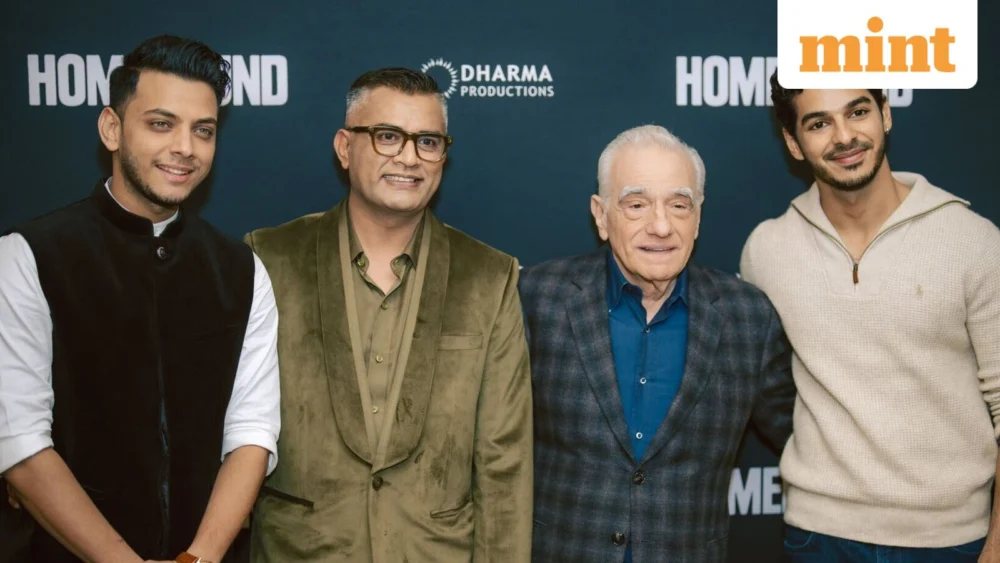
A prime example of this strategic alignment is Martin Scorsese’s involvement as executive producer for Dharma Productions’ Homebound. The film, based on a poignant true story, has not only garnered significant attention but was also shortlisted for the 98th Academy Awards for Best International Feature Film, a testament to its artistic merit and the amplified visibility brought by Scorsese’s endorsement. Speaking at a New York screening, Scorsese lauded Homebound as a "terrific" example of independent Indian cinema, expressing his desire for "all of America" to experience it. Such statements from an iconic filmmaker can dramatically elevate a film’s profile, facilitating access to international distributors, streaming platforms, and critical acclaim. The possibility of these films being available across diverse theatrical and streaming channels ensures their accessibility to a global audience, fostering cross-cultural appreciation.
Beyond creative mentorship, these partnerships extend to genre and technical expertise. Michael Bay, known for his high-octane action blockbusters, is slated to collaborate with Vinod Bhanushali’s Bhanushali Studios. Bay’s involvement could infuse Indian productions with a distinct style of spectacle, visual effects prowess, and action choreography that resonates with global audiences, further pushing the boundaries of Indian storytelling and technical execution. Similarly, the informal yet powerful backing of RRR by James Cameron, who publicly praised SS Rajamouli’s epic, underscored the global appeal of Indian narratives when presented with universal themes and high production value. The upcoming mythological epic Ramayana is set to feature Oscar-winning composer Hans Zimmer co-composing its music, an engagement that promises to elevate the film’s sonic landscape to international standards and broaden its appeal.

These collaborations serve as a powerful form of creative validation. Yusuf Shaikh, a veteran film producer, distributor, and founder of Janta Cinema, highlights that such international names act as "mentors and curators," assisting Indian producers in exploring novel narratives and tapping into new markets. The presence of Hollywood expertise encourages experimentation with innovative storytelling formats, cutting-edge technology, sophisticated visual effects, and dynamic action sequences. This becomes particularly crucial in a post-pandemic era where audience tastes have evolved, with widespread exposure to diverse global content through burgeoning Over-The-Top (OTT) platforms. Audiences are now more discerning, seeking elevated production values and compelling narratives, making these cross-cultural partnerships instrumental in meeting evolving consumer demands.
From a commercial standpoint, the benefits are multi-faceted. As Charu Malhotra, co-founder and managing director at Primus Partners, notes, the involvement of figures like Scorsese or Bay is less about operational management and more about "lending credibility, mentorship, or creative alignment." This strategic association can significantly enhance a film’s valuation, improve the pricing of overseas distribution rights, and secure more favorable deals with global streaming platforms. The Indian film industry, projected to grow at a Compound Annual Growth Rate (CAGR) of over 10% to reach an estimated USD 5.6 billion by 2028, presents an attractive market for global players. While the domestic box office remains robust, international revenue streams are increasingly vital for profitability and prestige. Collaborations help Indian films penetrate markets beyond the traditional diaspora, appealing to mainstream audiences in North America, Europe, and East Asia, thereby diversifying revenue and expanding market share.
Crucially, in this new model, intellectual property (IP) rights predominantly remain with the Indian producers. Hollywood collaborators typically do not invest significant capital or seek ownership stakes. Instead, their compensation often involves a fixed fee, backend participation tied to box office success, a success-linked bonus, or symbolic equity. This arrangement ensures that Indian creators retain control over their narratives and potential long-term franchise value, while leveraging international expertise for global reach. This alignment-focused approach, rather than an ownership-driven one, is a key differentiator from the failed studio models of the past. It allows Hollywood individuals to gain exposure to a rapidly expanding market and a wealth of diverse storytelling voices without the complexities of navigating India’s intricate business environment or its diverse distribution landscape.
The economic implications extend beyond individual film projects. Such partnerships contribute to the professionalization and globalization of the Indian film industry, fostering knowledge transfer in areas like production design, post-production, and marketing strategies for international audiences. This exchange elevates the overall standard of Indian cinema, making it more competitive on the world stage. Moreover, it reinforces India’s growing soft power, projecting its rich cultural narratives and artistic talent to a broader global audience. For Hollywood, it offers a pathway to engage with an exciting, dynamic film industry, tap into fresh storytelling perspectives, and potentially uncover new talent, all while mitigating financial risk.
Looking ahead, this collaborative model appears sustainable and poised for further expansion. As film producer and trade analyst Girish Johar observes, "India is an interesting and growing market for everyone, and they can see the share of Hollywood box office rising in the country." This mutual interest fuels one-on-one conversations and expanded footprints. The future of global cinema may increasingly feature such hybrid productions, blurring geographical and cultural lines, and fostering a more integrated, diverse, and accessible cinematic experience for audiences worldwide. These partnerships represent more than just financial transactions; they embody a strategic convergence of creative energies, driving Indian cinema towards unprecedented international recognition and influence.