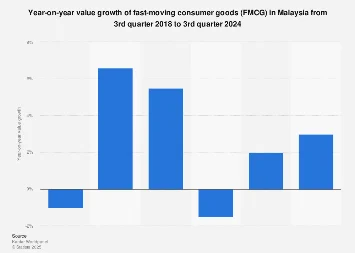
Malaysia’s Fast-Moving Consumer Goods (FMCG) sector is charting a course for significant value growth in 2024, signaling a dynamic and resilient market landscape. While precise figures for the projected growth rate remain behind a premium data wall, industry indicators and broader economic trends suggest a robust expansion that will impact manufacturers, retailers, and consumers alike. This anticipated surge is underpinned by a confluence of factors, including sustained consumer demand, evolving purchasing habits, and strategic market adaptations by key players.
The FMCG market, characterized by its high sales volume and low profit margins, is a critical barometer of consumer spending and overall economic health. In Malaysia, this sector encompasses a vast array of products ranging from food and beverages to personal care items and household essentials. The projected value growth for 2024 indicates an increase in the monetary worth of goods sold, which can be attributed to a combination of factors such as rising consumer prices, increased purchase volumes, or a shift towards higher-value products.
Globally, the FMCG market has demonstrated remarkable resilience, even amidst economic uncertainties. For instance, in emerging economies across Southeast Asia, rising disposable incomes and a growing middle class have consistently fueled demand for a wider variety of consumer goods. Malaysia, with its strategic location and relatively developed economy, is well-positioned to capitalize on these regional trends. Preliminary analyses suggest that the country’s FMCG market is not merely recovering but actively expanding, outpacing general inflation in many categories.
Several sub-segments within Malaysia’s FMCG market are expected to be key drivers of this growth. The food and non-alcoholic beverages segment, forming the largest portion of FMCG expenditure, is consistently driven by population growth and daily consumption needs. Projections indicate continued strong performance in this area, potentially boosted by an increasing preference for convenience foods, healthier options, and premium product lines. Data from market research firms often highlight the penetration of new product innovations and the expansion of private label offerings as contributing factors to value growth in this essential category.
The cosmetics and skin care segment, often considered a discretionary spend, is also showing promising signs of expansion. This growth is fueled by a rising awareness of personal grooming, the influence of social media trends, and a greater willingness among Malaysian consumers, particularly younger demographics, to invest in beauty and wellness products. The market is witnessing an influx of both international brands and the rise of local Malaysian beauty brands, creating a competitive environment that spurs innovation and market value.
Similarly, the apparel segment within FMCG, while perhaps less volatile than other categories, contributes to the overall value growth. This is influenced by changing fashion trends, increased online shopping penetration, and the accessibility of affordable yet fashionable clothing options. The rise of e-commerce platforms has significantly democratized access to a wider range of apparel, encouraging more frequent purchases.
The tobacco segment, though subject to regulatory pressures and health campaigns, still represents a significant portion of FMCG value. Its growth trajectory can be influenced by pricing strategies, product innovation within the category, and shifts in consumer behavior, though long-term trends often point towards a gradual decline or stabilization in volume.
Several underlying economic and social factors are shaping this optimistic outlook for Malaysia’s FMCG sector in 2024. Firstly, the nation’s economic recovery is projected to continue, with a stable employment market and government initiatives aimed at stimulating domestic consumption. As household incomes stabilize and potentially increase, consumers are more likely to maintain or even increase their spending on FMCG products.
Secondly, the evolving retail landscape is playing a crucial role. The continued expansion of modern retail formats, such as supermarkets and hypermarkets, alongside the enduring presence of traditional provision stores, ensures broad accessibility across different consumer segments and geographical areas. Furthermore, the rapid growth of e-commerce and online grocery platforms is transforming how consumers shop for FMCG items. This digital shift not only provides convenience but also exposes consumers to a wider product selection and competitive pricing, thereby driving overall market value. Many retailers are investing heavily in their digital infrastructure and logistics to capture a larger share of this online market.
Thirdly, demographic shifts are contributing to sustained demand. Malaysia has a young and growing population, a significant portion of which falls into the prime consumer age bracket. This demographic dividend ensures a consistent base demand for essential FMCG products. Moreover, the increasing urbanization and the growth of the middle class lead to a greater demand for a wider variety of products, including premium and specialized items.
Expert insights from industry analysts often point to the importance of innovation and adaptation for FMCG companies operating in Malaysia. Those that can effectively leverage data analytics to understand consumer preferences, develop targeted marketing campaigns, and introduce novel products that cater to evolving needs, such as health-conscious options or sustainable packaging, are likely to experience the most significant value growth. The ability to navigate supply chain complexities and optimize distribution networks also remains a critical factor for success.
Comparing Malaysia’s FMCG market performance to regional peers provides valuable context. While specific growth rates fluctuate, the overall trend in Southeast Asia is one of expansion, driven by similar demographic and economic forces. Countries like Indonesia, the Philippines, and Vietnam are also experiencing robust FMCG growth, albeit with varying market characteristics and consumer behaviors. Malaysia, with its mature market infrastructure and high digital penetration, offers a unique environment for brand strategists and investors.
The economic impact of a thriving FMCG sector extends beyond direct sales. It supports a vast ecosystem of related industries, including agriculture, manufacturing, logistics, advertising, and retail services. A strong FMCG market translates into job creation, increased investment, and a significant contribution to the nation’s Gross Domestic Product (GDP). For 2024, the projected growth in FMCG value suggests a positive ripple effect throughout the Malaysian economy.
While the precise growth rate for 2024’s FMCG value in Malaysia is proprietary data, the underlying trends paint a clear picture of a vibrant and expanding market. Factors such as sustained consumer spending, evolving retail channels, and demographic advantages are converging to create an environment ripe for growth. Companies that are agile, innovative, and deeply attuned to the Malaysian consumer’s needs are well-positioned to capitalize on this promising outlook. The continued evolution of consumer preferences, coupled with advancements in technology and retail strategies, will undoubtedly shape the trajectory of this vital economic sector in the coming year and beyond.