In an era defined by relentless digital transformation and hyper-connectivity, the customer experience (CX) has transcended its traditional role as a mere service function to become a pivotal determinant of corporate success and market differentiation. Businesses globally recognize the imperative of understanding and enhancing customer journeys, leading to an explosion in the collection of customer experience data. Yet, ironically, this very abundance often precipitates a new challenge: a pervasive metrics overload that can obscure actionable insights, stifle strategic decision-making, and drain valuable resources. Many large organizations, boasting extensive data infrastructures, find themselves collecting hundreds of disparate CX metrics across various touchpoints and channels, a practice that frequently yields more confusion than clarity. The critical task for modern enterprises is no longer simply to gather data, but to distill this vast ocean of information into a focused, impactful set of indicators that genuinely illuminate customer sentiment and drive tangible business outcomes.
The proliferation of customer experience measurement tools has transformed how companies interact with and perceive their clientele. What began with rudimentary satisfaction surveys and infrequent customer interviews has evolved into a sophisticated, multi-layered system encompassing perceptual measures (gauging customer emotions and perceptions), operational indicators (assessing the efficiency and effectiveness of internal processes), and financial outcomes (linking CX directly to sales, profitability, and market share). A customer might encounter a CX survey moments after a hotel checkout, a product delivery, or a call center interaction, generating an immediate data point. However, this fragmented approach, often driven by the adoption of industry-standard metrics without rigorous strategic alignment, frequently results in a sprawling, unmanageable data ecosystem. Companies may collect metrics simply because they are well-known or commonly tracked by competitors, rather than because they offer specific, actionable insights relevant to their unique customer base or business objectives.
The consequences of this metrics overload are substantial, manifesting in both operational inefficiencies and strategic paralysis. According to recent industry analyses, many multinational corporations manage upwards of 50 distinct CX metrics, with some exceeding 200, often overseen by different teams within siloed organizational structures. Our observations across various sectors, including a consortium of 14 subscription services firms, revealed a consistent pattern: across diverse channels—from digital interfaces and email communications to call centers and physical retail locations—these companies employed well over a hundred CX performance measures. The sheer logistical burden of collecting, compiling, and analyzing daily, weekly, monthly, and quarterly data from such a vast array of metrics consumes extensive human capital and financial investment. This data deluge not only inflates operational costs but also dilutes the focus of CX teams, making it arduous to identify causal relationships, prioritize improvement initiatives, and communicate a coherent CX narrative to executive leadership.
The strategic imperative, therefore, shifts from mere data acquisition to intelligent data curation. The true value of CX measurement lies in its ability to predict and influence customer behavior, ultimately impacting the bottom line. Research consistently demonstrates that companies excelling in CX outperform competitors, experiencing higher revenue growth, improved customer retention, and increased brand loyalty. For instance, a 5% increase in customer retention can boost profits by 25% to 95%, underscoring the direct financial leverage of positive customer experiences. Yet, without a clear link between specific CX metrics and these critical business outcomes, organizations risk investing heavily in data collection that fails to yield actionable intelligence. The challenge is to identify those "metrics that matter" – indicators that are not only relevant to the customer journey but also demonstrably correlated with key business objectives such, as reducing churn, increasing average revenue per user (ARPU), or enhancing brand advocacy.

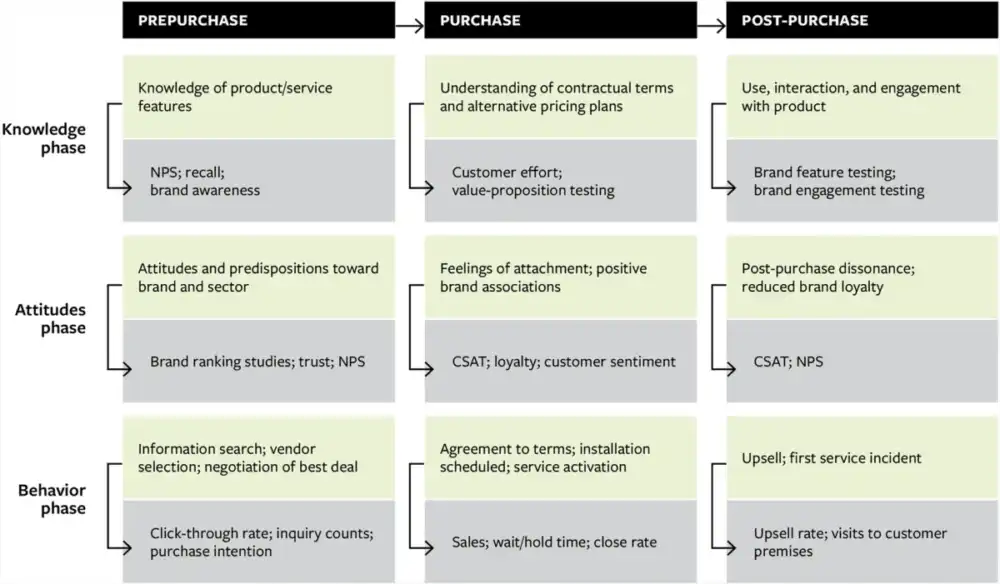
A fundamental step towards resolving metrics overload is the strategic mapping of a refined set of key CX indicators across the entire customer journey. The customer journey map, a visual representation of the customer’s end-to-end experience with a company, provides the ideal framework for this rationalization. By breaking down the customer lifecycle into distinct stages—such as awareness, consideration, purchase, onboarding, usage, support, and retention—businesses can pinpoint critical touchpoints and corresponding emotional states. At each stage, specific metrics gain heightened relevance. For instance, during the onboarding phase, metrics like "Time-to-Value" or "Successful First Use Rate" are far more indicative of future retention than general satisfaction scores. Similarly, "First Contact Resolution" or "Average Handling Time" are crucial for evaluating customer support, while "Net Promoter Score (NPS)" or "Customer Lifetime Value (CLTV)" might be more appropriate for assessing overall relationship health post-purchase. This granular approach ensures that each chosen metric serves a clear purpose, offering actionable insights for a specific part of the customer’s interaction.
The process of streamlining the CX measurement ecosystem requires a rigorous evaluation of existing metrics and a commitment to eliminating those that offer low value. Key criteria for metric selection should include: direct relevance to identified customer journey stages, a clear correlation with measurable business outcomes, ease of accurate collection and interpretation, and uniqueness (avoiding redundant metrics that measure similar aspects). This often necessitates a cross-functional collaborative effort involving marketing, sales, product development, and customer service teams to ensure a holistic understanding of the customer journey and a shared vision for CX improvement. Technology also plays a crucial role; advanced analytics, machine learning, and AI are increasingly employed to identify complex correlations between disparate data points, predict customer behavior, and even automate the identification of underperforming journey segments. Integrated CX platforms, which consolidate data from various sources into a unified view, are replacing fragmented tools, thereby enhancing reporting efficiencies and fostering a more cohesive understanding of customer interactions.
Globally, the focus on refined CX measurement is gaining traction, albeit with regional nuances. In mature markets, the emphasis is often on hyper-personalization and predictive analytics, leveraging historical data to anticipate customer needs and proactively address potential pain points. Emerging economies, while still building foundational CX capabilities, are rapidly adopting digital solutions to leapfrog traditional service models, often integrating real-time feedback mechanisms directly into their mobile-first strategies. The competitive pressure from digitally native companies, which inherently build customer experience into their core product and service offerings, compels incumbents across all sectors to rethink their CX measurement strategies. The future of CX lies not just in reacting to customer feedback, but in proactively shaping seamless, delightful experiences informed by precise, actionable data.
Ultimately, a truly effective customer experience management program moves beyond the simple accumulation of data points. It is about strategic foresight, operational efficiency, and a deep, empathetic understanding of the customer journey. By consciously curating a lean, powerful set of CX metrics and meticulously mapping them to critical stages of the customer lifecycle, businesses can transform their data deluge into a wellspring of actionable intelligence. This focused approach not only yields significant tracking and reporting efficiencies but, more importantly, empowers CX managers with the clarity needed to drive meaningful improvements, enhance customer loyalty, and ultimately secure a sustainable competitive advantage in an increasingly experience-driven global economy. The transition from data volume to data value is not merely an operational adjustment; it is a fundamental shift towards a more intelligent, customer-centric business philosophy that underpins long-term growth and resilience.