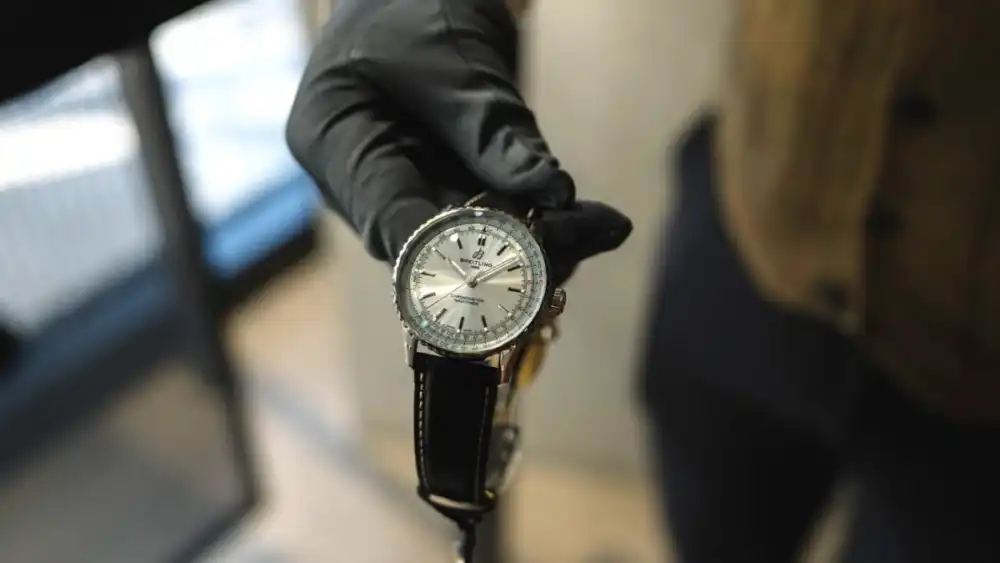
The era of exuberant growth and sky-high valuations in the luxury horology market appears to be reaching a definitive plateau, as evidenced by the recent decision by private equity backers to significantly revise the internal valuation of Breitling. This adjustment serves as a sobering bellwether for an industry that, until recently, seemed insulated from the tightening credit conditions and cooling consumer sentiment affecting the broader global economy. The markdown by the Swiss-based Partners Group, which holds a majority stake in the storied watchmaker, reflects a strategic recalibration in the face of shifting market dynamics, marking a sharp departure from the post-pandemic "revenge spending" boom that propelled Swiss watch exports to record heights.
For several years, Breitling stood as a poster child for successful private equity intervention in the luxury space. Under the leadership of Chief Executive Georges Kern, who took the helm after CVC Capital Partners acquired a majority stake in 2017, the brand underwent a radical transformation. Kern pivoted the company away from its narrow, hyper-masculine "aviation-only" branding toward a more inclusive "casual luxury" aesthetic, revitalizing heritage lines like the Navitimer and Chronomat while expanding into the "sea" and "land" categories. This turnaround story was so compelling that when Partners Group increased its stake in late 2022 to become the majority shareholder, the transaction reportedly valued the company at more than 4 billion Swiss francs. However, the current economic environment—characterized by persistent inflation, high interest rates, and a slowdown in the critical Chinese market—has forced a more conservative appraisal of that trajectory.
The valuation cut is not necessarily an indictment of Breitling’s operational performance, which has remained relatively robust compared to some of its peers, but rather a reflection of "multiple compression" within the private equity landscape. When interest rates were near zero, investors were willing to pay high premiums for growth-oriented luxury assets. Today, with the cost of capital significantly higher, the "exit multiples" that private equity firms use to calculate the present value of their holdings have shrunk. For Partners Group, marking down the valuation is a necessary accounting reality, aligning the company’s book value with the current appetite of the public markets and potential future acquirers.
Industry analysts suggest that the cooling of the "hype" cycle is a primary driver behind this correction. Between 2020 and early 2023, the luxury watch market experienced an unprecedented surge in demand, driven by a confluence of stimulus liquidity, a lack of travel opportunities, and the rise of watches as an alternative asset class. This led to a bubble in the secondary market, where prices for "grail" watches from brands like Rolex, Patek Philippe, and Audemars Piguet soared to several times their retail value. Breitling, while positioned in the more accessible "entry-to-mid" luxury tier (typically ranging from $4,000 to $15,000), benefited from this halo effect. As the secondary market bubble burst over the last eighteen months, with indices tracking pre-owned luxury watch prices dropping by double digits, the sense of urgency among consumers has dissipated.
The geographic distribution of this slowdown is particularly telling. For decades, China has been the undisputed engine of growth for Swiss watchmakers. However, the combination of a prolonged real estate crisis, fluctuating youth unemployment, and a general shift in consumer behavior toward "quiet luxury" and away from conspicuous consumption has hit Swiss exports hard. According to recent data from the Federation of the Swiss Watch Industry, exports to mainland China and Hong Kong have seen sharp contractions, sometimes exceeding 20% year-over-year in certain months. While Breitling has a smaller footprint in China compared to conglomerates like the Swatch Group or Richemont, it is not immune to the broader regional malaise that has dampened investor confidence in the entire sector.
Furthermore, the American market, which overtook China as the top destination for Swiss watches during the pandemic, is showing signs of fatigue. While high-net-worth individuals continue to spend, the "aspirational" consumer—the professional who might reward themselves with a Breitling Superocean or an Avenger—is feeling the pinch of increased borrowing costs and the rising cost of living. This segment is crucial for Breitling’s volume-driven growth strategy. When the aspirational buyer retreats, brands in the "mid-tier" luxury segment often feel the impact more acutely than "ultra-luxury" brands that cater to the billionaire class, whose spending habits are less sensitive to interest rate hikes.
The valuation adjustment also raises questions about the long-term exit strategy for Breitling’s private equity owners. Typically, a firm like Partners Group or CVC would look toward an Initial Public Offering (IPO) or a sale to a larger luxury conglomerate like LVMH or Kering as the ultimate "liquidity event." However, the IPO window for luxury brands has become increasingly narrow. The lackluster performance of some recent luxury listings has made investors wary of high-valuation debuts. By slashing the internal valuation now, the owners may be setting more realistic expectations for a future sale, ensuring that any eventual exit is seen as a success relative to a more modest baseline rather than a disappointment against an inflated peak.
Despite the valuation cut, Breitling’s fundamental business model remains a point of study for industry experts. The brand has successfully transitioned to an "omnichannel" approach, significantly increasing its number of mono-brand boutiques—often styled as "industrial lofts"—which allow for greater control over the customer experience and higher margins compared to third-party wholesale distribution. This direct-to-consumer shift is a key pillar of the modern luxury playbook, intended to insulate brands from the volatility of the wholesale market. Moreover, Breitling has been a leader in digital innovation, being one of the first major watchmakers to offer a blockchain-backed "digital twin" for every watch sold, enhancing transparency and security for the secondary market.
The broader Swiss watch industry is currently navigating what many call a "return to normalcy." The double-digit growth rates of 2021 and 2022 were historical anomalies, and the current environment of low single-digit growth—or even slight contraction—is a return to the industry’s long-term mean. For private equity firms, this shift requires a move away from "financial engineering" and toward "operational excellence." Success in the coming years will likely depend on a brand’s ability to maintain its cultural relevance and "desirability" without relying on the tailwinds of a speculative bubble.
The situation at Breitling is also a microcosm of the tension between private equity’s short-term horizons and the long-term stewardship required for luxury brands. Luxury is built on the perception of timelessness and scarcity; private equity is built on IRR (Internal Rate of Return) and exit multiples. When these two worlds collide during a period of economic contraction, the result is often a recalibration of value. However, some analysts argue that a lower valuation could actually be a strategic advantage for Breitling, allowing it to be more aggressive in its pricing or marketing without the pressure of justifying a $4.5 billion price tag to its limited partners.
As 2024 progresses, the luxury sector will continue to watch Breitling as a test case for whether a well-managed brand can navigate a "soft landing" in the global economy. The valuation cut serves as a reminder that even the most successful turnarounds are subject to the gravity of macroeconomic forces. While the "Breitling Squad" and their neo-luxury boutiques continue to project an image of adventure and success, the accountants in Zug and London are signaling that, for now, the time for unbridled optimism has been paused. The focus has shifted from growth at all costs to resilience, brand equity preservation, and preparing for a market where value is measured not just by a price tag, but by enduring relevance in an increasingly cautious world.