India’s burgeoning consumer market is undergoing a significant olfactory transformation, with men emerging as the unexpected and dominant force behind a robust boom in premium and luxury fragrances. This shift signals a profound evolution in male grooming habits, discretionary spending, and the broader luxury goods landscape across the subcontinent, moving away from mass-market deodorants towards sophisticated, higher-value scents. The fragrance sector, particularly its upscale segments, is experiencing unprecedented growth, fundamentally reshaping retail strategies and brand positioning for both domestic and international players.
The trajectory of this premiumization is striking. Market research firm Euromonitor reports that men currently account for a substantial 60% of India’s approximately $189.1 million fragrance market. More impressively, sales within the men’s fragrance category surged by 14.6% in 2024, significantly outperforming the overall market growth rate of 11.9%. This upward trend is not merely a transient phenomenon; Brickwork Ratings projects a robust compound annual growth rate (CAGR) of 15.23% for the Indian fragrance market through 2032, underscoring the sustained momentum of this consumer shift.
Several macroeconomic and socio-cultural factors underpin this fragrant ascent. India’s rapidly expanding middle class, characterized by increasing disposable incomes and a growing appetite for lifestyle upgrades, is a primary catalyst. As economic prosperity reaches a wider demographic, personal care products, once considered occasional indulgences, are now firmly integrated into daily grooming routines. This redefinition of personal care extends beyond basic hygiene to encompass sophisticated self-expression and an elevated sense of personal branding, particularly among urban male consumers who are increasingly globally aware.

The paradigm shift is evident in consumer behavior, moving from a price-sensitive approach to one valuing quality, brand prestige, and unique olfactory profiles. Historically, the men’s grooming market in India was largely dominated by mass-produced deodorants, which prioritized accessibility and basic functionality. Premium fragrances, often positioned for women and retailed through high-end international boutiques, had a niche presence. However, a new generation of male consumers is actively "trading up," not just purchasing more fragrances but opting for higher-priced, more concentrated formulations, thereby recalibrating the market’s value chain and pricing power.
Leading beauty retailers are witnessing this phenomenon firsthand. Nykaa Perfumery, the fragrance vertical of the prominent beauty e-tailer Nykaa, reported a December 2025 quarter average order value (AOV) that was three times higher than its regular beauty products. Crucially, over 45% of its gross merchandise value (GMV) in that quarter was driven by sales to men, particularly within the high-end and luxury segments. A spokesperson for Nykaa highlighted that men are "over-indexed" in the fragrance category compared to many global markets, suggesting that for many male consumers, fragrance serves as a "natural entry point into beauty," thereby meaningfully expanding the category.
Domestic brands have also capitalized on this evolving consumer landscape. Skinn by Titan Co. Ltd, for instance, has emerged as India’s top-performing fragrance brand, according to Euromonitor, with most of its best-selling products commanding prices above ₹1,000. This success story illustrates the potential for Indian brands to innovate and capture market share in the premium segment, challenging the long-held dominance of international labels.
The broader Indian fragrance market, encompassing deodorants, perfumes, and other formats, remains highly fragmented. Yet, even within the mass segment, a subtle premiumization is underway. Companies like Vini Cosmetics, known for its men-focused Fogg deodorants and perfumes (acquired by KKR in 2021), reported robust sales of ₹1,264.2 crore in FY25, a 17% year-on-year increase. Bellavita, a newer brand founded in 2018 with a strong male product focus, achieved over ₹450 crore in revenue in FY25 and is now actively premiumizing its offerings with luxury variants. McNROE’s Wild Stone, another established men-focused mass-market brand, also reported strong revenue growth, reaching ₹624.4 crore in FY25.

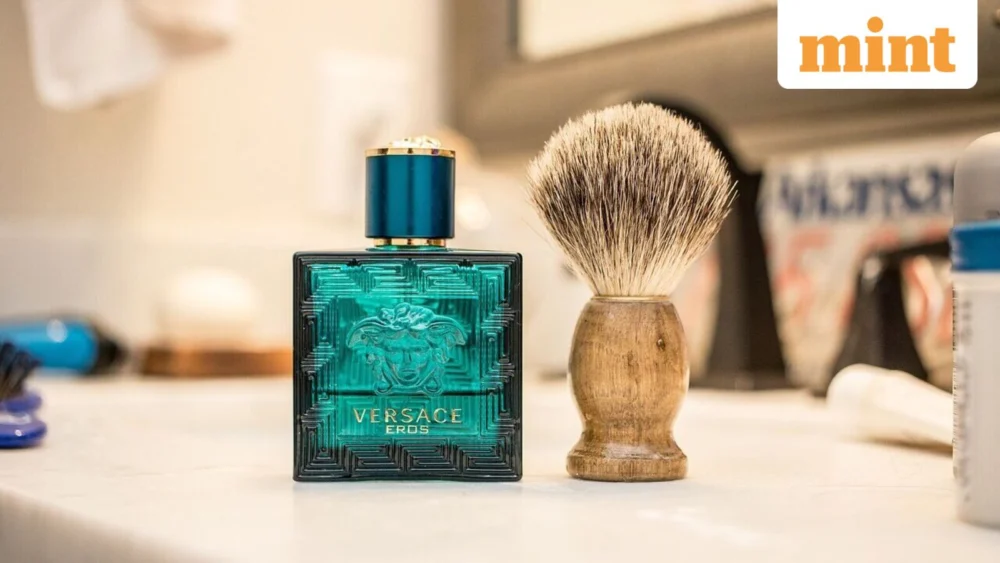
A clear indicator of this market-wide premiumization is the upward revision of average selling prices for popular international brands. The 75ml Eau de Toilette of Davidoff Cool Water for Men, for example, which retailed between ₹2,900 and ₹3,800 on Indian online platforms in 2023, now commands prices in the ₹3,800-₹4,995 range in 2026. Similarly, the maximum retail price of Versace Pour Homme (Eau de Toilette) has climbed from ₹10,500 in 2023 to ₹12,750 in 2026 on online shopping sites. These price escalations, accepted by consumers, reflect a growing perception of fragrances as investment-worthy lifestyle products.
The luxury segment, in particular, is experiencing significant momentum. A 2024 report by consulting firm Kearney identifies fragrance as the largest luxury beauty category in India, holding a 43% share. This dominance is attributed to impulse purchases, a thriving gifting culture, and the substantial contributions from male consumers. Interestingly, Ken Research estimates that nearly 90% of luxury fragrance purchases in India still occur through offline retail channels, underscoring the importance of experiential shopping and personalized assistance for high-value products.
Legacy brands are also adapting and thriving in this new environment. Abdulla Ajmal, CEO of Ajmal Group, a fragrance house with revenues nearing ₹60 crore, notes that 45-50% of their sales now originate from men, observing a distinct shift towards higher-value purchases. Ajmal explains that customers often begin with an everyday scent and progressively upgrade to higher concentrations and more sophisticated categories with repeat visits. This pattern signifies that luxury men’s fragrances are increasingly integrated into daily lifestyle choices rather than being reserved for rare indulgences. Euromonitor further clarifies that while men’s overall share of the total fragrance market may not be dramatically increasing, the acceleration of premiumization within men’s fragrances is a compelling indicator of a profound consumer shift towards higher-end products.
The accessibility of global luxury brands has also played a pivotal role. While international beauty brands have long been established in women’s segments—from mid-premium players like Bath & Body Works to high-end labels such as YSL, Armani, and Gucci—men now have similar access to an extensive portfolio. Platforms like Reliance Retail’s beauty venture, Tira, offer men’s fragrances from Versace and Prada starting around ₹10,000, extending to ultra-luxury brands like Amouage, priced upwards of ₹30,000. Nykaa Man further expands this spectrum, listing exclusive brands like The House of Creed and Bond No 9, with some products exceeding ₹50,000. This unprecedented variety was largely unavailable to male consumers in India just a few years ago.

The marketing landscape has also evolved to reflect this premium pivot. While mass-market brands previously relied on endorsements from Bollywood stalwarts like Shah Rukh Khan (Denver) and Akshay Kumar (Envy), luxury fragrance labels are now engaging a new generation of celebrity talent. French luxury brand Azzaro appointed Ibrahim Ali Khan as its Fragrance Local Ambassador for India in September 2025. Ajmal Perfumes has roped in Saif Ali Khan as its brand ambassador, while Ranbir Kapoor’s premium lifestyle brand ARKS offers unisex premium perfumes. Reliance Retail’s Tira recently signed Ahaan Pandey as its brand ambassador. These strategic associations lend an aura of aspiration and exclusivity, further fueling demand for high-end scents.
Despite the surge in premiumization, mass brands continue to dominate volume sales. A quick glance at Amazon India’s top-selling fragrance products reveals that seven out of ten are men’s perfumes and deodorants from mass-market brands, often including "dupes" or inspired renditions of iconic scents. This dual reality underscores the coexistence of aspirational demand and price sensitivity within the diverse Indian consumer base, where many seek the perceived value of luxury at a more accessible price point.
India’s deeply ingrained gifting culture—spanning birthdays, weddings, religious festivals, corporate events, and even informal occasions—has significantly bolstered sales of perfume gift sets. These sets, often perceived as thoughtful and luxurious presents, cater to the desire for premium appeal without necessarily requiring an individual to make a personal high-value purchase. This cultural practice provides an additional, robust channel for the growth of premium fragrances. As India’s economic ascent continues and consumer tastes evolve, the male fragrance market is poised for further innovation and expansion, cementing its position as a dynamic and influential segment within the global luxury market.