India’s ambitious push towards a sustainable energy future, marked by a rapid expansion of solar and wind power, is encountering a significant operational hurdle: the efficient integration of this abundant green electricity into the national grid. Widespread production cuts, particularly in key renewable energy hubs, have raised concerns across the industry, signaling a critical need for systemic upgrades and policy recalibrations to prevent the deceleration of the nation’s decarbonization efforts. This curtailment, a temporary measure enforced by grid operators to maintain stability, comes at a substantial economic cost to developers and poses a fundamental challenge to India’s target of achieving 500 gigawatts (GW) of non-fossil fuel capacity by 2030.
The core of the problem lies in the mismatch between the swift pace of renewable energy capacity addition and the slower evolution of supporting infrastructure, notably transmission lines and advanced energy storage solutions. States like Rajasthan and Gujarat, pioneers in harnessing solar and wind resources, have experienced significant instances of green power generation being "backed down." Data from energy transition think tank Ember indicates that such curtailment in these regions was equivalent to approximately 18% of the average monthly solar generation of 13 terawatt hours (TWh), leading to compensation payouts estimated between ₹575-690 crore to affected developers. While compensation exists, it frequently falls short of fully offsetting the financial losses, impacting project economics and investor confidence.
Recognizing the gravity of the situation, the Ministry of New and Renewable Energy (MNRE) has mandated a joint study by the Central Electricity Authority (CEA), India’s apex power sector planning body, and Grid Controller of India Ltd (Grid India), the national power grid operator. Their joint inquiry is tasked with exploring comprehensive solutions to this multifaceted issue. The immediate concern revolves around mitigating "oscillations"—variations in voltage, current, power, and frequency—that can destabilize the grid, damage equipment, or even trigger blackouts when excess intermittent power cannot be effectively absorbed or evacuated. Grid India’s intervention to order production cuts is a last resort to prevent such systemic failures, highlighting the grid’s current limitations in managing large influxes of variable renewable energy.
The technical intricacies of grid management are central to this challenge. Conventional power grids are designed for one-way power flow from large, centralized generation units (typically thermal or hydro) to consumers. Integrating variable renewable sources like solar and wind, which are often decentralized and depend on weather conditions, requires a far more dynamic and flexible grid. Unlike coal-fired power plants, which can be dispatched predictably, solar output peaks during midday and wind generation fluctuates based on wind speeds. When demand is lower than forecast, or when the grid is saturated with green power and conventional generators cannot ramp down sufficiently, the system operator has no choice but to curtail renewables to maintain the delicate balance between supply and demand. This was particularly evident in October 2025, when milder temperatures led to lower demand, exacerbating the midday solar surplus.

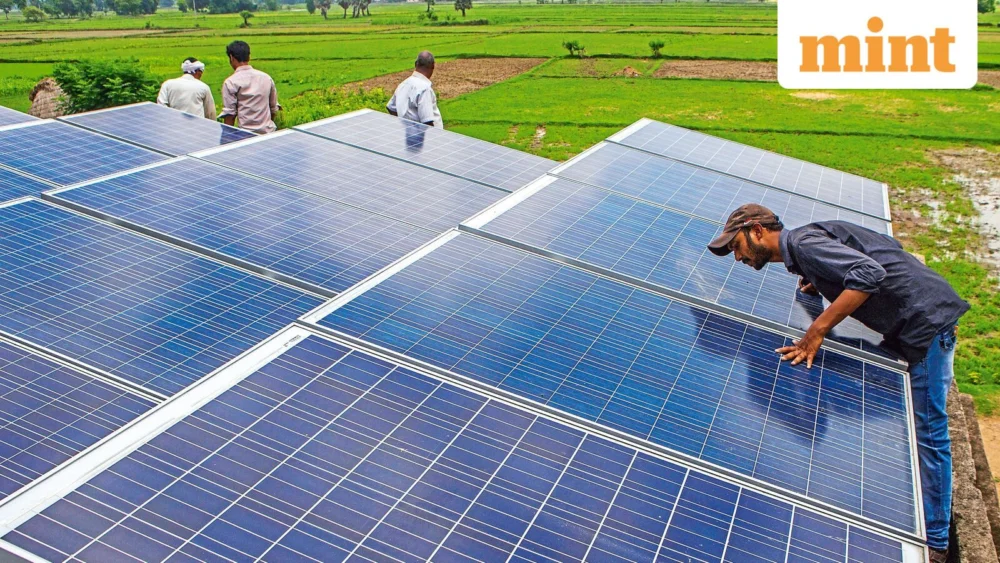
The infrastructure deficit is glaring. India currently boasts a renewable energy capacity of 258 GW, with solar accounting for 135.80 GW and wind for 54.51 GW. Against this, the installed transmission capacity stands at over 5 lakh circuit kilometers (ckm). While efforts are underway to expand this, the pace has been inconsistent. In the April-December period of FY27, only 5,077 ckm of transmission lines were added, a 14.8% decrease compared to the previous fiscal. Although the power ministry has announced plans for approximately 40,000 ckm of inter-state and 27,500 ckm of intra-state transmission projects, the lead time for commissioning these complex projects often lags behind the comparatively quicker installation of renewable generation capacity. This creates bottlenecks, especially in resource-rich but grid-poor regions.
Beyond transmission, the absence of widespread battery energy storage systems (BESS) is a critical missing link. BESS can store surplus renewable energy during peak generation hours and discharge it when generation dips or demand rises, effectively smoothing out intermittency and providing crucial grid stability services. However, large-scale deployment of BESS faces challenges related to high upfront costs, technology maturity, and supportive market frameworks. Without adequate storage, the grid’s ability to "absorb" high volumes of renewable energy efficiently remains constrained, making curtailment an unavoidable consequence during periods of high generation and low demand.
The economic implications for developers are profound. Neerav Nanavati, CEO of BluPine Energy, an Actis-backed renewable energy generator, emphasizes that curtailment clearly signals that "renewable capacity growth is outpacing the system’s ability to absorb power efficiently." He notes that when clean energy is backed down during predictable high-generation periods, it points to a shortfall in system flexibility. This directly impacts project economics and risk allocation, particularly for portfolios heavily reliant on solar or exposed to market fluctuations. It underscores the necessity for investors to explicitly factor system flexibility and grid behavior into their investment decisions. The "must-run" status typically accorded to renewable energy projects often fails to protect developers from revenue losses when operational realities force curtailment, thereby increasing the risk profile and potentially reducing internal rates of return (IRRs) in India’s highly tariff-competitive market.
Further compounding the issue are the prevailing market and policy structures. Many state-owned power distribution companies (discoms), which are the primary off-takers of electricity, continue to sign costly power purchase agreements (PPAs) for thermal power, often prioritizing its perceived reliability over cheaper, cleaner renewable alternatives. This preference persists even as discoms sometimes sell renewable energy on electricity exchanges at prices lower than their purchase cost. Alarmingly, a significant 43 GW of green power capacity, representing a proposed investment of ₹2.1 trillion, remains without PPAs or power supply agreements (PSAs) in place, leaving projects in limbo and further complicating the integration landscape. Akshay Hiranandani, CEO of Serentica Renewables, advocates for market-based dispatch and storage integration as key solutions to reduce curtailment risk and lower system costs. He warns that without robust transmission planning, storage integration, strict compensation mechanisms, and critical discom reforms, curtailment will continue to deter investment and inflate renewable tariffs.
Addressing this multifaceted challenge requires a concerted and integrated approach. On the infrastructure front, the commissioning of new high-capacity transmission lines, such as the 765 kV double-circuit Bhadla II–Sikar II and Khetri–Narela lines, connecting key generation zones with consumption centers, represents crucial progress. However, such projects need to be aggressively fast-tracked and synchronized with renewable energy capacity additions. Technologically, investments in advanced grid management systems, including smart grids, real-time forecasting, and artificial intelligence-driven dispatch, are essential to enhance the grid’s ability to predict and respond to variable generation.

Policy reforms must prioritize the implementation of market-based economic dispatch (MBED), which would optimize the dispatch of power based on actual demand and generation costs, thereby promoting the uptake of cheaper renewable energy. Stronger regulatory frameworks are needed to enforce the "must-run" status of renewables and ensure adequate, timely compensation for deemed generation during curtailment events. Additionally, incentivizing the deployment of energy storage through supportive policies, subsidies, and market mechanisms is paramount. Globally, countries like Germany, Australia, and the US have faced similar integration challenges, responding with robust grid modernization programs, significant storage investments, and market reforms that value grid flexibility and ancillary services.
Varchasvi Gagal, MD and CEO of Datta Power Infra Pvt. Ltd., encapsulates the developer’s perspective, emphasizing that curtailment translates directly into revenue loss and reduced capacity utilization factors, severely impacting project IRRs. He stresses the need for stringent enforcement of "must-run" status, guaranteed compensation, aligned transmission commissioning, and strengthened PPA protection mechanisms.
As India races towards its ambitious clean energy targets, resolving the current grid integration bottlenecks is not merely a technical challenge but an economic and strategic imperative. A holistic strategy encompassing rapid transmission expansion, widespread energy storage deployment, advanced grid management technologies, and market-driven policy reforms is crucial. Only then can India ensure that its burgeoning green power capacity translates into reliable, affordable electricity for all, truly powering the nation’s sustainable development.