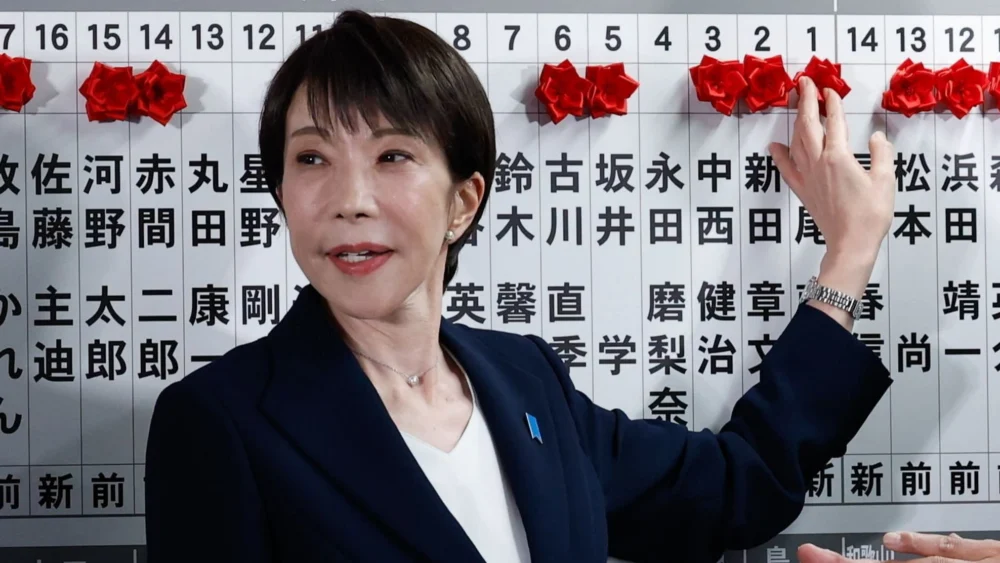
The landscape of Japanese politics underwent a seismic shift this week as Sanae Takaichi led the Liberal Democratic Party (LDP) to a commanding victory in the national elections, securing a mandate that promises to redefine the nation’s economic and security architecture for the coming decade. The win not only installs Takaichi as Japan’s first female prime minister but also signals a decisive return to the bold, nationalist, and expansionist policies once championed by her mentor, the late Shinzo Abe. With the LDP and its coalition partner Komeito retaining a robust supermajority in the House of Representatives, the path is now clear for "Sanaenomics"—a policy suite characterized by aggressive fiscal stimulus, strategic industrial investment, and a hawkish stance on regional defense.
The electoral triumph comes at a critical juncture for the world’s fourth-largest economy. Japan has spent the better part of the last year grappling with a fragile recovery, fluctuating currency valuations, and the persistent specter of cost-push inflation. Takaichi’s campaign resonated with a public weary of incrementalism, offering a vision of "strength through sovereignty." Her victory was particularly pronounced in rural strongholds and among younger voters drawn to her promise of technological resurgence and a more assertive Japan on the global stage. Preliminary data suggests the LDP successfully navigated recent scandals that had plagued the previous administration, pivoting the national conversation toward economic security and the existential threats posed by a shifting Indo-Pacific power balance.
From an economic perspective, the "Takaichi mandate" is expected to trigger a significant departure from the cautious fiscal consolidation attempted by her predecessors. Market analysts are closely watching the implementation of her "New Abenomics," which seeks to achieve a 2% inflation target not just as a ceiling, but as a stable floor supported by massive government spending. Takaichi has consistently advocated for a "crisis-ready" budget, arguing that Japan’s debt-to-GDP ratio—currently exceeding 250%—is manageable so long as the government invests in growth-generating sectors. Her primary focus remains the "triple-threat" of energy security, semiconductor independence, and artificial intelligence. By earmarking trillions of yen for domestic chip fabrication and next-generation nuclear reactors, the Takaichi administration aims to insulate Japan from global supply chain shocks.
The reaction from Tokyo’s financial markets has been one of cautious optimism tempered by concerns over the future of monetary policy. Following the election results, the Nikkei 225 saw a sharp uptick, particularly in the defense, heavy machinery, and technology sectors. However, the Japanese yen experienced renewed volatility as traders weighed Takaichi’s preference for ultra-loose monetary policy against the Bank of Japan’s (BoJ) recent inclination to raise interest rates. Takaichi has been a vocal critic of premature rate hikes, suggesting that the BoJ should maintain its accommodative stance until real wages show sustained growth. This potential friction between the Kantei (the Prime Minister’s Office) and the central bank will be a defining theme of her early tenure, with global investors looking for signs of how she will manage the delicate balance between stimulating growth and preventing a currency collapse.
On the global stage, Takaichi’s ascension marks a transition toward a more muscular Japanese foreign policy. Known for her frequent visits to the Yasukuni Shrine and her uncompromising stance on territorial disputes, the new Prime Minister is expected to accelerate Japan’s defense buildup. Her platform includes a commitment to doubling defense spending to 2% of GDP, a goal that aligns with NATO standards and reflects the growing urgency of the security environment in East Asia. Specifically, her administration is likely to prioritize the acquisition of counter-strike capabilities and the strengthening of the U.S.-Japan alliance, while simultaneously deepening security ties with "the Quad" partners—Australia and India—and European allies like the United Kingdom.
Beijing’s reaction to the election result was predictably cool, as Takaichi has been one of the most outspoken critics of China’s maritime activities in the East and South China Seas. Her support for Taiwan’s inclusion in international organizations and her emphasis on "economic coercion" as a primary threat to Japanese interests suggest a period of heightened diplomatic tension between Tokyo and Beijing. Conversely, Washington has welcomed the stability offered by a strong LDP majority, viewing Takaichi as a reliable partner in the "Integrated Deterrence" strategy designed to maintain a free and open Indo-Pacific.
Domestically, the Takaichi government faces the daunting task of addressing Japan’s demographic crisis—a "silent emergency" that threatens to hollow out the labor market and strain the social security system. While her predecessors focused on "Womenomics" and childcare subsidies, Takaichi’s approach appears more holistic, linking demographic survival to regional revitalization. Her plan involves incentivizing corporations to move headquarters out of Tokyo and into secondary cities, coupled with aggressive automation and robotics integration to offset the shrinking workforce. Whether these measures can reverse decades of population decline remains to be seen, but the sheer scale of her electoral victory gives her the political capital to push through structural reforms that were previously deemed too controversial.
The energy sector is another area where the Takaichi administration is poised to make a radical impact. In a departure from the post-Fukushima hesitancy regarding nuclear power, Takaichi has emerged as a staunch advocate for the restart of idle reactors and the development of Small Modular Reactors (SMRs). She argues that for Japan to meet its net-zero emissions targets while maintaining a competitive industrial base, nuclear energy must serve as the backbone of the nation’s power grid. This "green transformation" (GX) strategy is not just an environmental policy but a cornerstone of her economic security agenda, aimed at reducing Japan’s reliance on imported fossil fuels from volatile regions.
However, the path forward is not without significant hurdles. Critics of Takaichi’s fiscal philosophy warn that an unchecked expansion of the national debt could eventually lead to a loss of market confidence in Japanese government bonds (JGBs). Furthermore, her nationalist rhetoric, while popular domestically, carries the risk of alienating South Korea at a time when trilateral cooperation between Tokyo, Seoul, and Washington is seen as essential for regional stability. Maintaining the recent thaw in Japan-South Korea relations will require a level of diplomatic finesse that Takaichi’s detractors claim she lacks.
As the new cabinet is formed, the focus will shift to how Takaichi manages the various factions within the LDP. While the "crushing victory" has silenced many of her internal rivals for now, the party remains a broad church with differing views on tax hikes and social issues. Takaichi’s ability to maintain party unity while pursuing a transformative agenda will determine the longevity of her administration. If successful, she could become the most influential Japanese leader since Abe, fundamentally altering the nation’s trajectory.
In the final analysis, the LDP’s victory under Sanae Takaichi represents more than just a change in leadership; it is a mandate for a "Great Reset" of the Japanese state. By prioritizing national strength, technological sovereignty, and fiscal activism, Takaichi is betting that Japan can reclaim its status as a premier global power. As the first female leader of the world’s fourth-largest economy, she enters office with the weight of history on her shoulders and a clear, albeit ambitious, roadmap for the future. The world now watches to see if "Sanaenomics" can deliver the revitalization that has eluded Japan for over three decades, or if the challenges of an aging society and a fractured global order will prove too great to overcome. For now, the mandate is absolute, and the Takaichi era has officially begun.