The burgeoning over-the-top (OTT) streaming market in India finds itself at a critical juncture, grappling with the strategic imperative of balancing high-impact, short-term audience acquisition driven by live sports against the sustained engagement and brand equity fostered by original scripted content. Despite substantial investments in developing unique web series and cinematic productions, major sporting events consistently emerge as the unparalleled magnet for mass viewership, underscoring a fundamental dynamic in the subcontinent’s digital entertainment landscape.
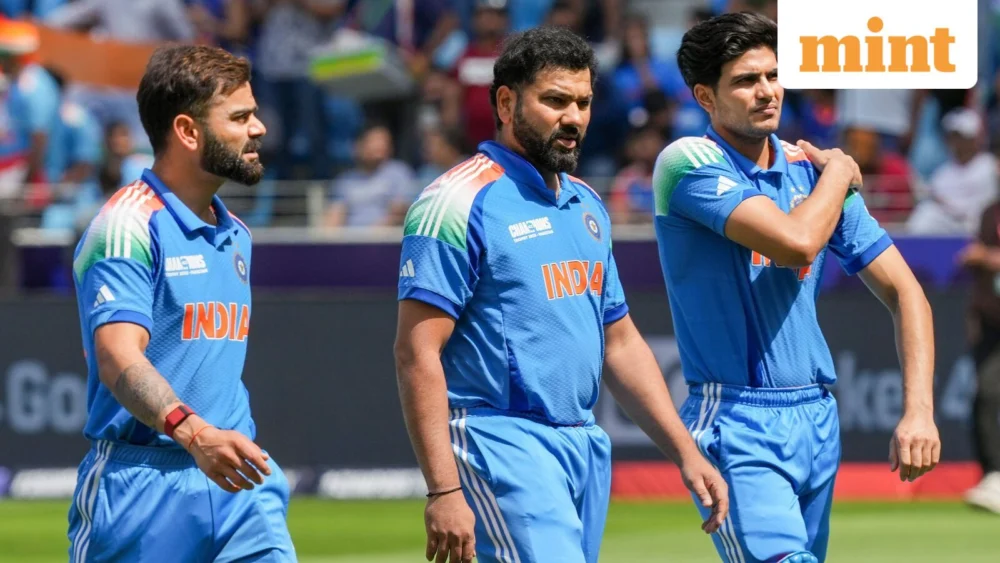
Recent industry data vividly illustrates this phenomenon. For instance, a men’s cricket series involving India against New Zealand on a prominent platform like JioHotstar commanded an staggering 17.2 million unique viewers within a specific week in January. This viewership significantly dwarfed other popular content offerings, with even a major domestic women’s cricket tournament, the Women’s Premier League, drawing 6.6 million viewers in the same period, according to insights from media consulting firm Ormax Media. The sheer gravitational pull of cricket, a sport with an almost religious following in India, renders it an invaluable asset for streaming platforms seeking to dramatically inflate their audience metrics in concentrated bursts.
This "appointment viewing" characteristic of live sports is a powerful driver. Unlike on-demand content, sports fixtures occur at fixed times, creating a collective, immediate experience that fosters a sense of urgency and community among viewers. This cultural immediacy, coupled with robust promotional campaigns often leveraging platform algorithms, ensures that sports events are not just watched but actively anticipated and discussed. Saurabh Srivastava, Chief Operating Officer-Digital Business at Shemaroo Entertainment Ltd., aptly describes this as a habit-driven phenomenon, where viewers are conditioned to "show up at a fixed time," mirroring traditional television consumption patterns but with enhanced flexibility and choice offered by OTT.
While sports deliver immediate, high-volume reach, the strategic importance of original scripted content cannot be overstated. These web series and films are the bedrock upon which platforms build distinct brand identities, cultivate subscriber loyalty, and differentiate themselves in an increasingly crowded market. Yet, their viewership trajectory often follows a "slow burn" model, garnering consistent engagement over weeks and months rather than the explosive, ephemeral peaks of live events. Industry figures highlight this contrast: while a New Zealand tour of India (ODI series) could reach 37 million viewers over two weeks on JioHotstar, a highly anticipated international original like Fallout Season 2 on Prime Video might register 6.2 million viewers in a comparable timeframe, as reported by Chrome Data Analytics & Media.
The challenge for originals often lies in discoverability and viewer patience. In an era of content abundance, even high-quality productions can struggle to cut through the noise. Viewers, accustomed to instant gratification, may binge-watch an entire season of a new series in a weekend, leading to its rapid exit from weekly viewership charts. As Munish Vaid, Vice-President at Primus Partners, notes, this makes online series excellent for initial acquisition and generating buzz, but less effective for sustaining week-on-week engagement compared to ongoing sports tournaments or daily general entertainment channel (GEC) serials.
General entertainment content, particularly popular television shows like Anupama, Naagin, and Laughter Chefs, also plays a significant role in bridging the gap between live sports’ scale and originals’ loyalty. These shows, often migrating from linear television to OTT, tap into established viewing habits and benefit from pre-existing fan bases. They provide a steady stream of content that encourages daily or weekly platform visits, mirroring the "GEC on OTT" behaviour described by Srivastava. Similarly, films, leveraging the extensive marketing budgets of their theatrical releases and the familiarity of star power, often transition smoothly to OTT, pulling in audiences through pre-built awareness. Aside from a handful of breakthrough original web shows, the top 10 most-watched OTT properties list frequently includes these GEC staples, underscoring their enduring mass appeal.
The strategic imperative for OTT platforms in India, therefore, becomes a delicate balancing act. As Pankaj Krishna, founder and CEO of Chrome Data Analytics & Media, articulates, "Sports delivers instant scale, but originals and films are what build long-term engagement and platform equity. The most successful platforms are those that balance reach with depth." This entails a multi-pronged content strategy: investing heavily in premium sports rights to acquire a vast user base rapidly, while simultaneously developing a robust slate of original programming and acquiring popular films and GEC content to retain those users and foster enduring subscription.
Globally, the competition for live sports rights has intensified dramatically, with major tech giants and streaming services entering the fray, driving up costs exponentially. In India, this trend is particularly pronounced for cricket, where rights deals often run into billions of dollars, reflecting the sport’s unparalleled commercial value. While such investments can lead to massive subscriber upticks during major tournaments, the challenge lies in converting these temporary users into long-term subscribers who engage with the platform’s broader content library. This is where the "spillover" effect comes into play: platforms hope that users acquired for sports will, through repeated app usage, discover and engage with their original content, thereby driving deeper retention.
However, not all platforms possess the financial muscle or strategic inclination to compete for top-tier national sports leagues. For these players, the path to sustainability and growth often involves a more targeted approach. Ujjwal Mahajan, co-founder of Chaupal, a platform specializing in regional content (Punjabi, Haryanvi, Bhojpuri), highlights that while relatable local leagues can attract users, national leagues are few and highly contested, akin to major Bollywood movies. Regional leagues, while potentially niche, often face fewer takers. This suggests an opportunity for platforms to carve out specific niches.
Rajat Agrawal, Chief Operating Officer of Ultra Media & Entertainment Group, affirms that platforms without major sports or GEC content still have significant "room to manoeuvre." He advises focusing on content with "mass appeal, strong IP, or niche but loyal audiences." This could mean specializing in genres like horror, science fiction, or hyper-local regional content, and investing in high-quality, unique productions that resonate deeply with specific demographics. Strategic partnerships with other services or offering highly affordable plans also present viable avenues for growth and subscriber acquisition in a market as price-sensitive and diverse as India. Furthermore, content strategies are evolving, with platforms experimenting with "season drops," "staged releases," and "mini-series" formats to extend the shelf-life and engagement window of original content, moving beyond the traditional all-at-once binge model.
The economic implications of these content strategies are profound. For platforms, the balance between content acquisition costs, subscriber acquisition costs (SAC), and average revenue per user (ARPU) is paramount. High-cost sports rights demand efficient monetization through subscriptions and advertising. Originals, while expensive to produce, offer greater intellectual property control and the potential for international syndication. The Indian OTT market, projected to grow significantly in the coming years, represents a lucrative battleground where content is king, but the crown is worn by those who can master both the immediate gratification of live spectacle and the enduring allure of compelling storytelling. Ultimately, sustained success in India’s dynamic streaming ecosystem will hinge on a sophisticated understanding of consumer behaviour, a willingness to innovate with content formats, and the strategic dexterity to leverage both the explosive power of live sports and the foundational strength of original narratives.