For decades, the Federal Republic of Germany served as the undisputed locomotive of the European project, a manufacturing powerhouse whose export-led growth provided the stability and momentum necessary to pull the broader Eurozone through periods of global volatility. Today, however, that locomotive appears to have stalled, and the very fiscal discipline that once earned Berlin international plaudits is increasingly viewed by economists and neighboring capitals as a significant barrier to continental prosperity. As the European Union grapples with anemic growth, a shifting geopolitical landscape, and the immense costs of the green energy transition, the consensus among global financial analysts is shifting: the future of European growth now hinges on a fundamental change in German fiscal policy—specifically, a massive and sustained increase in public spending.
The current economic indicators for Germany present a sobering picture of a nation at a crossroads. While much of the developed world has seen a robust, if uneven, recovery following the pandemic-induced shocks and the subsequent energy crisis triggered by the invasion of Ukraine, Germany has struggled to escape the gravity of stagnation. With GDP growth hovering near zero and industrial production figures consistently disappointing, the "sick man of Europe" moniker, first coined in the late 1990s, has begun to resurface in the corridors of Brussels and Frankfurt. The structural headwinds are formidable: an aging workforce, high energy costs that threaten the viability of energy-intensive industries like chemicals and steel, and a digital infrastructure that lags behind many of its peers in the OECD.
At the heart of the debate over Germany’s economic malaise is the Schuldenbremse, or the constitutional debt brake. Introduced in 2009 in the wake of the global financial crisis, this fiscal rule strictly limits the federal structural deficit to just 0.35 percent of GDP. While the rule was designed to ensure long-term generational equity and fiscal responsibility, its critics argue it has become a "suicide pact" in an era of shifting global economic paradigms. The legal rigidity of the debt brake was underscored by a landmark 2023 ruling by the German Constitutional Court, which struck down the government’s attempt to repurpose €60 billion in unused pandemic funds for climate and transformation projects. This ruling created a massive hole in the federal budget and forced the ruling "traffic light" coalition—comprising the Social Democrats, the Greens, and the pro-business Free Democrats—into a period of painful austerity at the exact moment the economy required a stimulus.
Economists from the International Monetary Fund (IMF) and the European Central Bank (ECB) have pointed out that Germany’s fiscal restraint has significant negative externalities for its neighbors. In a highly integrated single market, Germany’s lack of domestic investment translates directly into lower demand for goods and services from other EU member states. When the German manufacturing sector sneezes, supply chains in Poland, the Czech Republic, and northern Italy catch a cold. By suppressing domestic demand through fiscal tightening, Berlin is effectively exporting its stagnation to the rest of the Eurozone, making it harder for the bloc to compete with the aggressive industrial policies of the United States and China.
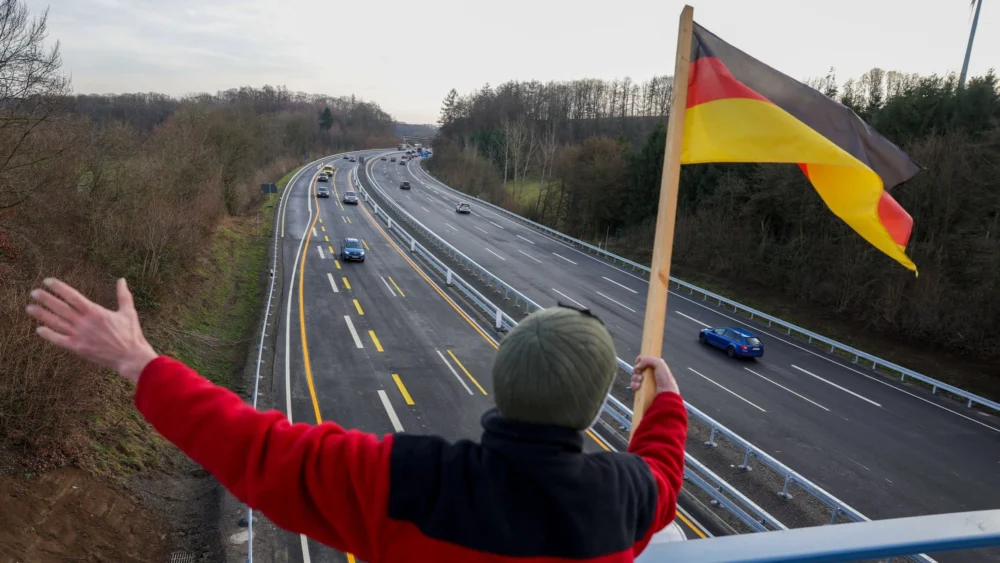
The scale of the required investment is staggering. Estimates from the German Economic Institute (IW) and the Macroeconomic Policy Institute (IMK) suggest that the country faces an investment gap of roughly €600 billion over the next decade. This capital is desperately needed to modernize a crumbling transport network—where delayed trains and weight-restricted bridges have become a symbol of national neglect—and to facilitate the Energiewende, Germany’s ambitious transition to a carbon-neutral economy. Without state-backed investment in hydrogen infrastructure, power grids, and electric vehicle charging networks, private capital remains hesitant to commit, leading to a "wait-and-see" approach that further hampers growth.
Furthermore, the global competitive landscape has been irrevocably altered by the U.S. Inflation Reduction Act (IRA) and China’s heavy subsidization of its green tech sectors. While Washington and Beijing are pouring hundreds of billions of dollars into the industries of the future, Germany’s adherence to fiscal orthodoxy risks a permanent hollowing out of its industrial base. Prominent German firms, including BASF and Volkswagen, have already begun shifting planned investments to North America or Asia, citing lower energy costs and more attractive subsidy regimes. Without a coordinated fiscal response from Berlin—one that moves beyond modest tax tweaks and into the realm of large-scale industrial strategy—Europe risks becoming a museum of 20th-century technology rather than a laboratory for 21st-century innovation.
The political friction within Germany regarding this spending spree cannot be overstated. Finance Minister Christian Lindner and his Free Democratic Party (FDP) remain the primary defenders of the debt brake, arguing that fiscal credibility is the bedrock of German power and that "throwing money at problems" without structural reform will only lead to inflation and higher borrowing costs. On the other side, Economy Minister Robert Habeck of the Greens and Chancellor Olaf Scholz of the SPD have increasingly signaled a desire for more flexibility. They argue that the current rules do not account for the "extraordinary emergency" of the climate crisis or the necessity of maintaining national security in an era of renewed great-power competition.
From a macroeconomic perspective, the argument for German borrowing has rarely been stronger. Despite the recent rise in interest rates, Germany’s debt-to-GDP ratio remains the lowest among the G7 nations, providing ample fiscal space for strategic investment. Proponents of a "spending spree" argue that if the debt is used to finance productive assets—such as education, digital infrastructure, and green energy—the long-term growth generated will far outweigh the costs of servicing the debt. In this view, the debt brake is not a shield against future crises but a barrier to the very investments that would prevent them.
The impact of a more expansionary German fiscal policy would be felt immediately across the European continent. A surge in German public investment would likely boost confidence, encourage private sector capital expenditure, and provide the ECB with more room to maneuver. For southern European nations like Spain and Greece, which have undergone painful structural reforms and are now showing signs of vitality, a booming German economy would provide a crucial export market and a source of tourism revenue. Conversely, if Berlin remains paralyzed by its own fiscal rules, the Eurozone faces a period of "secular stagnation," characterized by low growth, low inflation, and increasing social and political fragmentation.
The debate also touches upon the future of European defense. In the wake of the geopolitical shift following the war in Ukraine, Germany announced a €100 billion Sondervermögen (special fund) to modernize its military. However, even this significant sum is seen by many defense analysts as a one-off measure that does not address the long-term need for increased annual defense spending to meet NATO targets. To sustain this level of commitment while simultaneously funding the green transition and maintaining social welfare programs, the German state will inevitably have to reconsider its relationship with debt.
Ultimately, the question of German spending is a question of European leadership. For the European Union to remain a relevant global actor, its largest economy must be willing to invest in its own future. The era of the "Black Zero"—the obsession with a balanced budget—was perhaps suited to a world of cheap Russian energy, stable Chinese demand, and American-guaranteed security. That world no longer exists. Economists now warn that if Germany does not embrace a more proactive fiscal stance, it risks not only its own prosperity but the stability of the entire European project. The path to a rejuvenated Europe runs through Berlin, and it is paved with the public investments that the German government has, until now, been too hesitant to make. As the global economy continues to reorganize itself around new technologies and geopolitical realities, the cost of inaction for Germany—and for Europe—has never been higher.