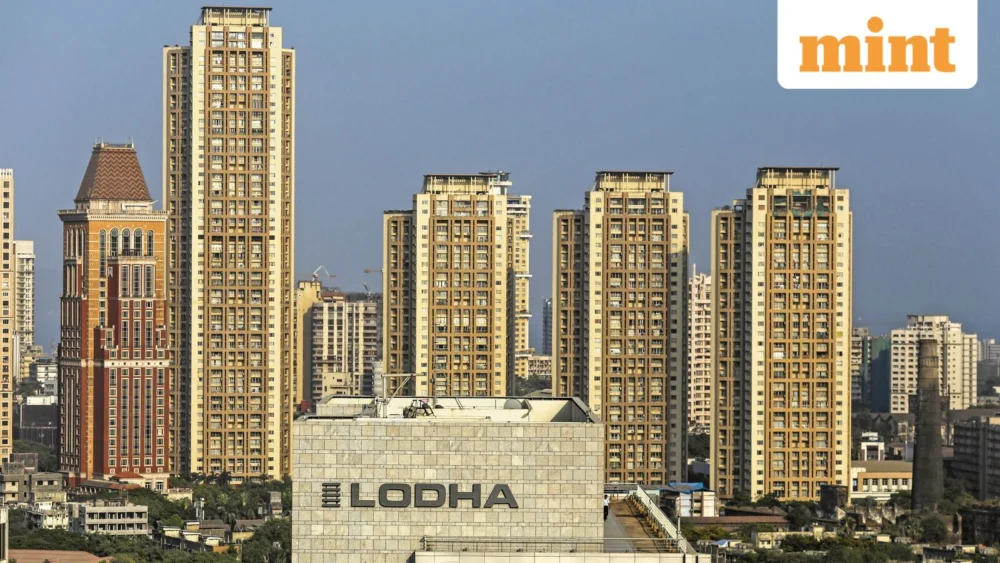
Mumbai, India – Macrotech Developers Ltd., operating under the esteemed Lodha brand, has reported a landmark third quarter for the fiscal year 2025-26, achieving its highest-ever quarterly pre-sales, a critical indicator of market demand and future revenue. The Mumbai-headquartered real estate conglomerate announced sales bookings of ₹5,620 crore for the December quarter, marking a significant 25% surge from the corresponding period a year prior. This robust performance, propelled by a combination of sustained sales from existing inventory and successful new project launches, underscores the enduring strength of India’s organized real estate sector, even as broader market dynamics suggest a nuanced landscape. Beyond pre-sales, the company’s operational revenue climbed by 14.4% year-on-year to ₹4,672.5 crore, while net profit saw a modest increase of 1.36% to ₹957.7 crore, reflecting the complex interplay of project execution timelines and cost structures inherent in large-scale real estate development.
The distinction between pre-sales and recognized revenue is fundamental in understanding the financial health of real estate developers. Pre-sales, or sales bookings, represent the value of properties committed by buyers, often against an initial down payment, and serve as a forward-looking metric of market appetite and a strong pipeline for future earnings. Revenue, conversely, is recognized progressively as construction milestones are achieved, reflecting actual work completed and value delivered. Lodha’s remarkable 25% growth in pre-sales to cross the ₹5,000 crore quarterly threshold is a testament to strong consumer confidence and effective sales strategies, indicating a healthy demand for its residential offerings. This momentum has propelled its cumulative pre-sales for the first nine months of FY26 to ₹14,640 crore, positioning the company firmly on track to achieve its ambitious full-year pre-sales guidance of ₹21,000 crore. Sushil Kumar Modi, Executive Director-Finance at Lodha Group, highlighted the crossing of the ₹5,000 crore mark as a significant milestone, reinforcing the company’s confidence in its annual targets. The relatively slower growth in net profit compared to revenue, however, suggests an environment of increasing operational costs, project-specific margins, or a strategic focus on expanding market share through competitive pricing, a common scenario in a high-growth, capital-intensive industry.
A pivotal element of Lodha’s strategy for sustaining this growth trajectory lies in its aggressive launch pipeline. The developer has earmarked projects worth an estimated ₹13,000 crore for launch in the upcoming fourth quarter, targeting key urban centers. This includes two significant project introductions in the Mumbai Metropolitan Region (MMR), a stronghold for the company, and one in Pune, a rapidly expanding market known for its IT and manufacturing hubs. Such a strategic pipeline ensures a continuous flow of new inventory to meet consumer demand and maintain competitive edge. On the business development front, the December quarter saw the addition of five new projects, boasting a substantial Gross Development Value (GDV) of ₹33,800 crore. These additions spanned across the economically vibrant MMR, the National Capital Region (NCR), and Bengaluru, signaling a strategic geographic diversification and a deep penetration into India’s most lucrative real estate markets. The cumulative GDV from projects added in the nine-month period reached an impressive ₹58,000 crore, laying a robust foundation for future revenue streams. Furthermore, the initiation of a pilot project in NCR through a joint development model reflects a pragmatic approach to market entry and expansion, allowing for shared risks and optimized capital deployment, especially in competitive landscapes.
The expansion, while strategic, has had a direct impact on the company’s balance sheet. Lodha’s net debt increased to ₹6,170 crore during the quarter, up from ₹5,370 crore as of September 30, 2025, primarily attributed to multiple land transactions necessary for these new project acquisitions. However, this strategic investment in land parcels, which underpins future development, is part of a deliberate growth strategy. Abhishek Lodha, Managing Director and Chief Executive of the company, articulated a forward-looking approach, stating that with the front-loading of business development activities, the company anticipates moderating land investment in the subsequent quarters to prioritize balance sheet strengthening. This strategic pivot is expected to result in a significant debt reduction of approximately ₹5,000 crore in the March-ended quarter, as confirmed by Sushil Kumar Modi. This disciplined financial management, balancing aggressive expansion with debt optimization, is crucial for long-term stability and investor confidence in a sector often characterized by high leverage.

Lodha’s impressive performance is not an isolated phenomenon but rather emblematic of a broader trend within India’s real estate sector, particularly among the leading organized developers. While the overall real estate market might exhibit signs of stabilization in certain segments, the top-tier players continue to demonstrate remarkable resilience and growth. This consolidation of market share among established developers like DLF Ltd, Godrej Properties Ltd (GPL), Lodha Developers, and Prestige Estates Projects Ltd is a defining characteristic of the current market cycle. These four real estate giants are collectively targeting an unprecedented ₹1 trillion in residential sales for FY26, a testament to the surging demand for quality housing from trusted brands. This collective ambition highlights the shift towards organized, transparent, and financially robust developers, who benefit from brand trust, superior execution capabilities, and access to capital in an increasingly regulated environment.
In the competitive landscape of Q3 pre-sales, Lodha secured the second position, trailing only Godrej Properties Ltd, which reported the highest sales bookings of ₹8,421 crore. Prestige Estates Projects Ltd followed with ₹4,183.6 crore in sales, while DLF Ltd recorded approximately ₹419 crore during the quarter. The varied performance metrics among these leaders often reflect their geographic focus, project mix (luxury, mid-market, plotted developments), and launch schedules. However, a common thread among all four is their unwavering confidence in meeting their ambitious sales guidance for the current fiscal year, signaling a robust outlook for the segment. This resilience of branded developers contrasts with the struggles of smaller, unorganized players, suggesting a widening gap in market dominance and reinforcing the trend of consolidation.
The robust performance of India’s leading real estate developers is underpinned by several macroeconomic factors. India’s strong economic growth, rapid urbanization, rising disposable incomes, and a young demographic dividend continue to fuel housing demand. Government initiatives, such as the Real Estate (Regulation and Development) Act (RERA), have instilled greater transparency and consumer confidence, benefiting organized players. Additionally, significant infrastructure development, including new airports, expressways, and metro networks, has opened up new growth corridors and enhanced connectivity, making peripheral areas attractive for residential development. While rising interest rates and input costs present challenges, the underlying demand, particularly in the mid-income and luxury segments, remains strong. The Indian real estate sector’s contribution to the nation’s GDP is substantial, and its growth has a cascading effect on numerous allied industries, including cement, steel, construction materials, labor, and financial services, making its health critical for overall economic vitality.
Looking ahead, the outlook for India’s real estate sector, particularly for well-capitalized and strategically agile developers like Lodha, remains positive. The focus on strengthening balance sheets, combined with a robust pipeline of new projects and a diversified geographical presence, positions these companies for sustained growth. The continued migration to urban centers, coupled with aspirations for better living standards, ensures a steady demand for residential properties. Furthermore, a growing interest from Non-Resident Indians (NRIs) seeking stable investment avenues back home adds another layer of demand. As the sector matures, the emphasis on sustainable development, smart city integration, and adoption of construction technology will become increasingly paramount. Lodha Developers’ record-breaking quarter is not merely a financial highlight for a single entity; it is a powerful indicator of the structural shifts and enduring strength within India’s dynamic real estate market, signaling a promising trajectory for the country’s economic landscape.