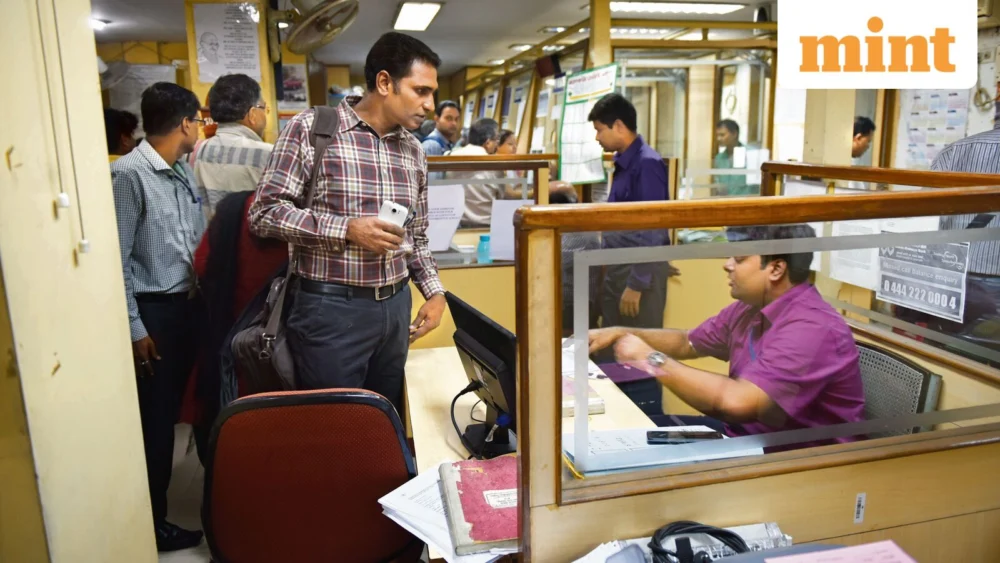
As the festive season sweeps across India, bringing with it a mosaic of cultural celebrations, the rhythm of the nation’s financial services often adjusts to accommodate traditional observances. The period around Christmas and the year-end is a prime example, where banking operations, particularly those involving physical branches, experience scheduled pauses. On December 26th, for instance, a significant number of banks, including major public and private sector players such as State Bank of India (SBI), HDFC Bank, ICICI Bank, Axis Bank, Punjab National Bank, and Central Bank, observed closures in various regions. This practice, deeply embedded in India’s diverse cultural fabric, is meticulously managed by the Reserve Bank of India (RBI) through its annual bank holiday calendar, a crucial instrument for informing both financial institutions and the public about non-working days.
The RBI’s holiday framework is a multi-tiered system designed to acknowledge both national significance and regional diversity. Beyond the three universally observed national holidays—Republic Day, Independence Day, and Mahatma Gandhi’s Birthday—the calendar incorporates numerous state-specific festivals. This nuanced approach reflects India’s vast geographical and cultural expanse, where a festival celebrated with fervour in one region might be a regular working day in another. For instance, while much of the country returns to regular banking post-Christmas Day, states like Mizoram, Meghalaya, and Nagaland often extend their festive observances, leading to continued bank closures on December 26th and sometimes beyond. These northeastern states, with their predominantly Christian populations, view Christmas as one of their most significant festivals, warranting an extended period of celebration that impacts commercial activities, including banking. In Nagaland, the festive spirit often translates into an extended banking holiday period, sometimes encompassing up to six consecutive days, including weekends and specific employee holidays, commencing even before Christmas Day itself.
This intricate holiday schedule, while respecting cultural traditions and providing essential respite for bank employees, presents a unique set of challenges and opportunities for India’s burgeoning economy. Historically, bank holidays could bring certain aspects of commerce to a standstill, particularly for businesses heavily reliant on cash transactions or physical cheque clearing. Small and medium-sized enterprises (SMEs), which often operate with tighter cash flows and depend on daily banking services for payroll, vendor payments, and customer receipts, were particularly vulnerable to disruptions. Delays in cheque processing could cascade through supply chains, affecting payment cycles and liquidity. For individual consumers, the inability to visit a branch for cash withdrawals, statement inquiries, or fund transfers could pose significant inconvenience, especially in an era predating ubiquitous digital access.
However, the landscape of Indian banking has undergone a transformative shift, largely driven by an aggressive push towards digitalization and financial inclusion. The advent and widespread adoption of digital payment systems have significantly mitigated the economic impact of physical bank closures. The Unified Payments Interface (UPI), for example, has revolutionized retail payments, enabling instant, peer-to-peer and person-to-merchant transactions 24 hours a day, 7 days a week, irrespective of bank holidays. According to recent data, UPI transactions regularly cross several billion transactions monthly, processing trillions of rupees, underscoring its pivotal role in maintaining economic continuity. Similarly, other electronic funds transfer mechanisms like Immediate Payment Service (IMPS), National Electronic Funds Transfer (NEFT), and Real-Time Gross Settlement (RTGS) ensure that interbank transfers and large-value transactions can proceed even when branches are shut. While NEFT operates on a batch processing basis during extended hours, IMPS and RTGS provide near-instantaneous transfers, functioning round the clock, including on holidays.

Beyond digital transfers, the extensive network of Automated Teller Machines (ATMs) remains a critical lifeline for cash withdrawals. With over 200,000 ATMs spread across urban and rural areas, consumers typically have reliable access to cash, mitigating the immediate concern of not being able to access funds during bank holidays. These machines also offer services like balance inquiries and mini-statements, further reducing the reliance on physical branches. The proliferation of digital banking platforms, mobile apps, and internet banking portals means that most routine banking operations, from bill payments to account management, can be performed remotely. This technological infrastructure ensures that while the brick-and-mortar presence of banks might pause for cultural observances, the underlying financial plumbing of the economy continues to function seamlessly.
From a global perspective, India’s approach to bank holidays, blending national standards with significant regional autonomy, is distinct. Many Western economies, for instance, observe statutory public holidays for Christmas Day and Boxing Day (December 26th), with banking operations typically resuming on the next business day. However, the sheer diversity of India’s cultural calendar, with its multitude of festivals, necessitates a more granular approach to holiday scheduling. This can result in a higher cumulative number of bank holidays annually compared to some other major economies, yet the impact is increasingly contained due to digital proliferation. Economists often highlight that while a high number of public holidays might theoretically lead to a marginal dip in GDP productivity due to reduced working days, the Indian context suggests this is increasingly offset by the robustness of its digital financial infrastructure and the nature of its service-oriented economy. The leisure and hospitality sectors, for example, often see increased activity during festive holidays, partially compensating for slowdowns in other areas.
The evolving role of bank holidays also touches upon broader economic policy and social welfare. Providing employees with time off for significant cultural and personal observances is crucial for workforce morale and well-being. The banking sector, a critical service industry, operates under immense pressure, and scheduled breaks are essential. The RBI’s calendar serves as a delicate balance between ensuring employee welfare and maintaining essential financial services. Furthermore, the explicit inclusion of Saturdays and Sundays in the holiday schedule, with banks remaining closed on the second and fourth Saturdays, alongside all Sundays, provides a predictable rhythm for both staff and customers. This standardization helps in managing expectations and planning financial activities.
Looking ahead, the trajectory of banking in India points towards an even greater reliance on digital platforms, further diminishing the functional impact of physical bank closures. Fintech innovations, Open Banking initiatives, and the continuous evolution of payment systems will likely ensure that financial services are available virtually 24/7, 365 days a year, irrespective of any holiday calendar. This shift not only enhances convenience for consumers and businesses but also fortifies the resilience of the financial system against disruptions, whether they are planned holidays or unforeseen events. The dialogue around bank holidays is thus transforming from one of potential disruption to one of seamless continuity, where cultural traditions are honored without impeding economic progress.
In essence, India’s system of bank holidays, particularly during festive periods like Christmas and the year-end, represents a unique confluence of tradition, economic strategy, and technological innovation. While the closure of physical branches in specific regions on days like December 26th upholds cherished cultural practices and provides essential rest for the banking workforce, the nation’s advanced digital payment infrastructure ensures that the underlying gears of commerce and personal finance continue to turn. This adaptive model allows India to celebrate its rich diversity while simultaneously propelling its ambition towards becoming a leading digital economy, demonstrating a harmonious coexistence between age-old customs and modern financial imperatives.