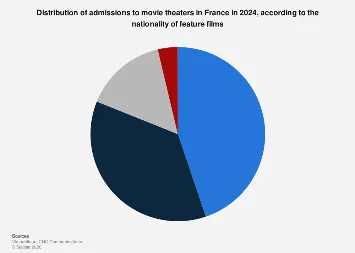
The French film industry, a global powerhouse renowned for its artistic innovation and cultural influence, is experiencing a dynamic evolution in audience preferences. As the 2024 box office figures begin to crystallize, a detailed examination of cinema admissions by film nationality offers critical insights into the evolving tastes of French moviegoers and the broader economic implications for the sector. While official, granular data for the entirety of 2024 will take time to compile and verify, preliminary trends and historical patterns provide a robust framework for understanding the current state and future trajectory of film consumption in France.
France has long championed its domestic film production, a strategy supported by a robust ecosystem of state subsidies, tax incentives, and a deeply ingrained cultural appreciation for its cinematic heritage. This has consistently translated into a significant share of the market for French-language films. Historically, French productions often command a substantial portion of total admissions, frequently outperforming even major Hollywood blockbusters within their home territory. This domestic dominance is not merely a matter of national pride; it represents a vital economic engine, supporting thousands of jobs across the creative, technical, and distribution sectors, and contributing significantly to the country’s cultural exports. In 2024, it is anticipated that French cinema will continue to hold a formidable position, with local narratives, auteur-driven projects, and popular comedies likely to resonate strongly with audiences.
However, the globalized nature of the film industry means that international productions, particularly those from the United States, remain a crucial component of the French box office. Hollywood’s output, characterized by high production values, star power, and widely recognized franchises, consistently attracts large audiences worldwide. France is no exception. American films often occupy a significant share of admissions, especially during peak holiday seasons and when major tentpole releases hit the screens. The appeal of Hollywood lies in its ability to offer escapism, spectacular visual effects, and universally understood storytelling, which continue to draw significant crowds to French cinemas. The interplay between domestic and international offerings creates a competitive yet complementary market, where a diverse slate of films caters to a wide spectrum of audience interests.
Beyond these two dominant forces, the landscape of French cinema admissions also reflects a growing appetite for films from other European nations and, to a lesser extent, from Asian and other international markets. The European Union, with its commitment to cultural diversity, often sees co-productions and films from neighboring countries like Germany, Spain, Italy, and the United Kingdom finding receptive audiences in France. These films often bring unique perspectives and storytelling traditions that can appeal to audiences seeking something beyond the mainstream Hollywood or French fare. Furthermore, the rise of streaming platforms and increased global connectivity has undeniably broadened the exposure of French audiences to a wider array of cinematic content, potentially influencing their choices at the traditional cinema.
The economic impact of these admission patterns is profound. The success of French films directly benefits the national economy through job creation, investment in production infrastructure, and the stimulation of ancillary industries such as tourism and merchandise. For every euro spent on a cinema ticket for a French film, a substantial portion is reinvested within the country. Conversely, admissions for foreign films contribute to their respective economies, but also represent a repatriation of capital that can impact France’s balance of payments in the cultural sector. The industry is meticulously monitored by bodies like the Centre national du cinéma et de l’image animée (CNC), which provides crucial data and support mechanisms to ensure the vitality of French cinema while acknowledging the realities of a global market.
Market data from previous years offers valuable context. For instance, in pre-pandemic years, French films often accounted for over 30-40% of annual admissions, with American films typically holding a similar or slightly larger share. European films collectively might represent another 15-20%, with the remainder made up by films from other international origins. While the COVID-19 pandemic significantly disrupted these patterns, leading to unprecedented drops in admissions and shifts in viewing habits, the recovery in 2022 and 2023 has shown a resilient desire among audiences to return to cinemas. The specific figures for 2024 will undoubtedly reflect the ongoing recovery and adaptation to post-pandemic consumer behavior, which may include a continued preference for event cinema and a discerning approach to film choices.
Industry analysts suggest that the types of films that succeed are also evolving. While broad comedies and historical dramas have traditionally been French box office champions, there is also a growing appreciation for genre films, including thrillers, science fiction, and animation, produced domestically. Similarly, the international market is increasingly diverse, with South Korean cinema, for example, gaining traction beyond its traditional fan base due to critical acclaim and viral popularity. The accessibility provided by digital platforms has undoubtedly played a role in cultivating this broader taste, even as the theatrical experience remains the primary driver of major box office success.
The distribution of admissions is not uniform across the country. Major metropolitan areas, with their larger populations and greater number of screens, tend to exhibit a wider diversity of admissions, reflecting more cosmopolitan tastes. However, smaller towns and rural areas often rely more heavily on a mix of popular French films and major international releases. This geographical disparity in audience preference underscores the importance of tailored distribution strategies and the ongoing challenge of ensuring access to diverse cinematic content across all regions.
Looking ahead, the sustainability of the French film industry hinges on its ability to continue producing compelling content that resonates both domestically and internationally. The ongoing digital transformation, including the rise of AI in filmmaking and evolving audience engagement models, presents both opportunities and challenges. Understanding the granular data of film nationality admissions in 2024 is not just an academic exercise; it provides a crucial barometer for the health of France’s cultural economy, informing policy decisions, investment strategies, and the very narratives that will shape the nation’s cinematic future. The ability to adapt to changing viewer habits, embrace technological advancements, and maintain a strong cultural identity will be paramount in navigating the competitive global film market. The ongoing discourse around these admission patterns will undoubtedly continue to shape the strategic direction of one of the world’s most vibrant film industries.