India’s intricate banking calendar for January 2026, featuring a total of sixteen closures across public and private sector institutions, including the venerable State Bank of India, underscores the nation’s unique balancing act between deep-rooted cultural traditions and the imperatives of a dynamic, modern economy. Far from a uniform nationwide shutdown, these holidays, which incorporate weekly breaks on all Sundays and the second and fourth Saturdays, are meticulously curated by the Reserve Bank of India (RBI) and often reflect a mosaic of regional festivals and observances, presenting both operational challenges and opportunities for digital innovation. The month’s calendar, a microcosm of India’s diversity, highlights specific closures, such as those on January 23rd, 2026, in states like Odisha, Tripura, and West Bengal, where financial institutions will pause operations in observance of Saraswati Puja (Shree Panchami), Basanta Panchami, Vir Surendrasai Jayanti, and the Birthday of Netaji Subhas Chandra Bose. These localized holidays, often extending into a "long weekend" due to their proximity to the second Saturday (January 24th) and Sunday (January 25th), create distinct pockets of operational downtime that merit close examination for their economic and logistical implications.
The framework governing bank holidays in India is multifaceted, primarily guided by the Negotiable Instruments Act, 1881, which empowers the central and state governments to declare specific days as holidays. The RBI, as the central banking authority, then consolidates these declarations into its annual holiday calendar, which differentiates between three broad categories: holidays under the Negotiable Instruments Act, holidays under the Negotiable Instruments Act and Real-Time Gross Settlement (RTGS) Holiday, and Bank’s Closing of Accounts Holiday. This structured approach ensures that while core financial market operations are generally protected on nationally observed days, regional holidays allow states to honor their unique cultural, historical, and religious milestones. For instance, the celebration of Saraswati Puja, or Basanta Panchami, is a vibrant Hindu festival dedicated to the goddess of knowledge, music, art, and learning, predominantly observed in Eastern India. Netaji Subhas Chandra Bose’s birthday commemorates a pivotal figure in India’s independence movement, holding particular significance in West Bengal. Similarly, Vir Surendrasai Jayanti honors a legendary freedom fighter from Odisha. These observances are not mere days off; they are integral to the social fabric, reflecting the profound cultural diversity that defines India.
However, the localized nature of these closures introduces a layer of complexity for businesses and consumers operating across state lines. While the country’s major financial markets, like the National Stock Exchange (NSE) and Bombay Stock Exchange (BSE), often follow a separate, more streamlined holiday schedule, the closure of physical bank branches and the cessation of traditional banking services can impact real-economy transactions. Small and Medium-sized Enterprises (SMEs), which often rely on timely access to banking services for cash deposits, withdrawals, loan disbursements, and cheque clearances, can experience disruptions. An exporter in West Bengal, for example, might face a delay in processing payment on a Friday if their local bank is closed, potentially impacting cash flow and supply chain timelines. Similarly, individuals needing to conduct over-the-counter transactions for remittances, bill payments, or other services find their access curtailed.
Economically, the impact of bank holidays is a subject of ongoing debate. While a single holiday might have a negligible effect on the national Gross Domestic Product (GDP), the cumulative effect of regional closures, especially when extended into long weekends, can subtly influence local economic activity. A study by the National Bureau of Economic Research (NBER) on the economic impact of holidays in various countries suggested that while some sectors might see a dip in productivity, others, like retail and tourism, could experience a boost. In India, the advent of a long weekend often triggers increased domestic travel and consumer spending, particularly in the hospitality and leisure sectors, potentially offsetting some of the losses from traditional banking and business closures. Nevertheless, the disruption to formal financial transactions can lead to a temporary slowdown in certain business-to-business (B2B) and business-to-consumer (B2C) operations, particularly for businesses less integrated with digital payment ecosystems.

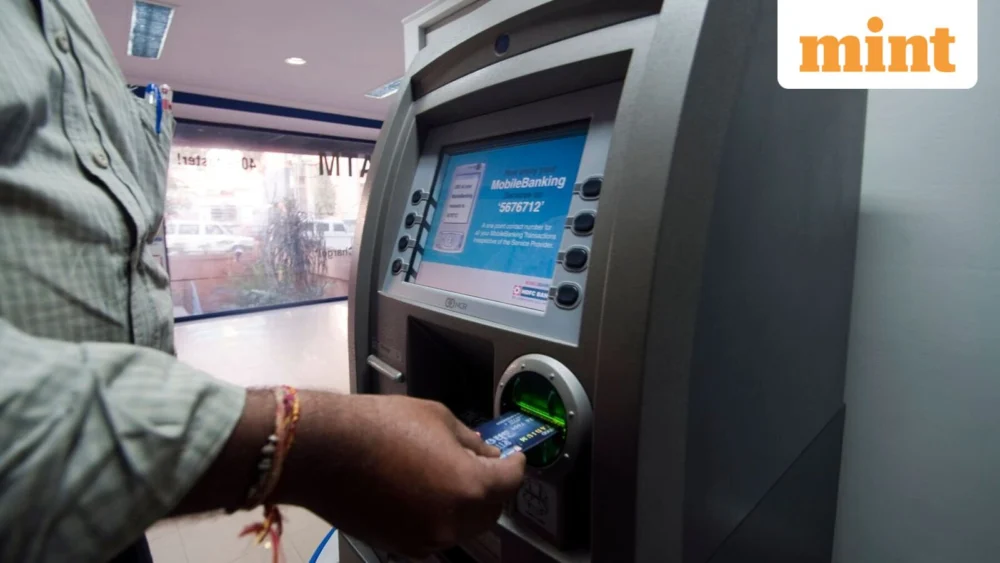
Crucially, the rapid advancements in India’s digital payment infrastructure have significantly mitigated the operational challenges posed by bank holidays. India has emerged as a global leader in digital payments, with platforms like the Unified Payments Interface (UPI) revolutionizing financial transactions. UPI, operating 24/7, 365 days a year, enables instant money transfers between bank accounts, regardless of bank holidays. Similarly, other digital channels such as Internet Banking, Mobile Banking, and ATMs remain operational. Services like Immediate Payment Service (IMPS) also offer real-time fund transfers, while National Electronic Funds Transfer (NEFT) and Real-Time Gross Settlement (RTGS) systems have largely moved to a 24×7 operational model, dramatically reducing the impact of physical branch closures on interbank settlements. This robust digital ecosystem ensures that the majority of financial transactions can proceed unhindered, allowing individuals and businesses to manage their finances even when brick-and-mortar branches are shuttered.
"While bank holidays are vital for cultural continuity and employee well-being, the modern economy demands seamless financial flows," notes Dr. Anjali Sharma, a Mumbai-based economic analyst. "India’s robust digital payment infrastructure has largely insulated the economy from significant disruption due to regional closures. The challenge now lies in ensuring digital literacy and access for all segments of the population, particularly in rural and semi-urban areas, to fully leverage these capabilities." This perspective underscores the ongoing effort to bridge the digital divide, ensuring that the benefits of financial technology are universally accessible.
Comparing India’s approach to bank holidays with other global economies reveals a spectrum of practices. Many Western nations, for instance, tend to have fewer public holidays but might offer more flexible work arrangements or longer annual leave. Countries with a more homogeneous culture might have a simpler, more uniform holiday calendar. In contrast, multi-cultural nations often face similar dilemmas as India, striving to honor diverse traditions without unduly impeding economic activity. For example, some Islamic countries observe Friday and Saturday as their weekend, aligning with religious observances, which influences their banking schedules differently. India’s model, with its blend of national and region-specific holidays, is a direct reflection of its federal structure and profound cultural pluralism.
Looking ahead, the evolution of India’s banking sector will likely continue to balance these competing demands. As technology advances further, with the potential integration of artificial intelligence and blockchain in financial processes, the reliance on physical branches for routine transactions will diminish even further. This shift could potentially lead to a re-evaluation of the holiday calendar, perhaps focusing more on national observances while ensuring that essential financial services remain available digitally around the clock. However, the deep cultural roots of many regional holidays mean they are unlikely to be phased out entirely. Instead, the narrative will continue to be one of adaptation: leveraging technological resilience to preserve cultural heritage while ensuring economic dynamism. The January 2026 bank holiday calendar, therefore, is not merely a list of dates; it is a snapshot of India’s complex identity, its economic ambitions, and its ongoing journey to harmonize tradition with modernity.