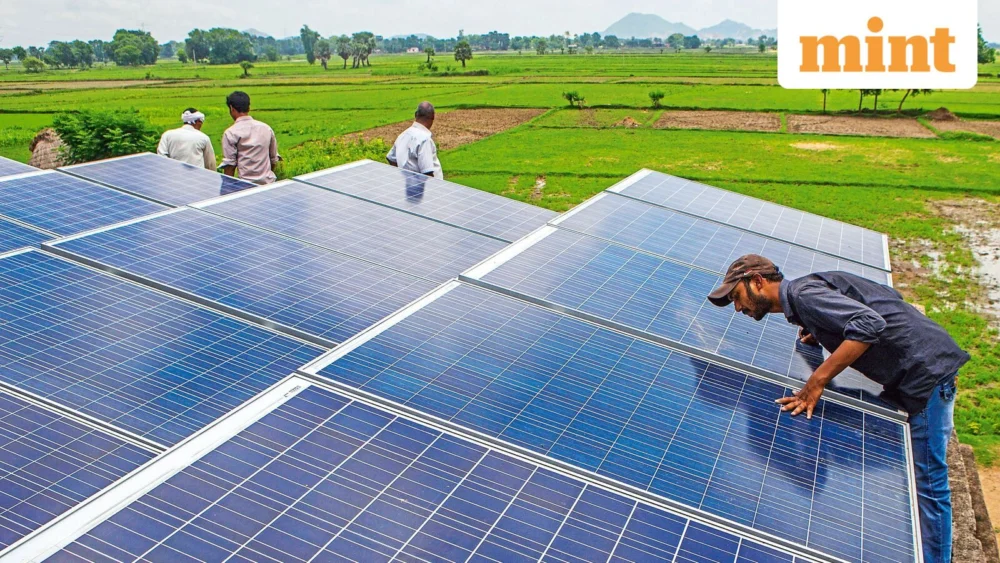
India’s ambitious trajectory towards a green energy future is currently navigating a complex confluence of challenges, ranging from an existing overhang of unsold renewable power capacity to a sudden and significant surge in solar module prices. The nation, committed to achieving 300 gigawatts (GW) of solar energy as part of its broader target of 500 GW of non-fossil fuel capacity by 2030, finds its path complicated by both domestic market dynamics and global supply chain vulnerabilities. This dual pressure threatens to elevate project costs, potentially pushing up power tariffs and, in turn, impacting the economic viability of new solar installations, a critical component of India’s energy transition strategy.
A significant portion of India’s burgeoning green power portfolio, estimated at approximately 43 GW and representing an investment of around ₹2.1 trillion (approximately $25 billion USD), remains without long-term power purchase agreements (PPAs). This creates a precarious situation for developers, as these assets, once commissioned, lack assured buyers for their output. State distribution companies (discoms), often burdened by financial constraints and preferring the perceived stability of coal-fired power, have shown reluctance to sign new long-term contracts for renewable energy. Compounding this, during peak solar generation hours, an oversupply of renewable electricity sometimes forces discoms to sell this power on electricity exchanges at prices below their initial procurement cost, exacerbating their financial woes and disincentivizing further long-term commitments. This structural imbalance not only strands significant capital but also undermines investor confidence in the sector’s long-term revenue predictability, which is crucial for attracting the vast sums required for India’s aggressive renewable energy buildout.

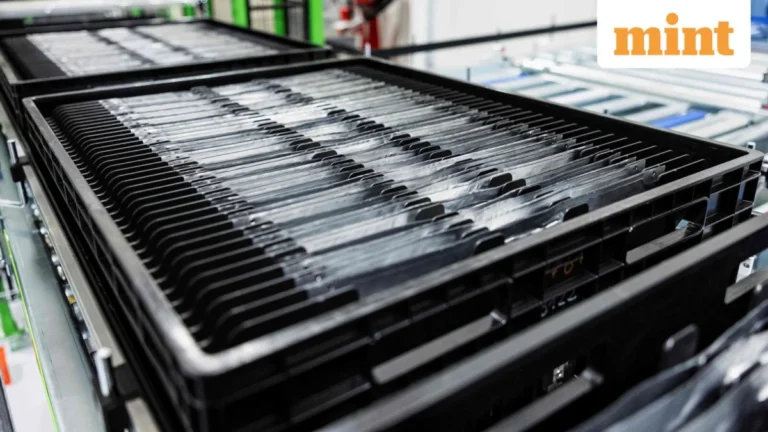
Adding another layer of complexity to this already challenging landscape is the recent and dramatic escalation in solar module prices. Since late December, the cost of photovoltaic (PV) cells – the fundamental building blocks of solar panels – has reportedly jumped by over 50%, from 3.5 cents to 5.5 cents per watt-peak in a matter of weeks. This translates to an overall module price increase of roughly a third, with domestic module manufacturers in India reportedly raising prices by as much as ₹20 lakh per megawatt (MW) from a base of ₹2-3 crore per MW. This sharp upward revision is driven by a confluence of global factors, creating a significant headwind for projects currently under construction and those in the planning stages.
Key among these drivers is the unprecedented rally in global commodity markets, particularly for silver and aluminium. Silver, an indispensable component in the conductive paste of PV cells, has seen its prices surge due to increased industrial demand, investment speculation, and supply chain disruptions. Similarly, aluminium, vital for module frames and mounting structures, has experienced price inflation. Beyond raw material costs, the depreciation of the Indian Rupee against the US Dollar further inflates the cost of imported components, as payments are typically dollar-denominated. However, the most profound impact stems from policy shifts and supply dynamics originating from China, the undisputed global leader in solar manufacturing. China has recently tightened quotas on wafer production, a crucial precursor to PV cells, signaling a strategic move to manage its domestic supply and potentially consolidate its market power. Simultaneously, the prospect of a rollback of a 9% value-added tax (VAT) refund for solar exports from China has triggered a global scramble among buyers to secure supplies before the deadline, thereby creating an artificial demand spike and driving up prices across the board.
This sudden price volatility starkly exposes India’s structural vulnerability in the solar supply chain. While the country boasts a robust and growing solar module manufacturing capacity, exceeding 100 GW – with major players like Adani Solar, Waaree Energies, ReNew, and Saatvik Solar – its upstream capabilities remain significantly underdeveloped. India’s cell production capacity stands at a mere 18 GW, and critically, almost all subcomponents, including polysilicon, ingots, and wafers, are imported, primarily from China. This heavy reliance on foreign sources, particularly a single dominant player like China (home to top suppliers such as Longi, Jinko Solar, and Trina Solar), leaves Indian developers and manufacturers susceptible to international market fluctuations and geopolitical decisions. Prashant Mathur, CEO of Saatvik Green Energy Ltd., aptly notes that this situation "highlights the structural vulnerability of India’s solar supply chain," warning that "as equipment costs rise, upcoming projects will face higher capital costs, and tariffs for new power purchase agreements (PPAs) are likely to harden after a prolonged period of deflation."

In response to this strategic dependence, the Indian government has initiated policies aimed at fostering domestic manufacturing, most notably the Approved List of Models and Manufacturers (ALMM) mandate. This policy requires solar projects under government-supported schemes to source components from an approved list of domestic manufacturers. While this mandate is already in effect for modules, it is slated to extend to cells by June of this year and potentially to wafers by 2028. The ALMM, coupled with Production Linked Incentive (PLI) schemes for solar manufacturing, aims to bolster India’s self-reliance (‘Atmanirbhar Bharat’) across the entire solar value chain. However, policy uncertainty, including past exemptions due to insufficient local capacity, has historically hampered its consistent implementation. The current price surge underscores the urgent need for a more comprehensive and stable framework to support domestic production from polysilicon to finished modules, mirroring efforts by other major economies like the United States and the European Union to onshore critical renewable energy manufacturing.
The implications for various stakeholders are profound. For Independent Power Producers (IPPs) who have already secured PPAs at fixed tariffs, the escalating module costs present a significant challenge. Mohit Bhargava, Country Director at the India Energy & Climate Center, Goldman School of Public Policy (GSPP), UC Berkeley, and a former CEO of NTPC Green Energy Ltd., points out that "there is no such provision in the power purchase agreements to revise tariffs or allow compensation if prices of components increase due to external factors." This rigidity means developers must absorb the increased costs, directly impacting their Internal Rate of Return (IRR) and potentially delaying project execution or even leading to project cancellations for those on tighter margins. While domestic module manufacturers might initially benefit from higher prices, those heavily reliant on imported cells and silver will also see their IRRs squeezed as input costs rise. Ashish Agarwal, head of solar and storage at BluPine Energy, suggests that current price movements might be a "familiar, short-term pattern in global supply chains" related to seasonal production dips in China, with expectations for prices to normalize. However, he cautions that "if elevated prices persist, this would directly impact project costs and returns for developers, while module suppliers remain largely insulated as costs are passed through."
Ultimately, prolonged price pressure could decelerate India’s ambitious renewable energy targets, making solar power less competitive against conventional sources if tariffs are forced upwards. The government faces a delicate balancing act: promoting domestic industry and reducing import dependence without unduly increasing project costs that could undermine the economic attractiveness of solar energy. Addressing the dual challenges of unsold capacity and rising input costs requires a multi-pronged approach. This includes not only robust policy support for domestic manufacturing across the entire solar value chain but also innovative PPA structures that incorporate mechanisms for adjusting to market volatilities. Furthermore, enhancing grid infrastructure and deploying advanced energy storage solutions are crucial to effectively integrate intermittent renewable power and address the issue of oversupply, thereby making long-term PPAs more appealing to discoms. India stands at a critical juncture where strategic policy interventions and diversified supply chain resilience will determine the pace and success of its green energy transition.