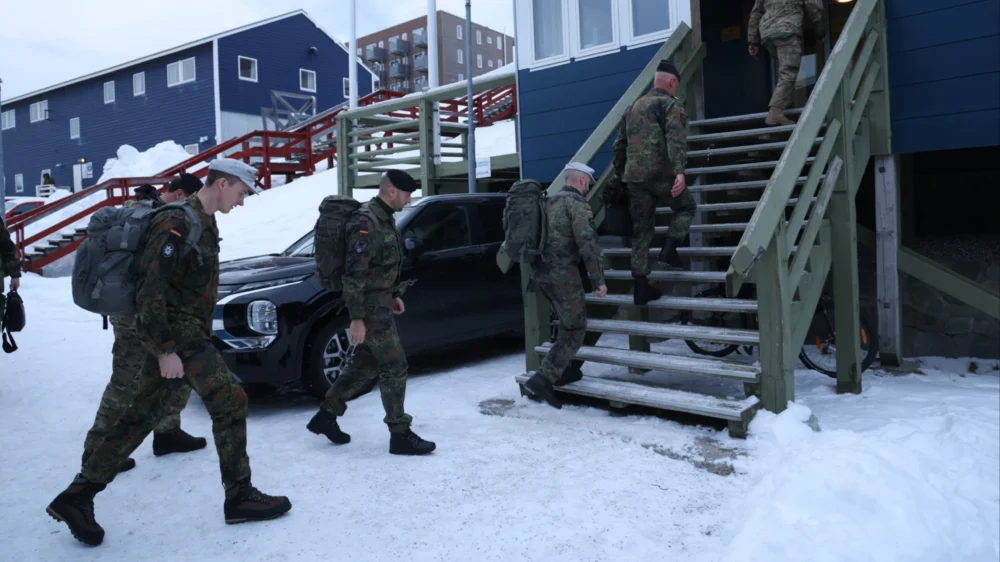
The geopolitical landscape of the High North is undergoing a tectonic shift, transforming a region once characterized by "high north, low tension" into a central theater for 21st-century power competition. At the heart of this volatility lies Greenland, a vast, ice-covered autonomous territory of the Kingdom of Denmark that has moved from the periphery of international relations to the absolute center of strategic calculations in Washington, Beijing, and Brussels. As political winds in the United States suggest a potential return to transactional foreign policy models, the European Union and Denmark face an urgent imperative: they must fortify their commitment to Greenland’s sovereignty and economic development, ensuring the island remains a partner in a rules-based order rather than a commodity in a neo-imperialist real estate negotiation.
The suggestion that Greenland could be purchased—a proposal famously floated by the U.S. administration in 2019—was initially met with derision and labeled "absurd" by Danish Prime Minister Mette Frederiksen. However, beneath the surface of what many dismissed as a diplomatic gaffe lies a persistent and calculated American interest in the Arctic’s untapped potential. For Europe, the challenge is no longer just about rebuffing a singular offer but about addressing the underlying economic and security vacuums that make such offers thinkable. To appease or ignore these territorial ambitions would be to signal that the Arctic is open to the highest bidder, a precedent that would destabilize the fragile equilibrium of the North Atlantic.
From a strategic perspective, Greenland is the ultimate "unsinkable aircraft carrier." Located between the North Atlantic and Arctic Oceans, it sits atop the GIUK gap—the naval chokepoint between Greenland, Iceland, and the United Kingdom that is vital for monitoring Russian submarine activity. The Pituffik Space Base (formerly Thule Air Base), the U.S. military’s northernmost installation, already provides essential early-warning radar coverage for ballistic missile defense. As the polar ice caps recede due to climate change, the island’s significance only intensifies. New shipping lanes, such as the Northwest Passage and the Northern Sea Route, promise to shave weeks off transit times between Asia and Europe. Controlling or influencing the landmasses adjacent to these routes is becoming a primary objective for global powers seeking to dominate future maritime trade.
The economic allure of Greenland is equally profound, centered on a treasure trove of critical minerals essential for the global energy transition. Geological surveys estimate that Greenland may hold some of the world’s largest deposits of rare earth elements (REEs), including neodymium, praseodymium, dysprosium, and terbium. These minerals are the lifeblood of high-tech industries, required for everything from electric vehicle motors and wind turbines to advanced military hardware. Currently, China controls approximately 85% to 90% of the global processing capacity for these elements. For the West, Greenland represents a golden opportunity to break this monopoly and secure a "friend-shored" supply chain.
However, the path to resource extraction is fraught with political and environmental complexities. The Kvanefjeld mining project, which contains significant deposits of both rare earths and uranium, became a lightning rod for domestic politics in Greenland, leading to a change in government in 2021 and a subsequent ban on uranium mining. This highlights the delicate balance the local government in Nuuk must strike: the desire for economic independence from Denmark versus the protection of an environment that sustains their traditional way of life. Europe’s role must be to provide a sustainable investment model that respects Greenlandic autonomy and environmental standards, offering an alternative to the predatory lending or purely extractive models seen elsewhere.
Economically, Greenland remains heavily dependent on the "block grant" from Denmark—an annual subsidy of approximately 3.9 billion Danish kroner (roughly $570 million), which accounts for more than half of the local government’s budget. While the fishing industry generates over 90% of Greenland’s export revenue, it is a volatile sector susceptible to climate shifts and market fluctuations. To achieve true self-determination, Greenland needs to diversify its economy. This is where Europe has historically been slow to act, creating a vacuum that others are eager to fill.
China’s "Polar Silk Road" initiative has already attempted to gain a foothold on the island. In 2018, a Chinese state-owned enterprise bid to build three international airports in Greenland, a move that prompted an emergency intervention from Copenhagen and Washington to provide the necessary financing instead. This episode served as a wake-up call. It demonstrated that if the West does not invest in Greenland’s infrastructure, Beijing will. The European Union has recently signaled a shift in strategy, opening a permanent diplomatic office in Nuuk and including Greenland in its "Global Gateway" investment program. These are positive steps, but they must be scaled up significantly to match the magnitude of the strategic challenge.
The argument for European assertiveness is not merely about excluding the United States or China; it is about upholding the principles of international law and the right to self-determination. The 2009 Act on Greenland Self-Government established a clear legal framework for the island’s eventual independence, should its people choose that path. Any external pressure to treat the island as a piece of real estate undermines this democratic process. If Europe allows Greenland to be viewed through a 19th-century lens of territorial acquisition, it risks delegitimizing the very international norms it seeks to defend in places like Ukraine.
Furthermore, the environmental stakes in Greenland are of global consequence. The Greenland Ice Sheet is the second-largest body of ice in the world; its total melting would raise global sea levels by more than seven meters. The region is warming nearly four times faster than the global average. This environmental crisis is the engine driving the new geopolitical interest, as melting ice reveals the minerals and sea routes mentioned earlier. Europe’s approach must integrate climate security with economic security. By leading in "green mining" technologies and Arctic research, the EU can position itself as a partner that values the island’s ecological integrity as much as its strategic location.
Market data suggests that the Arctic economy could see hundreds of billions of dollars in investment over the next two decades. For Greenland to benefit from this windfall without losing its soul—or its sovereignty—it requires sophisticated legal and financial partnerships. European banks and firms are well-positioned to provide the transparent, high-standard investment that Greenlandic society demands. This is a stark contrast to the transactional nature of a "purchase" proposal, which views the population of 56,000 as incidental to the land they inhabit.
In the face of a potential resurgence of "America First" rhetoric, the European Union must coordinate a unified Arctic policy that reinforces the Danish-Greenlandic relationship. This involves not only security cooperation within NATO but also a robust economic pillar that addresses the island’s infrastructure needs—from telecommunications and digital connectivity to sustainable energy and modern ports. By deepening Greenland’s integration into the European economic space, Brussels can ensure that the island remains anchored to a community of values.
The era of Arctic exceptionalism—the idea that the North is immune to global geopolitical strife—is over. Greenland is now a focal point of a broader struggle over resources, trade routes, and the future of international governance. Europe cannot afford to be a spectator in this transition. Appeasement or indifference toward territorial ambitions from any quarter would be a historic failure of statecraft. Instead, by treating Greenland as a vital, autonomous partner and investing in its future, Europe can secure its northern flank, protect the environment, and demonstrate that in the modern world, sovereignty is not for sale. The frost of the High North is thawing, and with it, the old certainties of the Atlantic alliance are being tested. Europe’s response must be as firm as the ice that once defined the Arctic.