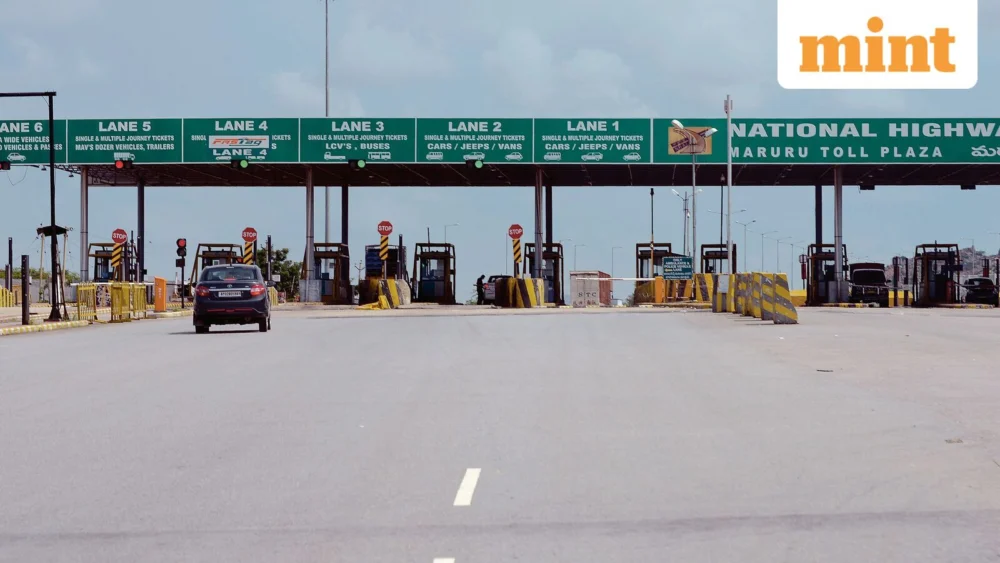
India’s national highway network, a critical artery for its burgeoning economy, has undergone a remarkable transformation in recent years, propelling the nation towards unprecedented levels of connectivity and mobility. While the rapid expansion, boasting a 61% increase from 91,287 km in 2014 to over 146,560 km today, has been a monumental achievement, it concurrently presented a significant challenge: the escalating issue of congestion and delays at conventional toll plazas. Recognizing that infrastructure development must be harmonized with user experience and logistical efficiency, the Ministry of Road Transport and Highways (MoRTH) and the National Highways Authority of India (NHAI) have systematically recalibrated the nation’s tolling framework, with a series of pivotal reforms introduced throughout 2025 fundamentally reshaping highway travel. These initiatives, ranging from predictable toll expenses and advanced digital payment integration to barrier-free tolling and equitable charging policies during construction, underscore a strategic shift towards a modern, transparent, and user-centric road network.
The imperative for a comprehensive overhaul of India’s tolling system stemmed from both user frustration and pressing economic realities. Prior to 2021, the reliance on manual cash payments led to extensive queues, disputes, and significant delays, particularly impacting commercial vehicles. This translated into substantial economic costs, including wasted fuel, increased vehicle wear and tear, and lost productivity. Industry estimates suggest that traffic congestion and inefficient logistics collectively account for billions of dollars in annual losses for India, directly impeding its ambitious goal of becoming a $5 trillion economy. Furthermore, India’s logistics costs, hovering around 13-14% of its GDP, are considerably higher than the global average of 8-10%, with inefficient transportation being a major contributor. The burgeoning number of vehicles, evidenced by the exponential growth in FASTag users from approximately 35 million in 2021 to over 80 million currently, further exacerbated these bottlenecks, necessitating a decisive move from a physical, stop-and-pay model to a seamless, digital, and predictable system.
At the heart of these reforms lies the evolution of digital payment mechanisms, spearheaded by the ubiquitous FASTag system. While FASTag, employing Radio-Frequency Identification (RFID) technology, became mandatory for all vehicles in February 2021 and achieved an impressive 98% adoption rate, MoRTH recognized the need to cater to the remaining segment while enhancing convenience for frequent commuters. A significant innovation in 2025 was the introduction of the FASTag annual pass, launched on August 15. This novel scheme allows private vehicle owners to make an upfront payment of ₹3,000, covering up to 200 toll trips or one year, whichever comes first, across 1,159 toll plazas nationwide. For daily commuters and inter-city travelers, this represents a paradigm shift, replacing variable daily charges with a fixed, predictable, and substantially reduced fee. With over 400,000 such passes sold and an adoption rate nearing 20% among car users, the initiative has demonstrated that affordability and seamless convenience can indeed coexist, fostering greater financial predictability and reducing the administrative burden of frequent FASTag recharges.

Complementing the annual pass, MoRTH also rationalized charges for non-FASTag users, bridging the gap towards a fully digital ecosystem. Historically, vehicles without FASTag incurred double the standard toll, a measure intended to incentivize digital adoption but which often led to friction. In November 2025, this punitive measure was replaced with a more equitable policy: non-FASTag users could now pay 1.25 times the toll using Unified Payments Interface (UPI). This strategic move not only provides an affordable and quick digital alternative for the remaining 2% of users but also aligns with India’s broader digital payments success story. The immediate impact was palpable, with over 1.5 million UPI transactions recorded between November 15 and December 10, 2025, amounting to ₹19.44 crore and contributing to a 25% reduction in cash collections. This shift underscores a clear governmental intent: to eliminate cash transactions at toll plazas entirely, promoting transparency, reducing congestion, and reinforcing the nation’s digital infrastructure.
The most transformative leap in India’s tolling future is undoubtedly the transition to Multi-Lane Free Flow (MLFF) systems, representing a true barrier-free experience. Drawing inspiration from advanced global practices in countries like Singapore, Australia, and parts of the United States, MLFF technology allows vehicles to pass through toll points at highway speeds without stopping, with charges automatically deducted via overhead gantries utilizing technologies such as Automatic Number Plate Recognition (ANPR) and GPS-based detection. This eliminates physical barriers, queues, and the associated fuel waste and emissions, significantly boosting highway capacity and reducing travel times. The first MLFF project is slated for operation at the Choryasi Fee Plaza on NH-48 in Gujarat this year, marking a critical milestone. Furthermore, five additional MLFF projects have been awarded across economically vital corridors, including the Delhi-Mumbai, Bengaluru-Chennai, Delhi-Dehradun, Amritsar-Jamnagar expressways, and the NH-44 stretch along Gurugram-Jaipur. This imminent nationwide transition promises substantial benefits for truck drivers and long-haul operators, leading to reduced fatigue, faster turnaround times, and a significant improvement in the efficiency of India’s logistics sector, directly addressing the high logistics costs previously highlighted.
Beyond technological advancements, the reforms also prioritized fairness and transparency for highway users. Recognizing the inconvenience caused by ongoing construction and upgrades, MoRTH announced a critical policy change in July 2025 concerning toll collection on national highways undergoing expansion. Under this new directive, when a highway is being upgraded—for instance, from two lanes to four or six lanes—users are required to pay only 50% of the existing toll until the project reaches completion. This measure ensures that commuters are not overcharged for incomplete infrastructure and fosters greater trust between the public and infrastructure developers. It also serves as an incentive for project developers to complete upgrades within stipulated timelines, as full toll collection is contingent upon the delivery of the promised infrastructure quality. This policy reflects a user-centric approach, balancing the need for funding infrastructure with the right to fair service.
To ensure the sustained success and integrity of the tolling system, MoRTH has concurrently focused on strengthening the underlying FASTag ecosystem. This includes enhancing interoperability between various banks and payment issuers, ensuring seamless transactions regardless of the issuing bank. Robust dispute resolution mechanisms have been implemented, coupled with improved customer support channels to address commuter complaints swiftly and efficiently. Furthermore, real-time balance alerts and auto-recharge options have been integrated, minimizing instances of insufficient balance and transaction failures. Measures to improve data security and prevent fraudulent activities are also being continuously upgraded, bolstering public confidence in the digital payment system. These systemic improvements are vital for maintaining smooth toll operations and ensuring that the technological advantages translate into tangible benefits for every road user.

The ripple effects of these comprehensive toll reforms extend far beyond mere convenience. Economically, the reduction in transit times and fuel consumption through barrier-free tolling and smoother digital transactions is projected to significantly lower operational costs for the logistics industry, potentially shaving off critical percentage points from India’s logistics cost-to-GDP ratio. This enhanced efficiency will foster more reliable supply chains, facilitate "just-in-time" delivery models, and boost the competitiveness of Indian goods in both domestic and international markets. Environmentally, the reduction in vehicle idling at toll plazas will lead to a decrease in carbon emissions, contributing to India’s climate goals and improving air quality along major corridors. Socially, predictable and faster travel times enhance overall quality of life, encourage regional tourism, and stimulate economic activity in connected towns and cities. The successful integration of digital payments further solidifies India’s position as a leader in digital public infrastructure, attracting both domestic and foreign investment into its infrastructure sector.
While the reforms of 2025 have laid a robust foundation, the journey towards a fully optimized, smart tolling system continues. Future challenges include ensuring the flawless technological integration of MLFF systems across diverse geographical and traffic conditions, educating the public on new payment paradigms, and maintaining the highest standards of cybersecurity and data privacy. The vision ahead involves exploring advanced concepts such as dynamic pricing based on traffic density, further integration with smart city initiatives, and the eventual complete elimination of physical toll booths nationwide. India’s proactive approach to reforming its highway tolling system is not just about making travel smoother; it is a strategic investment in its economic future, a testament to its commitment to world-class infrastructure, and a blueprint for sustainable, efficient mobility in the 21st century.