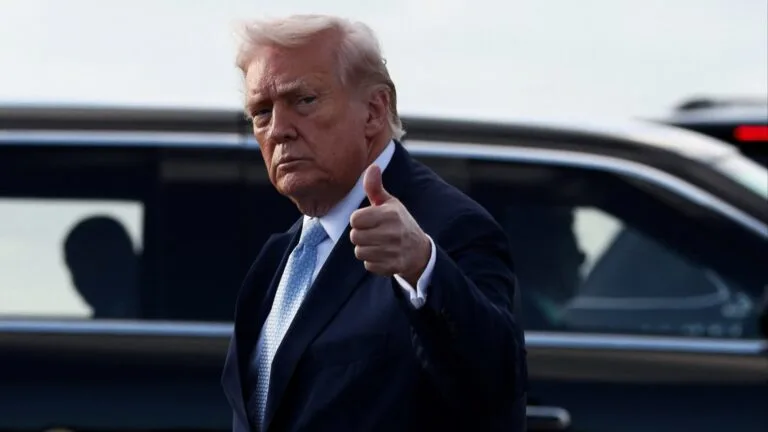
The architectural framework of the next American economic era is beginning to take shape, not through the traditional vetting of independent agencies, but through the strategic consolidation of power within the West Wing. In a move that signals a preference for internal policy cohesion over immediate institutional reshuffling, President-elect Donald Trump has indicated a desire for Kevin Hassett, a perennial frontrunner for the chairmanship of the Federal Reserve, to remain in a high-level White House capacity. This decision carries profound implications for the trajectory of U.S. fiscal policy, the independence of the central bank, and the global financial markets’ perception of American economic stability.
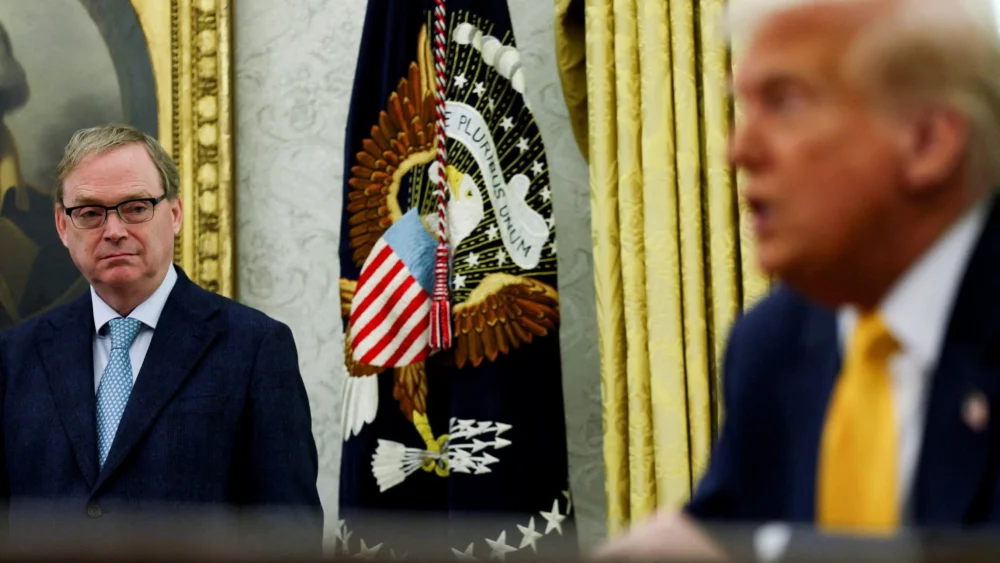
Kevin Hassett, who previously served as the Chairman of the Council of Economic Advisers (CEA) during Trump’s first term, has long been viewed as a bridge between the populist "America First" agenda and the more traditional supply-side economics favored by the Republican establishment. By signaling that Hassett’s talents are best utilized within the immediate orbit of the presidency—likely in a role such as Director of the National Economic Council (NEC)—Trump is prioritizing the rapid implementation of his second-term economic agenda over an immediate confrontation with the Federal Reserve’s current leadership.
The decision to keep Hassett in the White House rather than nominating him to a seat on the Federal Reserve Board of Governors, or designating him as a "Chair-in-waiting," suggests a tactical pivot. While the Federal Reserve remains the world’s most powerful monetary authority, its gears turn slowly, governed by statutory independence and a dual mandate of price stability and maximum employment. In contrast, the White House economic apparatus is the engine room for trade policy, tax reform, and deregulation—three pillars that the incoming administration views as urgent priorities.
Central to this strategic calculation is the current status of the Federal Reserve Chair, Jerome Powell. Powell’s term does not expire until May 2026, and his seat on the Board of Governors lasts until 2028. While Trump has been a vocal critic of Powell’s interest rate decisions, the legal hurdles to removing a Fed Chair "for cause" are significant and historically untested. By positioning Hassett in the White House, Trump secures a loyalist with deep technical expertise who can serve as an intellectual counterweight to the Fed’s current consensus without triggering a constitutional or market crisis through a premature firing of Powell.
Hassett’s presence in the West Wing is expected to accelerate the administration’s plans for a significant overhaul of the tax code. With major provisions of the 2017 Tax Cuts and Jobs Act (TCJA) set to expire in 2025, the White House requires an economist who not only understands the nuances of corporate tax structures but also possesses the political capital to navigate a potentially divided Congress. Hassett was a primary architect of the original TCJA, and his return suggests that the administration will push for a permanent extension of those cuts, coupled with a further reduction in the corporate tax rate from 21% to as low as 15% for domestic manufacturers.
Beyond tax policy, Hassett’s role will be pivotal in managing the complex interplay between trade tariffs and domestic inflation. The President-elect has proposed a baseline universal tariff of 10% to 20% on all imports, with significantly higher levies on Chinese goods. Traditional economic models suggest such moves could be inflationary, potentially forcing the Federal Reserve to keep interest rates higher for longer. Hassett, however, has frequently argued that supply-side improvements—such as deregulation and energy independence—can offset the inflationary pressures of trade protectionism. His ability to synthesize these conflicting economic forces into a coherent narrative will be essential for maintaining market confidence.
Market data reflects a cautious but curious reaction to these personnel rumors. Following the news of Hassett’s likely White House placement, Treasury yields showed slight volatility as investors weighed the prospect of a more aggressive fiscal policy against the potential for renewed friction between the executive branch and the central bank. Historically, the "Trump Trade" has been characterized by a stronger dollar and rising equity prices, driven by expectations of growth, yet tempered by concerns over the national debt, which currently exceeds $35 trillion.
The global context adds another layer of complexity to Hassett’s anticipated role. As the European Central Bank (ECB) and the Bank of England grapple with their own growth stagnation and inflationary hangovers, the U.S. approach under a Hassett-influenced White House would represent a sharp departure from the multilateralism of the previous four years. International observers are particularly focused on how a Hassett-led economic council would handle the "weaponization" of the dollar and the potential for a renewed global trade war. If Hassett can successfully argue that American growth serves as a "rising tide" for the global economy, he may mitigate some of the diplomatic friction expected from the administration’s protectionist leanings.
Furthermore, the concept of a "shadow Fed" has gained traction in some economic circles. By having a highly qualified Fed contender like Hassett in the White House, the administration creates an environment where the Fed’s policy decisions are constantly scrutinized by a sophisticated internal rival. This creates a psychological pressure on the FOMC (Federal Open Market Committee). If the Fed remains hawkish while Hassett produces data suggesting that the economy can handle lower rates without sparking inflation, the political pressure on Jerome Powell will become immense.
Expert insights suggest that Hassett’s greatest challenge will be the management of the federal deficit. While he is a staunch advocate for growth-oriented tax cuts, the math of the U.S. budget remains daunting. Debt-to-GDP ratios are at levels not seen since World War II. Critics argue that Hassett’s brand of economics relies too heavily on "dynamic scoring"—the idea that tax cuts eventually pay for themselves through increased economic activity. If the promised growth fails to materialize, the administration may find itself in a fiscal vice, where rising interest costs on the debt begin to crowd out the very private investment the TCJA was designed to spur.
The institutional integrity of the Federal Reserve also hangs in the balance. Central bank independence is a cornerstone of modern macroeconomics, intended to prevent politicians from engineering short-term "boom" cycles before elections at the cost of long-term price stability. If Hassett’s role in the White House is perceived as an attempt to direct monetary policy through the backdoor, the "credibility premium" of the U.S. dollar could be at risk. However, supporters of the move argue that the Fed has become too insulated and that a healthy dose of White House intellectual pressure is necessary to ensure the central bank remains responsive to the broader economic goals of the elected government.
As the transition period progresses, the focus will shift to who will join Hassett in this economic brain trust. The synergy between the Treasury Secretary, the NEC Director, and the CEA Chairman will determine whether the administration’s policies are a series of disjointed populist measures or a cohesive economic doctrine. By keeping Hassett close, Trump is betting on the latter. Hassett’s ability to translate "MAGA" rhetoric into the language of bond yields and GDP multipliers makes him perhaps the most indispensable player in the upcoming administration’s attempt to redefine the American economy.
Ultimately, the decision to retain Kevin Hassett in the White House signifies a realization that the real battles of 2025 will be fought in the halls of Congress and the boardrooms of American industry, rather than in the quiet deliberative chambers of the Federal Reserve. For now, the Fed chairmanship remains a prize for a later date, while the immediate task of re-engineering the U.S. economy falls to those within the President’s direct sightline. The world will be watching to see if this consolidation of economic expertise can deliver the promised growth without destabilizing the fragile foundations of the post-pandemic global order.