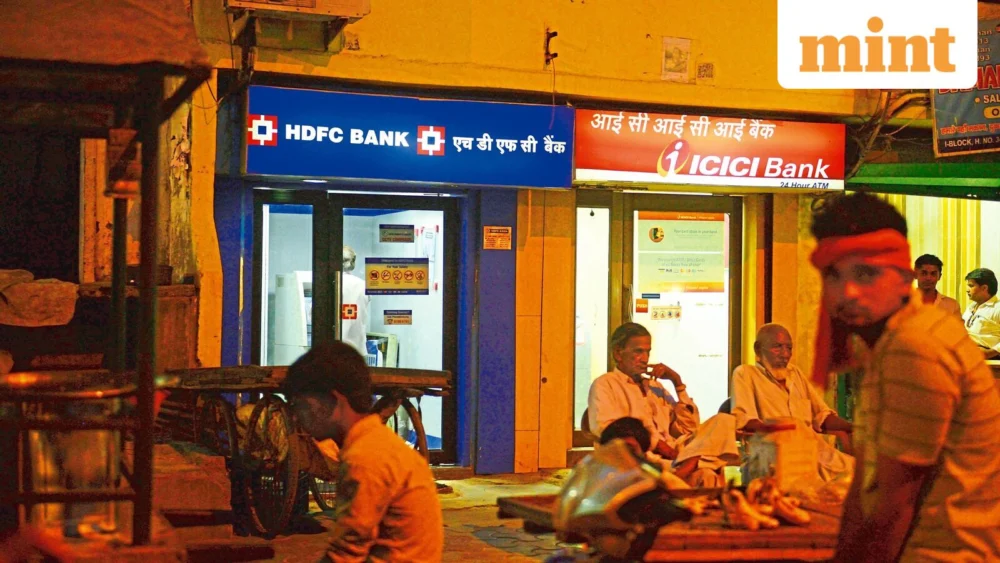
Mumbai, the bustling financial capital of India, is bracing for the Q3 earnings reports from its two largest private-sector lenders, HDFC Bank and ICICI Bank, whose performance is widely anticipated to reflect robust underlying economic currents and strategic financial management. Ahead of their scheduled disclosures, a consensus among leading financial analysts and brokerage houses points towards a steady quarter, characterized by firm loan growth, a discernible recovery in net interest margins (NIMs), and disciplined control over operational expenditures. This positive outlook underscores the resilience of India’s banking sector, even as it navigates evolving monetary policies and a dynamic global economic environment.
The anticipation surrounding these results is significant, given HDFC Bank and ICICI Bank’s pivotal roles in India’s financial ecosystem. Combined, they command a substantial share of the country’s credit market, influencing investment cycles, consumer spending, and the broader liquidity landscape. Their performance often serves as a bellwether for the health of the Indian economy, reflecting credit demand across various segments, from retail and small and medium enterprises (SMEs) to large corporates. While the overall sentiment is optimistic, the period is not without its nuances, particularly regarding asset quality, where seasonal pressures, especially in agriculture-linked portfolios, could lead to a modest uptick in slippages. However, analysts largely expect these to be manageable, with provisions potentially showing a sequential decline following a previous quarter’s one-off higher allocation.
HDFC Bank: Navigating Integration and Growth Trajectories
HDFC Bank, India’s largest private lender, post its monumental merger, is expected to post a net profit around ₹18,366 crore for the December quarter, representing an approximate 10% year-on-year increase. While this marks a solid annual progression, some analysts project a slight sequential dip of over 1%, attributable to various factors including the ongoing integration complexities and treasury dynamics. The bedrock of this projected profitability lies in the bank’s sustained momentum in loan growth, which, as per provisional figures, expanded by nearly 12% year-on-year and 3% quarter-on-quarter in gross advances. This growth is largely broad-based, fueled by healthy disbursement activity across retail, corporate, and commercial banking segments.
Deposit mobilization remains a critical focus area for HDFC Bank, particularly in the context of its elevated Credit-Deposit (CD) ratio. Analysts from firms like Elara Capital India are closely monitoring deposit traction and the strategic mix of retail and other deposits. Projections indicate the bank’s CD ratio might hover between 98-100%, and future commentary on this metric will be crucial for understanding its liquidity management strategy and funding costs. A higher CD ratio often implies a greater reliance on wholesale funding or a more aggressive push for retail deposits, which can impact NIMs.

On the profitability front, Net Interest Income (NII) for HDFC Bank is anticipated to reach approximately ₹32,856 crore, reflecting over 7% year-on-year and 4% quarter-on-quarter growth. This NII expansion is expected to translate into an improved NIM, potentially rising to 3.38% from 3.27% in the previous quarter, according to a Bloomberg poll of 13 analysts. This margin recovery is attributed to a combination of factors, including a stabilization or slight decrease in the cost of deposits offsetting a moderate fall in yields on advances. Several brokerages, including Motilal Oswal Financial Services, believe the "trough of NIMs" is likely behind the lender, with expectations for continued improvement into the next fiscal year. Fee income is largely seen as stable sequentially, while other income might see a slight dip due to higher recoveries reported in the preceding quarter. Operational expenses are expected to remain well-controlled, contributing positively to the overall bottom line.
ICICI Bank: Consistent Performance and Strategic Stability
ICICI Bank, the second-largest private sector lender, is likewise poised for another quarter of consistent performance. Brokerage consensus projects a net profit of around ₹12,493 crore, marking a 6% year-on-year and 1% quarter-on-quarter increase. This steady growth is underpinned by healthy expansion in both loans and deposits, with Motilal Oswal anticipating nearly 4% sequential growth in both categories. For the September quarter, the bank had reported robust domestic loan growth of nearly 11% year-on-year and a 9% rise in deposits, showcasing its strong market penetration and diversified portfolio.
Asset quality for ICICI Bank is expected to remain robust, though seasonal factors, particularly in agricultural lending, might lead to a marginal increase in slippages. Consequently, provisions could see a slight uptick, albeit within manageable parameters. Operating expenses are projected to be broadly stable quarter-on-quarter, with fee income benefiting from overall business growth. However, rising bond yields could exert pressure on treasury income, a common challenge for banks in a tightening interest rate environment. The bank’s NII is estimated at ₹22,212 crore, up 9% year-on-year and 3% quarter-on-quarter, as per Bloomberg’s poll.
The outlook on Net Interest Margins for ICICI Bank presents a more nuanced picture, with analysts offering diverse perspectives. While some, like Elara Capital and Motilal Oswal, anticipate a modest sequential improvement (e.g., 3 basis points) potentially benefiting from changes in the cash reserve ratio (CRR) or optimized funding costs, others, such as YES Securities, project a slight contraction. Systematix and Bloomberg estimates, however, lean towards stable NIMs, maintaining close to the 4.30% reported in the September quarter. Beyond the financial metrics, market participants will also be keenly observing any commentary regarding the potential extension of CEO Sandeep Bakhshi’s tenure, which could offer insights into the bank’s long-term leadership stability and strategic direction.
Broader Sectoral Trends and Economic Implications

The performance of HDFC Bank and ICICI Bank is reflective of broader trends shaping India’s banking sector. The Indian economy continues to demonstrate strong growth momentum, with GDP projections remaining robust. This economic buoyancy translates into sustained credit demand across segments. Retail credit, in particular, has been a significant growth driver, fueled by rising disposable incomes, urbanization, and a growing consumer finance market. Corporate credit, while showing signs of revival, remains sensitive to investment cycles and industrial output. Deposit mobilization, however, continues to be a key challenge for many banks, leading to intense competition for funds and impacting the cost of liabilities. The Reserve Bank of India (RBI) has been closely monitoring credit growth and deposit trends, implementing measures to ensure financial stability and adequate liquidity.
The ongoing digital transformation within the banking sector is another critical factor. Both HDFC Bank and ICICI Bank have heavily invested in digital infrastructure, enhancing customer experience, streamlining operations, and expanding their reach. This technological prowess not only improves efficiency but also allows for better data analytics, leading to more targeted product offerings and improved risk management.
Globally, while developed economies grapple with inflation and potential slowdowns, India stands out with its relatively strong growth trajectory. This makes Indian banking stocks attractive to international investors, seeking exposure to a high-growth emerging market. However, global interest rate movements, capital flows, and geopolitical uncertainties can still influence investor sentiment and market valuations. The ability of Indian banks to maintain healthy asset quality amidst global headwinds and domestic seasonal pressures is a testament to their improved risk management frameworks and a more diversified loan book compared to a decade ago.
Looking Ahead: Key Watch Factors for Investors
Beyond the headline numbers, management commentary from both HDFC Bank and ICICI Bank on several key aspects will be under intense scrutiny. This includes their outlook on loan and deposit growth trajectories for the coming quarters, detailed insights into their CD ratios and strategies to optimize them, the expected trajectory of NIMs in a potentially evolving interest rate cycle, and a granular breakdown of asset quality trends across different lending segments. Any forward-looking statements on credit costs, provisions, and capital adequacy will also provide crucial signals regarding their preparedness for future economic shifts.
The Q3 results for these banking behemoths are not just about their individual financial health; they offer a panoramic view of India’s economic vigor and the banking sector’s capacity to support sustained growth. As India positions itself as a global economic powerhouse, the stability and growth of its leading financial institutions, exemplified by HDFC Bank and ICICI Bank, will remain central to its narrative of progress and resilience. Investors and economists alike will be dissecting these reports for indicators of future performance and the broader direction of the Indian financial landscape.