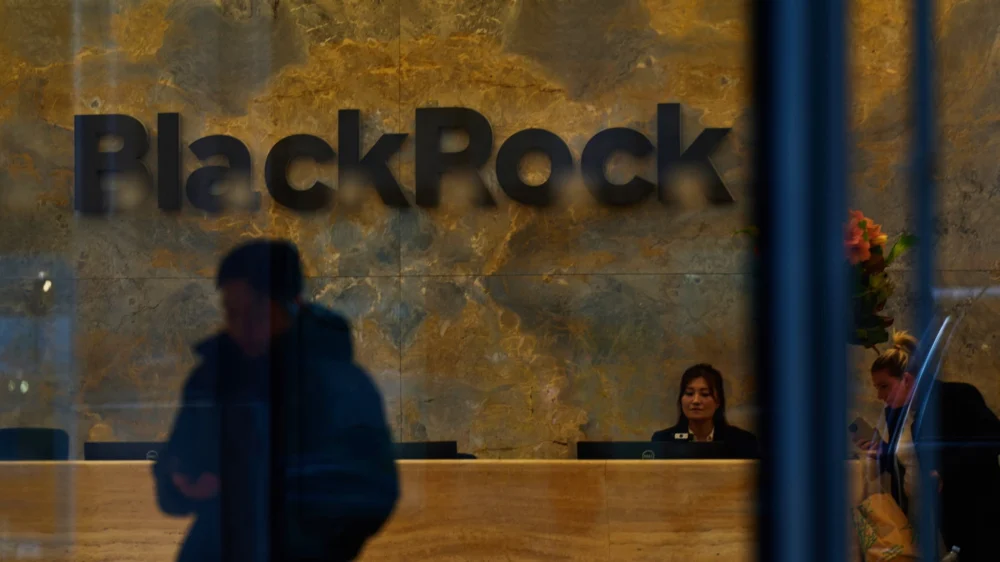
The global financial landscape reached a historic inflection point this quarter as BlackRock, the world’s largest asset manager, reported a surge in assets under management to an unprecedented $14 trillion. This milestone, driven by a combination of relentless organic growth, strategic acquisitions, and a robust rally across global equity markets, solidifies the firm’s position as the primary architect of modern capital markets. The achievement is not merely a reflection of market appreciation but a testament to a structural shift in how institutional and retail wealth is managed in an increasingly complex macroeconomic environment.
The ascent to $14 trillion marks a significant acceleration from previous years, highlighting a "flywheel effect" where scale begets further scale. During the most recent quarter, BlackRock captured record-breaking net inflows, as investors pivoted toward a diversified mix of exchange-traded funds (ETFs), private market strategies, and fixed-income products. This influx of capital comes at a time when the global economy is navigating a precarious transition from a period of high inflation and aggressive monetary tightening toward a potential easing cycle by central banks. For BlackRock, this environment has proven to be a fertile ground for its diverse product suite, which caters to both risk-on sentiment in equities and the search for yield in the credit markets.
Central to this growth story is the continued dominance of the iShares franchise. BlackRock’s ETF division has become the cornerstone of the passive investing revolution, attracting billions of dollars as investors seek low-cost, transparent access to broad market indices and thematic sectors. The democratization of finance through ETFs has allowed BlackRock to capture a massive share of the retail market, while simultaneously serving institutional clients who use these vehicles for liquidity management and tactical asset allocation. In the latest quarter, iShares saw particularly strong demand for fixed-income ETFs, as the prospect of stabilizing interest rates encouraged investors to lock in yields that have not been seen in over a decade.
However, the narrative of BlackRock’s expansion is no longer confined to the realm of passive indexing. Under the leadership of Chief Executive Larry Fink, the firm has aggressively pivoted toward private markets and infrastructure—sectors that offer higher margins and deeper integration into the real economy. The recent multi-billion-dollar acquisition of Global Infrastructure Partners (GIP) serves as a clear signal of this intent. By integrating one of the world’s largest independent infrastructure managers, BlackRock is positioning itself to capitalize on the "great relocation" of capital toward energy transition, digital connectivity, and logistical hubs. As governments face mounting deficits and limited fiscal space, the role of private capital in funding essential infrastructure has never been more critical, and BlackRock is positioned to be the primary intermediary in this trillion-dollar trade.
The firm’s expansion into private credit further underscores its ambition to replace traditional bank lending in the wake of stricter capital requirements for commercial lenders. With $14 trillion in oversight, BlackRock now possesses the "permanent capital" necessary to fund long-term projects that banks are increasingly hesitant to touch. This shift toward "shadow banking"—a term the industry prefers to call "non-bank financial intermediation"—represents a fundamental restructuring of the global credit system. By providing bespoke financing solutions to mid-market companies and large-scale infrastructure projects, BlackRock is creating a closed-loop ecosystem where it manages the assets, provides the technology to track the risk, and facilitates the financing.
Technology remains the silent engine behind this gargantuan growth. Aladdin, BlackRock’s proprietary risk management platform, is now the industry standard, used by rival asset managers, insurance companies, and sovereign wealth funds to monitor over $20 trillion in assets. The integration of artificial intelligence into the Aladdin ecosystem is expected to further widen the moat between BlackRock and its competitors. By leveraging generative AI to enhance portfolio construction and automate client reporting, the firm is driving operational efficiencies that allow it to manage more assets with a relatively stable headcount. This "tech-first" approach has transformed BlackRock from a traditional investment house into a hybrid financial-technology giant, a move that has been rewarded by investors with a valuation premium over its peers.
From a global perspective, BlackRock’s $14 trillion milestone places it in a category of its own. To put the figure in context, the firm’s assets under management now exceed the combined GDP of the United Kingdom, France, and Germany. Such scale brings with it immense power and, inevitably, intense scrutiny. The firm has found itself at the center of a geopolitical and domestic political tug-of-war. In the United States, BlackRock has faced criticism from across the political spectrum—ranging from accusations of "woke capitalism" regarding its Environmental, Social, and Governance (ESG) initiatives to concerns from the left about the concentration of corporate power. Despite these headwinds, the firm’s financial performance suggests that the institutional demand for its services remains decoupled from political rhetoric.
International expansion remains a core pillar of the firm’s long-term strategy. While the U.S. remains its largest market, BlackRock is aggressively pursuing growth in the Middle East and Asia. The recent announcement of a dedicated transformation fund in Saudi Arabia and continued efforts to penetrate the Chinese wealth management market demonstrate a commitment to being a global player regardless of regional volatility. In Europe, the firm is capitalizing on the shift from defined benefit to defined contribution pension schemes, providing the sophisticated multi-asset solutions that aging populations require to secure their retirement.
The economic impact of a single entity managing $14 trillion cannot be overstated. As a major shareholder in nearly every publicly traded company in the S&P 500, BlackRock’s voting decisions on corporate boards influence everything from executive compensation to climate disclosure policies. This "stewardship" role has made the firm a de facto regulator of corporate behavior. However, the firm maintains that its primary fiduciary duty is to deliver returns for its clients, a stance that Larry Fink has reiterated in his annual letters to CEOs. The challenge for BlackRock moving forward will be balancing this fiduciary duty with the societal expectations that come with such unprecedented economic influence.
Looking ahead, the path to $15 trillion and beyond seems likely to be paved with further consolidation in the asset management industry. As fee compression continues to squeeze smaller players, the "barbell" effect is becoming more pronounced: investors are choosing either ultra-low-cost passive providers or high-conviction, specialized private market managers. BlackRock is one of the few institutions that occupies both ends of that spectrum successfully. The firm’s ability to offer a "one-stop-shop" for every conceivable investment need makes it an indispensable partner for the world’s largest pension funds and sovereign wealth funds.
The record quarter also highlights a broader market trend: the resilience of the American financial engine. While global markets have faced bouts of instability, the depth and liquidity of U.S. capital markets—anchored by firms like BlackRock—continue to attract global savings. This reinforces the "exorbitant privilege" of the U.S. dollar and the American financial system, even as the world moves toward a more multi-polar economic order.
In conclusion, BlackRock’s surge past the $14 trillion mark is more than just a headline number; it is a signal of the new era of "mega-managers." The firm has successfully navigated the transition from a bond-focused shop in the 1980s to a diversified global titan that sits at the nexus of technology, finance, and geopolitics. As it continues to integrate its recent acquisitions and expand its technological footprint, the question for the industry is no longer whether anyone can compete with BlackRock on scale, but how the global financial system will adapt to the gravity of such a massive singular force. For now, the "BlackRock effect" remains the defining characteristic of 21st-century capitalism.