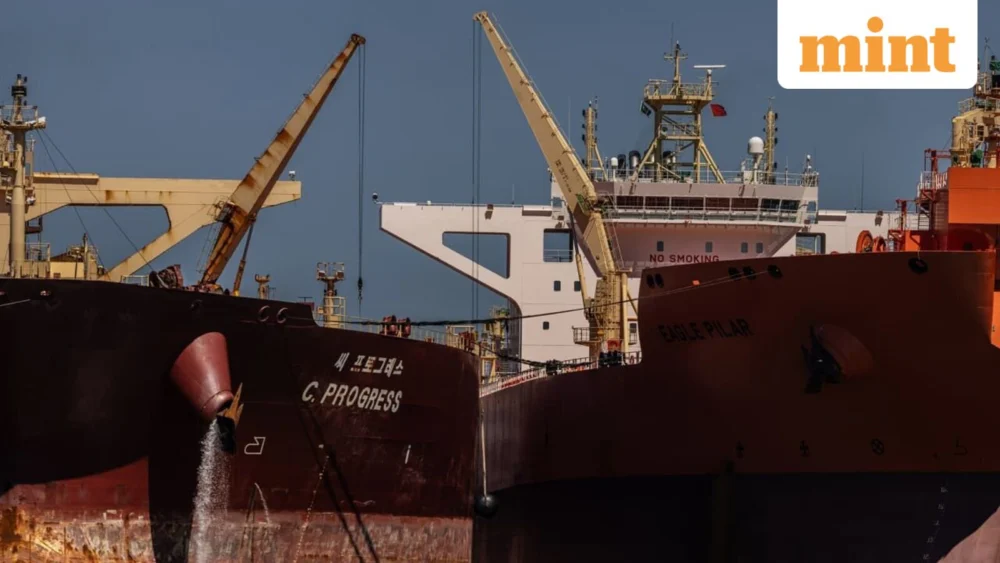
In an increasingly fractured and unpredictable global landscape, China, the world’s preeminent crude importer, has paradoxically emerged as a crucial bulwark against a complete collapse in international oil prices. Despite a persistently oversupplied market and a complex web of geopolitical friction, Beijing’s consistent, opportunistic purchases for its strategic petroleum reserves (SPR) have effectively absorbed excess barrels, preventing a deeper market downturn and injecting a degree of stability into a commodity vital for global economic health. This deliberate strategy, driven by a deep-seated concern for energy security and a wary eye on escalating international flashpoints, highlights China’s profound influence on the world’s most critical energy market.
The global oil market has been grappling with a significant imbalance for the past three years, characterized by robust supply outpacing demand growth. Estimates of the daily surplus vary widely among analysts, ranging from a conservative 500,000 barrels per day (bpd) to more than two million bpd. This persistent oversupply, fueled by record-setting U.S. shale production and the gradual return of OPEC+ barrels to the market following various supply agreements, has exerted downward pressure on crude benchmarks. West Texas Intermediate (WTI) futures, for instance, have seen a roughly 20% decline over the past year, hovering just above $60 per barrel in recent trading. Without a major supply disruption, the consensus among energy economists points to continued price weakness. However, this projected decline has been significantly mitigated by China’s consistent demand.
Analysts universally agree that China’s strategic buying has been the primary factor preventing a more drastic price plunge. John Kilduff, a partner with Again Capital, articulates this clearly: "They know they are vulnerable." China’s energy security imperative stems from its profound import dependency, with approximately 75% of its crude oil requirements met by foreign sources. This vulnerability, coupled with ambitions for regional dominance and potential friction points like Taiwan, compels Beijing to maintain a robust buffer against supply shocks. Consequently, when global prices dip, China sees an opportune moment to accumulate, funneling vast quantities of crude into its strategic reserves. "They just put it in storage and hold onto it," Kilduff adds, underscoring the long-term, strategic nature of these acquisitions.

This consistent accumulation strategy has been instrumental in supporting prices. Bart Melek, Global Head of Commodities Research at TD Securities, observes, "China is why oil isn’t $40 and why it’s now around $60 again because those inventories will continue increasing." Last year alone, China reportedly added an average of 900,000 bpd to its strategic reserves for much of the period, a figure that significantly offsets the global surplus. This continuous absorption acts as a crucial floor for prices, effectively tightening the market and preventing a freefall that could have severe repercussions for oil-producing nations and the broader energy sector. Despite the overall decline in crude prices, the S&P energy sector has demonstrated relative resilience, posting a roughly 4% gain, partly buoyed by the underlying stability China’s purchases provide.
The geopolitical landscape further complicates China’s energy calculus and reinforces its stockpiling efforts. Beijing’s primary sources of crude oil, Russia and Iran, both face extensive U.S. and European sanctions. Russia has solidified its position as China’s largest single supplier, providing approximately 20% of its crude needs via pipelines and tankers. Iran contributes around 12%, according to data from Kpler. Navigating these sanction regimes requires intricate financial and logistical maneuvers, often involving "dark fleet" tankers and opaque trading practices. Furthermore, China has historically been the largest buyer of Venezuelan crude, although these imports, around 500,000 bpd, represent only a fraction of China’s substantial refining capacity, which can process upwards of 14 million bpd. The assertive actions of the U.S. administration, particularly its expanded influence over Venezuela’s oil supplies and the seizure of tankers suspected of carrying sanctioned crude, underscore the risks associated with these supply chains.
The issue of sanctioned barrels, particularly from Iran and Venezuela, adds another layer of complexity. Reports from maritime intelligence firms like Kpler indicate that millions of barrels of sanctioned oil have been "floating storage" off the coasts of China and Malaysia. Matt Smith, a Kpler analyst, notes, "There has been Venezuelan crude building up off of China for a good many months now. There’s Iranian crude as well." While some of these barrels find their way to independent Chinese refiners, often at steep discounts, larger state-owned enterprises have shown a preference for non-sanctioned crude. This dynamic inadvertently drives down the price of sanctioned oil, creating a two-tiered market and potentially influencing China’s purchasing decisions.
The specter of broader geopolitical conflict, particularly involving the U.S., looms large over China’s energy strategy. Helima Croft, head of global commodities strategy at RBC, highlights this critical debate: "Given the fraught world right now, I don’t think there’s anything to indicate that they’re going to slow these purchases." She explains that optimists regarding oil prices believe China possesses ample physical storage capacity and will continue to fill its strategic reserves due to concerns about supply disruptions, including those arising from a potential conflict with the U.S. over issues like Taiwan. This proactive stockpiling serves as a critical hedge against any future embargoes or blockades that could severely cripple China’s energy-dependent economy.

However, the U.S. administration’s stance has, at times, introduced tactical shifts in China’s purchasing patterns. Ed Morse, global commodities strategist and senior advisor at Hartree Partners, observed a temporary reduction in Chinese SPR purchases in recent months. "The Chinese government didn’t want to cross [the U.S. administration]," he stated, indicating a strategic pause by state-owned entities to avoid direct confrontation. This suggests a nuanced approach where China balances its long-term strategic goals with short-term geopolitical realities. Nevertheless, Morse anticipates a resurgence in China’s SPR acquisitions, projecting an increase to one million bpd or more, driven by renewed concerns about the unpredictability of global political actions.
China’s strategic reserve operations are notoriously opaque, with the government providing only general guidance rather than detailed public disclosures. This lack of transparency makes it challenging for market participants to gauge the precise extent of Beijing’s buying and its remaining storage capacity. Despite this secrecy, analysts anticipate that China may offer some indication of its reserve activities later in the current quarter, providing crucial insights into its future intentions. Regardless of the immediate fluctuations, the overarching consensus is clear: China’s strategic imperative for energy security will continue to drive significant demand for crude.
This consistent demand from the world’s largest importer effectively acts as a "swing factor" in the global oil balance. "They are the swing between it being a loose market and a tight market. They are likely to keep it a tighter market," Morse concludes. By continuously absorbing surplus oil, China prevents a complete market capitulation, supporting prices at levels that, while lower than previous peaks, remain viable for many producers. This strategy offers a degree of stability to the global energy complex, dampening extreme volatility that could otherwise destabilize economies worldwide. While the immediate beneficiaries include oil producers struggling with oversupply, the broader impact extends to global inflation, transportation costs, and industrial input prices, all of which are indirectly influenced by China’s calculated moves in the crude market. As geopolitical tensions simmer and the world grapples with supply chain vulnerabilities, China’s strategic oil stockpiling remains a silent but powerful force shaping the contours of the global energy economy.