The global economy is currently navigating a significant inflationary tide, with a key industrial metal — copper — emerging as a prominent driver of rising costs across an array of vital sectors. Often dubbed "Doctor Copper" for its perceived ability to predict economic health, the red metal’s price has witnessed an extraordinary surge, climbing nearly 60% over the past twelve months alone. This dramatic escalation is translating into higher input costs for manufacturers worldwide, particularly impacting the burgeoning electric vehicle (EV) market, renewable energy infrastructure, advanced data centers, and, perhaps most acutely for consumers, household appliances like air conditioners. On January 9, domestic copper futures on the Multi-Commodity Exchange (MCX) were trading at ₹1,281 per kilogram, while global prices, according to analysis by Motilal Oswal Wealth Management, approached an unprecedented $13,000 per tonne in late 2025. This sustained rally underscores a complex interplay of burgeoning demand and persistent supply constraints, setting the stage for significant economic repercussions.
The primary impetus behind copper’s remarkable ascent stems from a confluence of structural demand-side factors and an increasingly strained supply landscape. Foremost among these is the accelerating global energy transition. Electric vehicles, for instance, are substantially more copper-intensive than their internal combustion engine counterparts; a typical EV requires between three to four times the amount of copper, ranging from 80-100 kg per unit for wiring, motors, and battery components. This demand extends beyond the vehicles themselves to the extensive charging infrastructure necessary to support their widespread adoption. Similarly, the rapid expansion of renewable energy systems, including solar farms and wind turbines, coupled with large-scale battery storage solutions, necessitates vast quantities of copper for generation, transmission, and grid integration. Analysts estimate that global investment in renewable energy projects is projected to exceed $2 trillion annually by 2030, each requiring substantial copper outlays.

Beyond green technologies, the digital revolution is also proving to be a voracious consumer of copper. The proliferation of data centers, driven by the exponential growth in cloud computing, artificial intelligence (AI), and high-speed data transmission, relies heavily on copper for high-performance wiring and cooling systems. These facilities, essential for modern digital infrastructure, demand robust and efficient electrical networks, further tightening the copper supply. Simultaneously, aging power grids in developed nations are undergoing significant modernization and expansion, requiring extensive copper upgrades to enhance efficiency and reliability. On the supply side, the market has been plagued by disruptions in major mining regions due to geopolitical uncertainties, labor disputes, and environmental regulations. These factors, alongside tariff-driven stockpiling by strategic industries, have collectively curtailed the availability of refined copper, exacerbating price pressures.
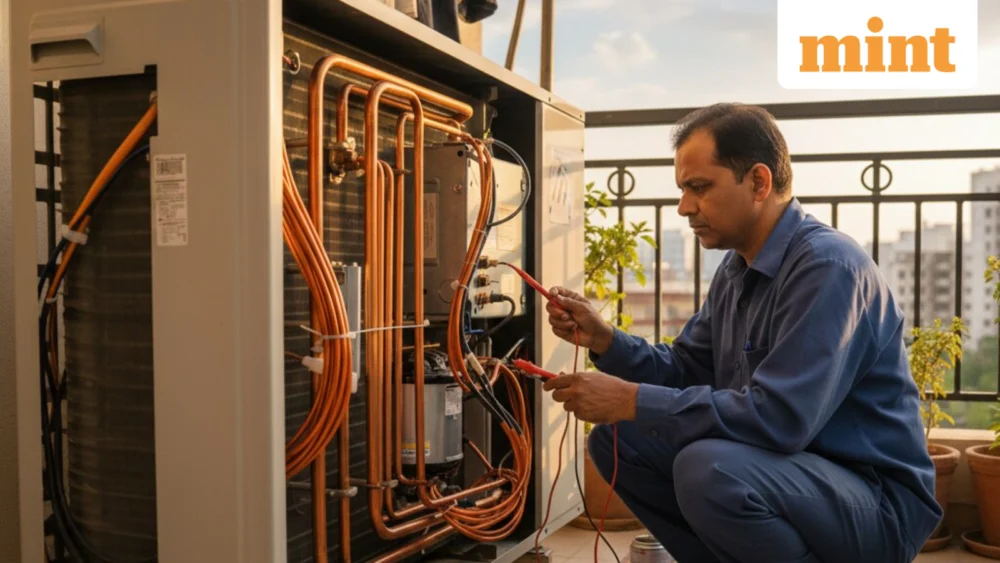
The widespread use of copper as a foundational material means its price volatility sends ripple effects across numerous industrial value chains. Manufacturers of consumer electronics, automotive components, and heavy machinery are all grappling with elevated input costs. In the HVAC (heating, ventilation, and air conditioning) sector, copper’s superior thermal conductivity makes it indispensable for coils, pipes, and heat exchangers. This direct reliance means that the price of cooling products like air conditioners and heating appliances such as geysers is particularly sensitive to copper market dynamics. Industry projections indicate that consumers can expect to see price increases of 7-10% on these essential appliances in the run-up to the peak summer season of 2026. This hike reflects not only the rising cost of copper, which accounts for a significant 22-24% of an air conditioner’s material cost, but also other compounding factors.
For instance, in some markets, any relief provided by policy changes has been swiftly eroded. In September 2025, a government decision to reduce the Goods and Services Tax (GST) on air conditioners from 28% to 18% had initially promised a price reduction of approximately ₹1,500-₹2,500 per unit for consumers. However, this benefit has been largely negated by the persistent surge in global copper prices. Furthermore, a weakening domestic currency against the US dollar has made imported copper even more expensive, while new, stricter Bureau of Energy Efficiency (BEE) star-rating norms, effective from January 2026, mandate higher efficiency standards that often require more advanced, and thus costlier, components. These converging pressures mean that manufacturers are left with little choice but to pass on these increased costs to the end-consumer, diminishing purchasing power and potentially slowing the adoption of newer, more energy-efficient models.

Looking ahead, the outlook for copper prices suggests continued elevated levels, albeit with some anticipated volatility. Major global investment banks, including JP Morgan, Goldman Sachs, and Bernstein, while not expecting prices to sustainably exceed the recent peak of $13,000 per tonne, broadly concur that copper is unlikely to experience a significant crash. The consensus forecast places copper trading within a robust range of $11,750-$12,500 per tonne for 2026. This optimistic long-term trajectory is underpinned by several structural factors: the ongoing global push towards electrification, massive governmental and private sector investments in infrastructure development, and the unwavering commitment to clean energy transitions. A softer US dollar index, which has depreciated by approximately 9% over the past year (though it has strengthened against some emerging market currencies), also contributes to making dollar-denominated commodities more attractive to international buyers. The collective force of these demand drivers ensures that the "Doctor Copper" narrative of economic health remains intertwined with the narrative of escalating commodity costs.
In response to these unprecedented price levels, industries are actively exploring alternatives, though the transition is not without its challenges. Manufacturers of HVAC systems are experimenting with aluminum coils as a cheaper substitute for copper. While aluminum offers cost advantages, it typically comes with trade-offs in durability and ease of repair, and its thermal conductivity, though good, does not quite match copper’s superior performance. Other materials like stainless steel, brass, and advanced plastic composites are also being tested for specific applications within HVAC and other sectors. However, copper’s unique combination of high thermal and electrical conductivity, corrosion resistance, and longevity makes it exceptionally difficult to replace entirely without compromising performance or product lifespan. The industry trend is leaning towards hybrid solutions, combining copper with aluminum or other composites to strike a balance between cost management and maintaining essential efficiency standards.
Beyond copper, the broader metals market is experiencing a synchronized upward trend, further complicating the global supply chain and inflationary landscape. Aluminum, critical for packaging, transportation, and construction, has also seen significant price appreciation. Zinc, widely used in galvanization and various alloys, is similarly under pressure. Precious metals like silver and gold, fueled by safe-haven demand amidst global uncertainties and robust central bank buying, have reached record highs, influencing costs in jewelry and electronics. Moreover, battery-linked metals such as lithium and cobalt, crucial for energy storage and EV manufacturing, continue to face demand-supply imbalances, adding another layer of cost pressure across industries. While these metals collectively contribute to the inflationary environment, copper’s sheer volume of usage and its specific role in high-growth sectors like green technology and consumer appliances ensure its disproportionate impact on consumer prices and industrial investment decisions. The red metal’s enduring rally is thus not merely a market fluctuation but a fundamental indicator of the costs associated with the global economic and environmental transformation currently underway.