India is embarking on a high-stakes endeavor to cultivate a robust, indigenous battery supply chain, a critical pillar for its burgeoning electric vehicle (EV) market and ambitious renewable energy storage targets. This strategic pivot is driven by the imperative of energy sovereignty and the desire to reduce reliance on dominant global players, primarily China, in a sector deemed vital for future economic growth and national security. The nation’s innovators, from advanced research laboratories to industrial refineries, are racing to establish the complex "midstream" chemistry essential for powering India’s clean energy transition.
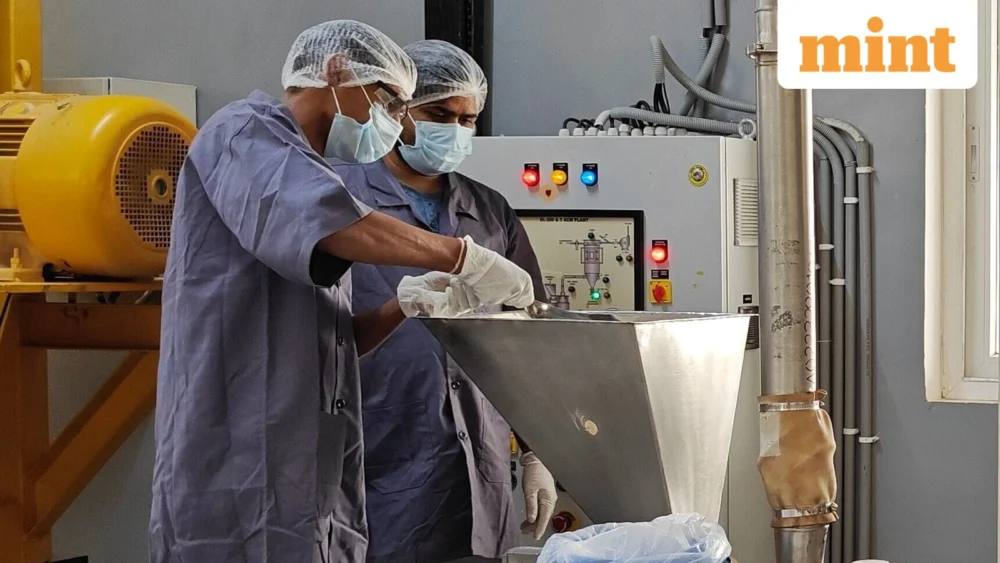
At the forefront of this industrial awakening is companies like Altmin, a battery materials firm that, three years ago, initiated the pioneering production of cathodes – a core component in lithium-ion batteries – on Indian soil. Operating a pilot plant within the International Advanced Research Centre for Powder Metallurgy and New Materials (ARCI) in Hyderabad since 2023, Altmin has successfully scaled its output to 250 kg per day of this crucial mineral, which forms a substantial portion of a battery cell’s chemistry. This collaborative effort with ARCI scientists underscores a concerted national push to localize a geopolitically sensitive supply chain. Building on this success, Altmin is now scaling towards industrial-grade cathode manufacturing with a 100,000-tonne capacity facility in Telangana. Furthermore, a landmark agreement with state-owned Singareni Collieries Co. Ltd (SCCL) will see the establishment of India’s first lithium refinery, designed to feed the domestic production of cathode active materials, marking a significant step towards vertical integration. R. Vijay, director at ARCI, highlights the journey: "We started working on the technology a decade back at a laboratory scale with only a couple of scientists. The last few years we have worked on bringing down the costs, solving the teething problems faced with scaling the technology from lab scale to plant scale."

The midstream segment encompasses critical battery components such as graphite anodes, separators, and electrolytes, positioning itself between raw material extraction and final cell assembly. India’s strategic focus is currently leaning towards lithium-iron phosphate (LFP) batteries, favored for their superior thermal stability in hot climates and cost-effectiveness compared to nickel and cobalt-based chemistries. Emerging chemistries like sodium-ion are also gaining traction. Several prominent Indian conglomerates and startups are actively investing in this space: Reliance Industries Ltd has unveiled plans to commence anode and cathode manufacturing by 2027-28; Epsilon Advanced Materials is already producing graphite anodes and is expanding into cathode production; Lohum Cleantech, initially a battery recycling startup, is now scaling its advanced materials business; and Neogen Chemicals is bolstering its electrolyte production capacities. These ambitious ventures aim to lay the groundwork for India’s nascent EV and energy storage ecosystem, which includes major players like Reliance, Exide Industries, Amara Raja Energy and Mobility, Ola Electric Mobility, and Waaree Technologies. The collective ambition is to carve out a significant share in the global battery market, mirroring, albeit on a smaller scale, China’s formidable dominance, thereby bolstering India’s energy security agenda.
According to data from the Observer Research Foundation (ORF), a prominent think tank, planned investments in battery and cell manufacturing across India currently total approximately ₹43,300 crore (roughly $5.2 billion), excluding the significant capital inflows into midstream component manufacturing by firms such as Altmin, Epsilon, and Neogen. Industry analysts like Satyadeep Jain from advisory firm Ambit emphasize that without a comprehensive battery manufacturing ecosystem spanning upstream, midstream, and downstream segments, India risks remaining a passive consumer, heavily reliant on imports and forfeiting substantial employment opportunities and current account benefits. Moreover, Jain sees a potential opening for India to supply midstream components to markets like the United States, which is actively seeking to diversify its supply chains away from China until its domestic capacities mature.
However, replicating China’s entrenched dominance presents formidable challenges in terms of scale and economic viability. The International Energy Agency (IEA) acknowledges that "diversifying the production of batteries and their supply chain is a substantial undertaking and may require trade-offs," necessitating significant time and investment to build domestic manufacturing, expertise, and close the cost gap with China. Indeed, China’s footprint spans every stage of the global battery supply chain. According to Jefferies, China controls approximately 70% of global lithium processing, 95% of graphite processing, and nearly 70% of synthetic graphite capacity. Its command extends to battery components, accounting for over 90% of global cathode and anode manufacturing. This colossal scale, coupled with low financing costs and strategic government subsidies, allows Chinese cell makers to price their products aggressively, often close to raw-material and energy costs, thereby squeezing margins for new entrants elsewhere. Rajat Verma, founder and CEO of Lohum, succinctly summarizes the challenge: "One is China’s ability to produce at a large scale, so they have economies of scale and economies of scope, which does make them the lowest possible cost player, even without the government subsidy. And then, there are government subsidies that have encouraged them to set up these capacities. The third bit – the dumping that they engage in – always has an indirect support of their government."

This aggressive market posture creates significant hurdles for emerging players like Altmin, which remains in a pre-revenue stage as cell manufacturers, both domestically and internationally, engage in protracted qualification processes and intense price negotiations. The approval process for advanced materials like cathodes can take two to four years for cell manufacturers outside China, starkly contrasting with an average of just 27 days in China. Anjani Sri Mourya Sunkavalli, founder and managing director of Altmin, voices the dilemma: "Supply managers within cell companies tell us that first you set up the industry, and then we will see. But how do we set up the industry without assured clients? And they ask us to match Chinese prices! We are just starting, we don’t yet have full control over the supply chain and input materials."
India’s National Programme on Advanced Chemistry Cell (ACC) Battery Storage mandates that selected beneficiaries, including Ola Cell Technologies and Reliance New Energy, achieve a domestic value addition of at least 25%, escalating to 60% within five years. This target has proven challenging. Industry analysts suggest that schemes offering upfront capital for factory setup, rather than production-linked incentives, might be more effective. The absence of long-term offtake agreements further complicates project financing, despite growing local capabilities in advanced battery materials. Currently, all key battery cell components can be imported into India from China without duties, and Indian cell manufacturers often face contractual obligations to source components from their Chinese technology partners. The International Institute for Sustainable Development (IISD) advocates for India to pursue backward integration into high-value cell components and equipment manufacturing to truly capture value across the battery supply chain.
In light of these challenges, some Indian firms are strategically targeting export markets. Epsilon Advanced Materials, for instance, is already supplying graphite anodes to customers in Japan, Korea, America, and Europe, leveraging the global desire for supply chain diversification away from China. The company is expanding its production capacity and has acquired Johnson Matthey’s LFP cathode active material technology center in Moosburg, Germany, in 2024. Vikram Handa, managing director at Epsilon, explains their strategy: "The Indian market is not ready to commit. These projects are not easy to finance because banks don’t understand them today. When we are discussing contracts for the outside market, these are 6-10 year contracts. In India, they just want to compare prices." While a significant portion of Epsilon’s cathode production will initially go to an automotive customer in the US, Handa has earmarked 15-20% capacity for Indian clients, anticipating domestic demand to materialize within three to four years. For now, Indian cell manufacturers remain highly price-sensitive and sometimes lack the sophisticated cell testing capabilities required to qualify advanced materials from new suppliers.

The strategic dilemma is evident even among established players. Amara Raja Energy and Mobility, for example, is establishing a 16GWh gigafactory in Telangana. For its initial phase, cell components will largely be sourced from China, balancing cost-efficiency with long-term security. Vijayanand Samudrala, president of new energy at Amara Raja, notes: "The material supply chain is the bigger challenge. You got to have a secure supply chain with a clear visibility of where the material is going to come from over a longer period of time and it should be cost-efficient for you to be competitive in the marketplace." While acknowledging China’s competitive advantage in the short to medium term, Samudrala emphasizes the need for a "Plan B" for security, even if it entails higher costs.
The reliance on Chinese technology transfer agreements, such as Exide Energy Solutions’ partnership with SVOLT and Amara Raja’s agreement with Gotion InoBat Batteries, carries inherent strategic and geopolitical risks. As Anika Chhillar of ORF points out, while these agreements provide access to technology, expertise, and global supply chains, they perpetuate a dependency. China has already demonstrated its willingness to weaponize its supply chain dominance, imposing broad export controls on lithium-ion battery materials, technologies, and equipment in October last year. These measures, expanding on previous restrictions, now cover high-performance battery cells and packs, cathode precursors, an extended range of anode materials, LFP cathode materials, and critical production equipment and technologies. This geopolitical reality, as Altmin’s Mourya highlights, means "Focus on sahi daam (right price) is not how this supply chain is going to pan out. There is geopolitics and mineral security at play here." Unlike solar panels, where India imposed tariffs to curb Chinese imports, similar measures for batteries have been absent due to a lack of significant domestic capacity and the technological complexity involved.
Despite groundbreaking battery research underway at institutions like ARCI, the Indian Institute of Science, the Central Electrochemical Research Institute, and various IITs, the chasm between laboratory innovation and industrial-scale production remains vast and capital-intensive. Sagar Mitra, a professor at IIT Bombay, believes that "The lag with China can be overcome by more effort, resources and manpower added to the system. We are in the research scale but are lacking in the industry scale. That lag has to be minimized by big players’ R&D effort." A critical impediment is the severe lack of "patient capital" in India for deep tech ventures. Unlike foreign investors who support long-gestation R&D with high-risk profiles, traditional Indian venture capitalists and domestic institutional investors often prioritize quick returns, creating a significant funding gap for science-led breakthroughs. As Epsilon’s Handa laments, "Risk capital does not exist in India. In India, scientists are struggling to raise patient capital."

The success of India’s efforts to de-risk its battery supply chain from China, without compromising on quality or scale, will be a defining factor in its industrial future. As a recent report by consulting firm Praxis Global Alliance succinctly puts it, "While China and the US lead production of next-gen chemistries, India’s presence in lithium-ion, sodium-ion and flow technologies remains limited. The next decade will define whether India becomes a global hub or remains a late-stage assembler in the battery supply chain." The journey is arduous, fraught with economic and geopolitical complexities, but the strategic imperative for India to build its own battery ecosystem has never been clearer.