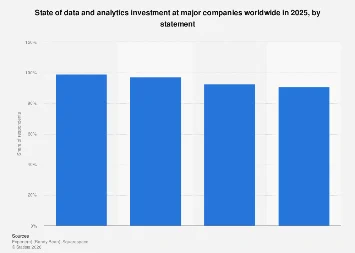
A significant majority of major global corporations identified investment in data and artificial intelligence (AI) as a paramount strategic priority in 2025, underscoring the transformative power these technologies are now wielding across the business landscape. This sentiment is further bolstered by the fact that an equally substantial proportion of these companies reported experiencing tangible, measurable improvements in their business operations and outcomes directly attributable to their data and AI initiatives. These findings paint a clear picture of a global business environment where data analytics and AI are no longer considered optional enhancements but rather foundational pillars for sustained growth, competitive advantage, and operational excellence.
The widespread adoption and prioritization of data and AI investment reflect a fundamental shift in corporate strategy. Businesses are increasingly recognizing that unlocking the potential of their vast data reservoirs, coupled with the analytical and predictive capabilities of AI, is crucial for navigating an increasingly complex and dynamic global marketplace. This strategic focus is not merely about staying current with technological trends; it is about fundamentally re-architecting business processes, enhancing decision-making, and driving innovation at an unprecedented scale. The insights gleaned from such investments are enabling companies to better understand customer behaviors, optimize supply chains, personalize product and service offerings, and identify new revenue streams, all while improving efficiency and reducing operational costs.
The survey, which canvassed the data and AI leadership of Fortune 1000 companies and other leading global brands, involved nearly 110 respondents. This robust sample size, drawn from influential entities within the global economic sphere, lends significant weight to the reported trends. The data indicates a pervasive understanding that in the 2025 fiscal year, resources allocated to data analytics and AI were not discretionary but essential for future-proofing operations and maintaining market relevance. This proactive stance suggests that companies are moving beyond mere experimentation to full-scale integration, viewing these technologies as integral to their core business functions.
Beyond the prioritization of investment, the reported tangible business value derived from these initiatives is a critical indicator of their efficacy. When companies can point to concrete improvements, such as increased revenue, reduced costs, enhanced customer satisfaction, or improved product development cycles, it validates the significant capital and human resources being channeled into these areas. This validation loop is crucial for continued investment and further innovation, creating a virtuous cycle of progress. It suggests that the initial hesitations or challenges associated with data and AI implementation are being overcome, replaced by a confident recognition of their return on investment.
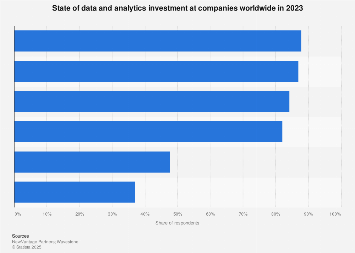
The landscape of data and AI investment is multifaceted, encompassing various strategic objectives and technological applications. Companies are leveraging data analytics for everything from predictive maintenance in manufacturing to sophisticated customer segmentation for targeted marketing campaigns. AI is being deployed to automate routine tasks, augment human capabilities in complex decision-making, and even to generate entirely new business models. The ability to process and analyze massive datasets in near real-time, combined with the power of machine learning algorithms, allows businesses to gain a competitive edge through deeper insights and more agile responses to market shifts.
Globally, this trend is mirrored across developed and emerging economies. While specific investment figures may vary by region and industry sector, the overarching commitment to data and AI as drivers of economic value is a consistent theme. In North America, for instance, venture capital funding for AI startups reached record highs in recent years, indicating a vibrant ecosystem of innovation. Similarly, in Europe, regulatory frameworks are evolving to support data utilization while ensuring ethical AI deployment, fostering responsible growth. In Asia, particularly in countries like China and South Korea, significant state and private investment is fueling rapid advancements in AI research and application, from autonomous vehicles to smart city initiatives.
The economic impact of this widespread data and AI adoption is profound and far-reaching. It is contributing to increased productivity across industries, driving economic growth, and creating new job opportunities in specialized fields such as data science, AI engineering, and machine learning ethics. However, it also presents challenges, including the need for upskilling and reskilling the workforce, addressing potential job displacement due to automation, and navigating complex ethical considerations surrounding data privacy and algorithmic bias. Governments and international organizations are increasingly focused on developing policies and frameworks to mitigate these risks and ensure that the benefits of data and AI are broadly shared.
For businesses that are yet to fully embrace data and AI, the findings of this 2025 survey serve as a stark reminder of the evolving competitive landscape. The gap between organizations that are data-driven and AI-enabled and those that are not is likely to widen, leading to significant disparities in performance and market share. The investment in data and AI is not a one-time expenditure but an ongoing commitment to continuous learning, adaptation, and innovation. It requires a strategic vision that integrates data governance, robust technological infrastructure, and a culture that embraces data-informed decision-making at all levels.
Looking ahead, the trajectory of data and AI investment is expected to continue its upward climb. As AI capabilities become more sophisticated and accessible, and as the volume and variety of data generated continue to explode, businesses will find even greater opportunities to leverage these technologies for competitive advantage. The key for organizations will be to move beyond simply adopting new tools and to instead foster a deep understanding of how data and AI can fundamentally transform their business models, enhance their customer relationships, and drive sustainable value creation in the decades to come. The businesses that successfully navigate this transformation in 2025 are positioning themselves as leaders in the digital economy of the future.