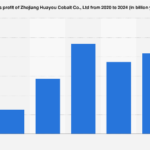
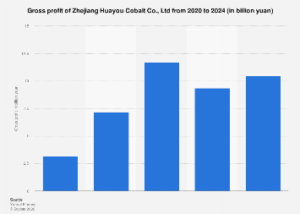


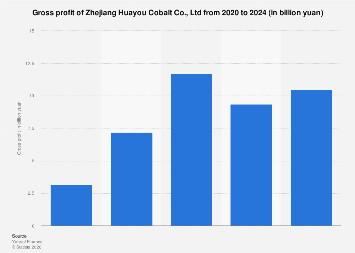
As the global demand for electric vehicles (EVs) and advanced battery technologies continues its exponential ascent, the profitability of key players in the battery materials supply chain, particularly those involved in cobalt extraction and processing, comes under intense scrutiny. Zhejiang Huayou Cobalt Co., Ltd., a prominent Chinese enterprise, stands at the forefront of this critical industry. While precise, up-to-the-minute financial data often resides within specialized commercial databases, an examination of the company’s operational context and market trends provides significant insight into its potential financial performance in 2024 and beyond. The company’s gross profit margins are intrinsically linked to the volatile global commodity markets for cobalt, nickel, and lithium, as well as its strategic positioning within the increasingly complex EV ecosystem.
The automotive industry’s pivot towards electrification has fundamentally reshaped demand patterns for battery raw materials. Cobalt, a vital component in the cathodes of many high-performance lithium-ion batteries, has historically been a significant contributor to Huayou Cobalt’s revenue. However, the commodity’s price has been subject to considerable fluctuation, driven by geopolitical factors, supply chain disruptions, and the increasing ethical concerns surrounding artisanal cobalt mining, predominantly in the Democratic Republic of Congo (DRC). For instance, cobalt prices, which saw a significant surge in the mid-2010s, have experienced periods of sharp decline and subsequent recovery, directly impacting the gross profit of companies like Huayou Cobalt. Analysts closely monitor the London Metal Exchange (LME) cobalt price as a key indicator of market sentiment and pricing power.
Beyond cobalt, Huayou Cobalt has strategically diversified its portfolio to include other essential battery metals like nickel and lithium. Nickel, particularly in its high-purity forms (Class 1), is increasingly critical for the development of nickel-rich cathode chemistries (e.g., NMC 811), which offer higher energy density and longer range for EVs. The company’s investments in nickel processing facilities and its engagement in long-term supply agreements for nickel precursors are crucial for its revenue streams and profitability. Similarly, the burgeoning demand for lithium-ion batteries has propelled lithium to become a cornerstone commodity. Huayou Cobalt’s expansion into lithium resource acquisition and processing, including investments in brine and hard-rock lithium projects, signifies a proactive approach to capturing value across the entire battery material spectrum. The price of lithium carbonate and lithium hydroxide, its primary refined forms, has also experienced dramatic volatility in recent years, underscoring the inherent risks and rewards for producers.
The global competitive landscape for battery materials is intensely dynamic. Huayou Cobalt faces competition from both established mining and refining giants and emerging players, particularly in China, Australia, and North America. Companies like Glencore, Vale, and BASF are significant entities in the broader nickel and cobalt markets. In the lithium space, competitors range from SQM and Albemarle to numerous Chinese lithium producers. This competitive pressure necessitates continuous investment in operational efficiency, technological innovation, and cost management to maintain healthy gross profit margins. Efficiency gains in extraction, processing, and recycling technologies can significantly reduce per-unit production costs, thereby bolstering profitability even in the face of commodity price downturns.
Furthermore, the geopolitical dimension of the battery supply chain cannot be overstated. China’s dominance in battery manufacturing and material processing, coupled with its significant investments in overseas resource projects, positions companies like Huayou Cobalt favorably. However, this also exposes them to potential trade tensions, regulatory changes, and calls for supply chain diversification from Western governments seeking to reduce reliance on any single nation. Huayou Cobalt’s ability to navigate these geopolitical complexities, secure stable and ethically sourced raw material supplies, and adapt to evolving trade policies will be paramount to its sustained financial health.
Environmental, Social, and Governance (ESG) considerations are also increasingly influencing the financial performance of companies in the mining and metals sector. Investors, consumers, and regulators are placing greater emphasis on responsible sourcing, carbon footprint reduction, and community engagement. Huayou Cobalt’s efforts to improve transparency in its supply chains, particularly concerning cobalt, and its investments in sustainable mining and processing practices, are not just ethical imperatives but also critical for attracting investment, securing long-term contracts with major automotive manufacturers who have their own stringent ESG targets, and maintaining a positive corporate reputation. Failure to meet these evolving ESG standards could lead to reputational damage, divestment by institutional investors, and ultimately, a negative impact on its gross profit and overall valuation.
Analyzing the potential gross profit for Zhejiang Huayou Cobalt in 2024 requires a multifaceted approach, considering not only commodity prices but also production volumes, operational costs, and strategic market positioning. If commodity prices for cobalt, nickel, and lithium remain at robust levels, and the company successfully scales its production capacity while maintaining cost discipline, its gross profit is likely to see favorable performance. Conversely, a significant downturn in key commodity prices, coupled with rising operational expenses or unexpected supply chain disruptions, could exert downward pressure on margins. The company’s ongoing investments in downstream processing, including the production of battery precursors and cathode active materials, represent a strategy to capture more value along the supply chain, potentially smoothing out the volatility associated with raw material commodity prices and enhancing overall profitability. The integration into battery cell manufacturing or partnerships with battery makers could further solidify its market position and contribute to more stable and predictable financial outcomes. The success of these diversification strategies will be a key determinant of Huayou Cobalt’s gross profit trajectory in the coming years.