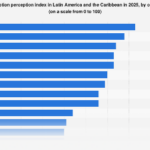


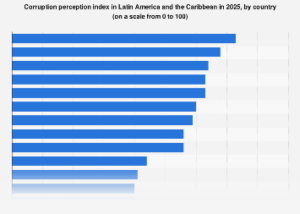
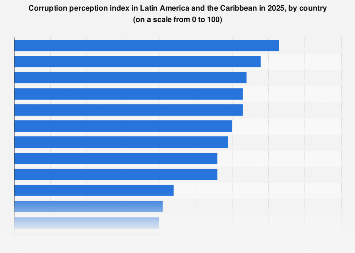
Uruguay has once again emerged as a beacon of perceived integrity within Latin America and the Caribbean, according to the latest Corruption Perception Index (CPI) for 2025. The nation secured a commendable score of 73 out of a possible 100, positioning it as the least corrupt country in the region. This consistent performance highlights Uruguay’s robust institutional frameworks and a strong societal commitment to transparency and accountability. In stark contrast, Venezuela registered a score of a mere 10 points, signaling an alarmingly high level of perceived corruption and underscoring the profound challenges the nation faces in fostering trust and good governance.
The CPI, compiled annually by Transparency International, offers a critical barometer of public sector corruption as perceived by experts and business people. Its methodology, which aggregates data from various sources, provides a standardized measure to compare corruption levels across different countries. A higher score indicates a lower level of perceived corruption. The significant divergence between Uruguay and Venezuela in the 2025 rankings reflects not only differing national realities but also the varied trajectories of democratic development and economic stability across Latin America.
For Uruguay, its leading position is not an isolated incident but a testament to decades of sustained efforts in strengthening democratic institutions, ensuring judicial independence, and promoting a culture of ethical conduct in public life. The country has consistently ranked high in global indices for its ease of doing business, low levels of inequality, and effective social policies, all of which are intrinsically linked to a low-corruption environment. This perceived incorruptibility makes Uruguay an attractive destination for foreign investment and a stable partner in international trade, contributing to its sustained economic growth and social progress. Its success serves as a potential model for other nations in the region seeking to improve their governance standards.
Conversely, Venezuela’s exceptionally low score paints a grim picture of a nation struggling with systemic corruption that permeates its political and economic structures. The score of 10 suggests a pervasive environment where bribery, embezzlement, and illicit enrichment are widely believed to be commonplace. This deep-seated corruption has had devastating consequences for Venezuela, exacerbating its severe economic crisis, fueling social unrest, and undermining public services. The lack of transparency and accountability has deterred foreign investment, led to a significant brain drain, and eroded the confidence of its citizens in their government and institutions. Reversing this trend will require a monumental and sustained effort focused on judicial reform, the establishment of independent anti-corruption bodies, and a commitment to democratic principles.
The broader landscape of corruption in Latin America remains a significant impediment to development and prosperity. Numerous experts within the region identify corruption as the primary obstacle hindering their countries’ progress. This sentiment is particularly strong in Peru, where a substantial proportion of respondents believe corruption is their nation’s most pressing problem. Colombia and Brazil also feature prominently on this list, indicating widespread public concern.
In Colombia, the legacy of protracted internal conflict, including drug trafficking and guerrilla warfare, has unfortunately fostered an environment where perceptions of elite capture of the political system are notably high, even ranking among the highest globally. This perception suggests that powerful, often illicit, interests may exert undue influence over government policy and decision-making. Recognizing the detrimental impact of this reputation, the Colombian government has undertaken considerable legislative action to combat corruption. Key initiatives include reforms to the Colombian Penal Code and the enactment of specific Anti-Corruption Acts. These legislative efforts aim to strengthen law enforcement, enhance transparency in public procurement, and impose stricter penalties for corrupt practices. The effectiveness of these measures will be crucial in rebuilding public trust and creating a more equitable playing field for economic activity.
Brazil, another economic powerhouse in the region, has also grappled with significant corruption scandals in recent years, impacting its political stability and economic performance. Public outcry and subsequent investigations have led to increased scrutiny of public officials and corporations. While the scale of Brazil’s economy and population makes corruption a complex issue to eradicate, the heightened awareness and the actions taken by judicial and law enforcement agencies signal a growing commitment to address the problem, though public perception remains a challenge.
The economic ramifications of corruption in Latin America are profound and multifaceted. Beyond the direct loss of public funds through illicit means, corruption distorts markets, discourages investment, and increases the cost of doing business. It diverts resources away from essential public services such as healthcare, education, and infrastructure, disproportionately affecting the most vulnerable populations. Moreover, it erodes the rule of law, creating an uneven playing field where connections and bribes trump merit and fair competition. This can stifle innovation and entrepreneurship, as legitimate businesses struggle to compete with those that benefit from corrupt networks.
The World Bank estimates that corruption costs developing countries billions of dollars annually, hindering poverty reduction efforts and perpetuating inequality. In Latin America, where many economies are still developing and reliant on foreign direct investment, high levels of perceived corruption can act as a significant deterrent. Investors often factor in the potential costs associated with bribery, bureaucratic hurdles, and legal uncertainties when making investment decisions. This can lead to a suboptimal allocation of capital, with projects that offer greater returns but lack political connections being overlooked.
Furthermore, corruption can undermine democratic institutions by weakening the checks and balances necessary for good governance. When political systems are perceived to be controlled by a corrupt elite, public participation and civic engagement can decline, leading to apathy and disaffection. This can create a vicious cycle, where a lack of accountability further enables corrupt practices.
Addressing corruption in Latin America requires a comprehensive and sustained approach that involves not only legislative reforms but also a fundamental shift in societal attitudes and behaviors. Strengthening independent judiciaries, empowering anti-corruption agencies, promoting transparency in government contracts, and fostering an active civil society are all critical components. International cooperation and the sharing of best practices can also play a vital role in supporting national efforts.
The stark contrast between Uruguay’s perceived integrity and Venezuela’s deep-seated corruption issues serves as a powerful reminder of the divergent paths nations can take. While Uruguay’s success offers a hopeful precedent, the ongoing challenges faced by many other countries underscore the persistent need for vigilance, reform, and a collective commitment to building cleaner, more equitable, and more prosperous societies across the Latin American continent. The fight against corruption is not merely an ethical imperative; it is an economic necessity for the region’s sustained development and its integration into the global economy on fair and competitive terms.