

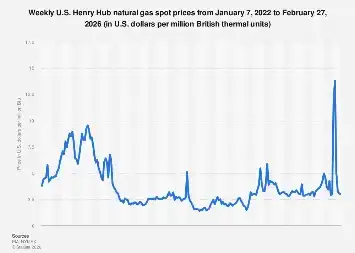
The price of natural gas at the U.S. Henry Hub, a key barometer for North American energy markets, was recorded at $3.01 per million British thermal units (MMBtu) on February 27, 2026. This figure, while representing a specific point in time, underscores the dynamic and often unpredictable nature of natural gas pricing, which is heavily influenced by a confluence of factors ranging from weather patterns to global geopolitical events. The trend since 2022 has demonstrated significant price fluctuations, with colder weather fronts frequently acting as catalysts for price surges, impacting refiners and broader energy demand. This sensitivity to meteorological conditions is not unique to the U.S. market; the European natural gas benchmark, the Dutch TTF, has also experienced upward price movements during periods of unusually cold weather, highlighting the interconnectedness of global energy markets.
The Henry Hub’s significance in the U.S. energy landscape cannot be overstated. Established as the primary pricing benchmark for natural gas traded on major exchanges like the New York Mercantile Exchange and later the Intercontinental Exchange since 1990, it serves as a crucial reference point for contracts and market analysis. The physical hub itself, a complex distribution pipeline system located in Louisiana, has been operational since the 1950s. Historically, the Henry Hub has witnessed periods of extreme price volatility. The highest annual average prices were observed in 2005 and 2008, exceeding $8 per MMBtu. More recently, in 2022, weekly average prices approached $10 per MMBtu, a surge attributed to widespread global supply constraints and heightened demand. This demonstrates the market’s susceptibility to disruptions, whether they stem from extreme weather events or broader supply chain challenges.
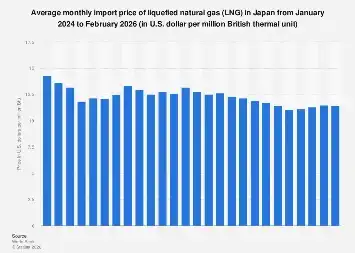
The evolving landscape of U.S. natural gas exports has also become a critical determinant of domestic pricing. In recent years, the United States has strategically invested in expanding its liquefied natural gas (LNG) liquefaction and export infrastructure. This expansion broadens the U.S. market reach, allowing it to serve a more diverse international customer base. The geopolitical shifts that began in 2022, particularly sanctions on Russian energy imports, prompted many European nations to seek alternative natural gas suppliers. The U.S. emerged as a significant provider, and consequently, the monthly LNG export prices from the U.S. have mirrored the volatility seen in Henry Hub pricing. These export dynamics are intricately linked to global energy security concerns and the shifting allegiances in international energy trade, directly impacting the balance between domestic supply and international demand.
The market data from January 2022 through February 2026 illustrates these price dynamics. While the provided data points offer a snapshot of weekly prices, a broader analysis reveals distinct periods of elevated pricing. For instance, the surges seen in late 2022 and early 2023 can be correlated with the heightened global demand for LNG as Europe sought to secure supplies amidst the ongoing conflict in Eastern Europe. Conversely, periods of milder weather or increased domestic production have typically led to price moderation. The projections and historical data suggest that the Henry Hub price will likely continue to be influenced by these multifaceted drivers.
Factors influencing future prices include the pace of global economic recovery, which directly impacts energy consumption. The transition towards renewable energy sources also plays a role, potentially affecting long-term demand for natural gas, though its role as a transitional fuel is expected to remain significant for several decades. Additionally, U.S. domestic production levels, influenced by drilling activity, technological advancements, and regulatory environments, will continue to shape supply dynamics. Infrastructure development, including pipeline expansions and new LNG export terminals, will also be critical in determining the U.S.’s capacity to respond to both domestic and international market signals.
Expert analysis suggests that while the extreme price spikes of 2022 may not be a constant feature, the market is likely to remain susceptible to weather-related disruptions and geopolitical events. The U.S. Energy Information Administration (EIA) often provides forecasts that consider these variables, projecting a range of potential price scenarios based on different assumptions regarding economic growth, global demand, and supply availability. For example, a harsh winter in major consuming regions could significantly boost demand, pushing prices upwards. Conversely, a robust increase in renewable energy adoption or a slowdown in industrial activity could dampen demand.
The relationship between Henry Hub prices and global benchmarks like the TTF and Japan Korea Marker (JKM) is a subject of ongoing study. While arbitrage opportunities exist, the cost of liquefaction and shipping creates a natural spread. The increasing U.S. LNG export capacity has effectively integrated U.S. gas into the global market more deeply, meaning that events impacting international supply and demand will have a more pronounced effect on domestic prices. The strategic importance of natural gas as a fuel for power generation and industrial processes, coupled with its role in producing essential chemicals, ensures its continued relevance in the global energy mix. Therefore, understanding the trends and influencing factors of the Henry Hub price remains paramount for market participants, policymakers, and consumers alike. The market’s inherent volatility underscores the need for robust risk management strategies and a keen awareness of the global energy landscape. The ongoing transition to cleaner energy sources adds another layer of complexity, requiring careful consideration of how natural gas will fit into the long-term energy security framework of nations worldwide.