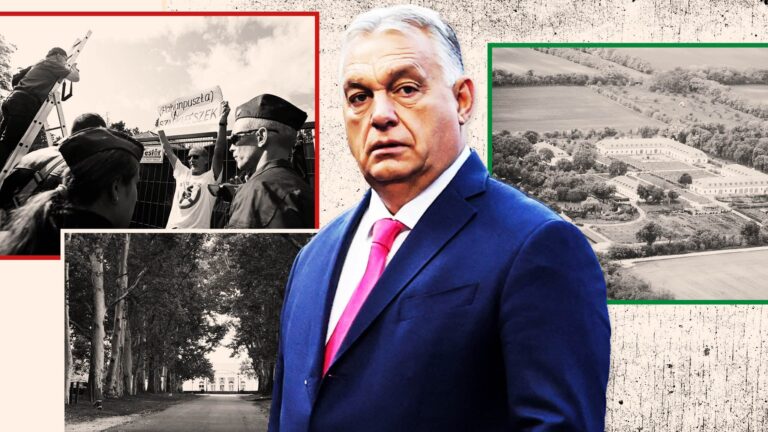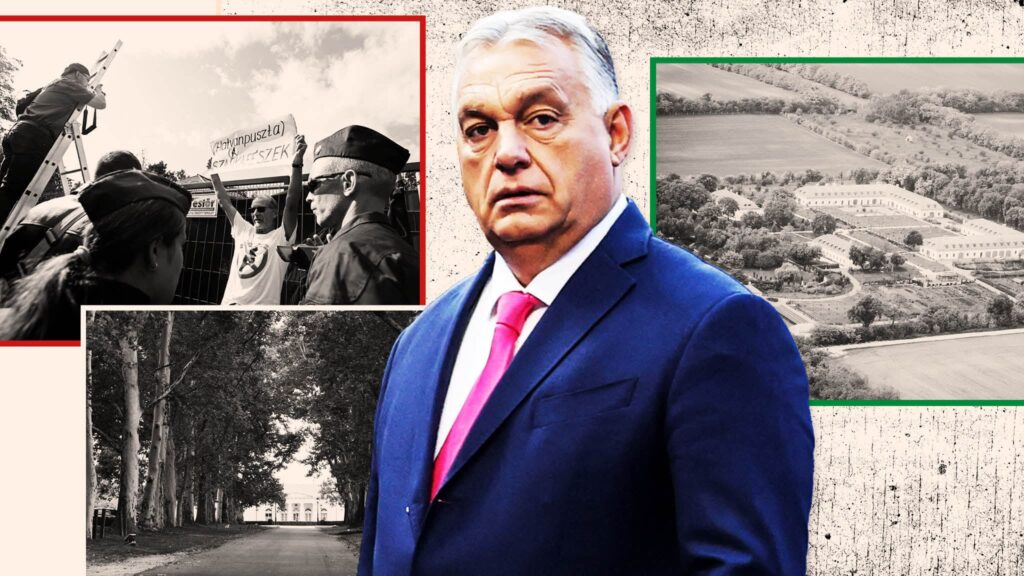


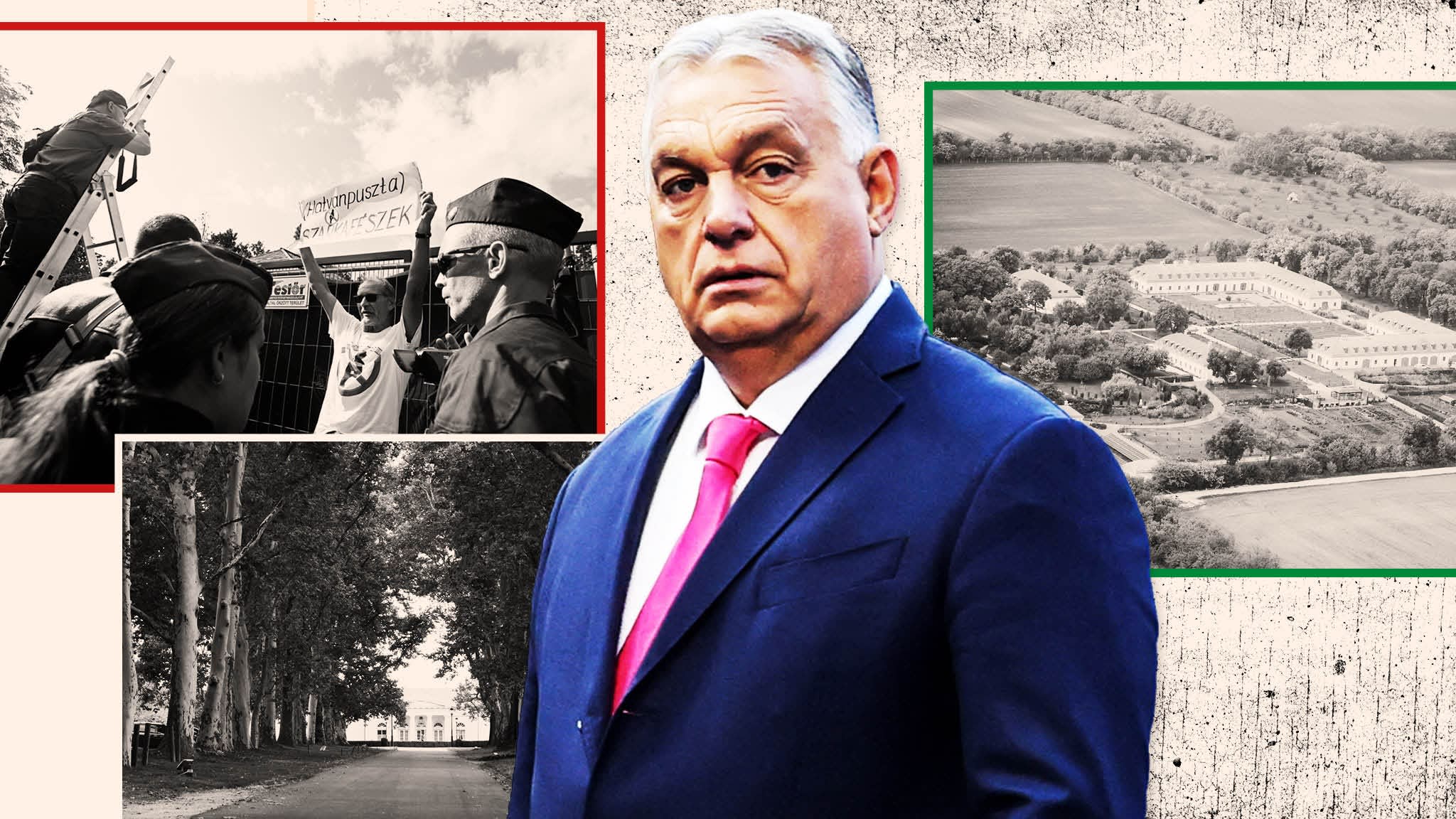
In the rolling hills of the Váli Valley, roughly 45 kilometers west of Budapest, lies the village of Felcsút. To a casual observer, the settlement of roughly 1,900 inhabitants might appear as just another quiet corner of the Hungarian countryside. However, over the past decade, Felcsút has undergone a transformation so profound that it has become a central case study for economists, political scientists, and anti-corruption watchdogs investigating the intersection of state power and private wealth in Central Europe. The village, where Prime Minister Viktor Orbán spent much of his childhood, has evolved into an improbable hub of high-end infrastructure, sporting excellence, and concentrated corporate interest, reflecting the broader economic shifts within Hungary’s "National System of Cooperation" (NER).
The most visible symbol of this transformation is the Pancho Aréna, a stunning piece of organic architecture designed by the late Imre Makovecz. Opened in 2014, the stadium serves as the home for the Puskás Akadémia FC. While its sweeping wooden arches and slate roof are aesthetically acclaimed, the facility’s scale tells a different story: it has a seating capacity of approximately 3,500—nearly double the entire population of the village. The funding for such projects often stems from a unique Hungarian tax-incentive scheme known as TAO, which allows corporations to divert a portion of their corporate tax directly to sports organizations rather than the central treasury. Critics argue this creates a "shadow budget" that bypasses standard parliamentary oversight, while proponents claim it has revitalized Hungarian athletics.
The economic gravity of Felcsút is inseparable from the meteoric rise of Lőrinc Mészáros, a childhood friend of the Prime Minister and the former mayor of the village. Once a modest gas-fitter, Mészáros has ascended to become one of Hungary’s wealthiest individuals, with a net worth estimated by Forbes to fluctuate between $1.2 billion and $1.6 billion. His business empire, centered around the holding company Opus Global, spans construction, energy, agriculture, media, and tourism. The rapid expansion of his portfolio is frequently linked to his success in securing public procurement contracts, many of which are funded by the European Union’s cohesion and structural funds.
Analysis of public tender data reveals a striking pattern: companies associated with the Mészáros family or their close business partners often win significant shares of large-scale infrastructure projects. This concentration of capital has led to what economists describe as a "captured economy," where market competition is sidelined in favor of a politically loyal national bourgeoisie. From an economic perspective, this model aims to reduce Hungary’s dependence on foreign multinational corporations by fostering a class of domestic "national champions." However, international bodies like the European Commission and the European Anti-Fraud Office (OLAF) have raised concerns regarding the transparency and competitiveness of these procurement processes.
The village’s infrastructure boom extends beyond the football pitch. One of the more controversial developments is the Vali-völgyi light railway, a narrow-gauge tourist train that runs for six kilometers through Felcsút and its surroundings. The project, which cost approximately €2 million—the majority of which was provided by EU funds—was intended to bolster local tourism. However, ridership figures have frequently fallen short of the ambitious projections submitted in the project’s feasibility studies. For many analysts, the railway serves as a microcosm of "prestige investment," where capital is allocated based on political proximity rather than strict cost-benefit analysis or market demand.
This local phenomenon has significant macroeconomic implications for Hungary’s relationship with the European Union. In recent years, the European Commission has frozen billions of euros in funding earmarked for Hungary, citing concerns over the rule of law and the systemic failure to prevent corruption in public spending. The "Felcsút model" of development is often cited in the EU’s annual Rule of Law reports as evidence of institutional weaknesses. The freezing of these funds has placed immense pressure on the Hungarian forint and forced the government to seek alternative sources of financing, including high-interest sovereign debt and investments from non-EU actors like China and South Korea.
The concentration of wealth in such a small geographical area also highlights the widening disparity between Hungary’s "winners" and the broader rural population. While Felcsút boasts pristine roads, a modern sports complex, and manicured public spaces, many other villages in the eastern and northern reaches of the country struggle with crumbling infrastructure, depopulation, and a lack of basic services. This asymmetric development challenges the traditional narrative of cohesion policy, which is designed to level the playing field across different regions. Instead, Felcsút has become an island of prosperity, fueled by state-directed capital flows that do not necessarily ripple out to the wider region.
From a global perspective, the economic trajectory of Felcsút mirrors trends seen in other "illiberal" democracies where personal loyalty to the executive branch is rewarded with economic opportunity. Similar patterns of "hometown development" have been observed in Turkey under Recep Tayyip Erdoğan and in various post-Soviet states. In these systems, the line between public funds and private gain becomes increasingly blurred. The economic risk of such a system is twofold: first, it creates a fragile economy dependent on the political survival of a single leader; and second, it stifles genuine innovation by signaling to entrepreneurs that political connections are more valuable than competitive products or services.
Market data suggests that the dominance of the NER-affiliated companies in the construction and energy sectors has led to higher costs for public projects. When competition is limited, the "political premium" added to contract bids can inflate the price of infrastructure by as much as 20% to 30% compared to competitive market rates. This inefficiency acts as a hidden tax on the Hungarian public, as the capital that could have been used for healthcare or education is instead funneled into high-margin contracts for a select few.
Despite the international scrutiny, the development of Felcsút shows no signs of slowing down. Recent projects include the expansion of luxury hotel facilities and further investments in the Alcsút Arboretum, a nearby historical park. The village has effectively become a headquarters for the country’s new economic elite. On match days at the Pancho Aréna, the VIP boxes are often filled with the ministers, CEOs, and influential figures who command the Hungarian economy, turning the village into a de facto center of power that rivals the parliament building in Budapest.
The long-term sustainability of the Felcsút economic model remains a subject of intense debate among financial analysts. As the European Union tightens its "conditionality mechanism," which links funding to judicial independence and anti-corruption measures, the flow of capital that fueled the village’s rise may begin to dry up. If the Hungarian government cannot resolve its disputes with Brussels, it may be forced to scale back the very subsidies and tax breaks that sustain the Puskás Akadémia and its surrounding ecosystem. Furthermore, the high concentration of assets in the hands of a few individuals like Mészáros creates a systemic risk; any sudden shift in the political landscape could lead to a rapid devaluation of these "political" assets, with potential spillover effects for the Hungarian banking sector.
In summary, Felcsút is more than just a village; it is a physical manifestation of a specific economic ideology. It represents a move away from the neoliberal, market-driven transitions of the 1990s toward a state-led, patron-client model of capitalism. While the village itself has benefited from world-class facilities and significant investment, the "Felcsút miracle" serves as a polarizing symbol of how wealth is generated and distributed in 21st-century Hungary. For the residents, it is a source of local pride and modernization; for the international community, it remains a cautionary tale about the risks of institutional capture and the erosion of competitive markets in the heart of Europe. As Hungary navigates its complex geopolitical and economic future, the riches of Felcsút will continue to serve as a barometer for the health of its democracy and the transparency of its economy.