

The global energy landscape is currently grappling with a seismic shift as crude oil prices surge past the $100-per-barrel threshold for the first time in four years. Triggered by the escalating conflict involving Iran, this price spike has sent ripples of anxiety through international markets, reviving fears of stagflation and supply chain paralysis. However, as the world’s largest economies brace for the impact, a distinct divergence is emerging in how different nations absorb the blow. While many Asian neighbors and Western counterparts face immediate inflationary pressure, China appears increasingly insulated from the worst of the volatility. This resilience is not accidental; rather, it is the fruition of a twenty-year strategic pivot designed to reduce the country’s vulnerability to maritime blockades and global commodity cycles.
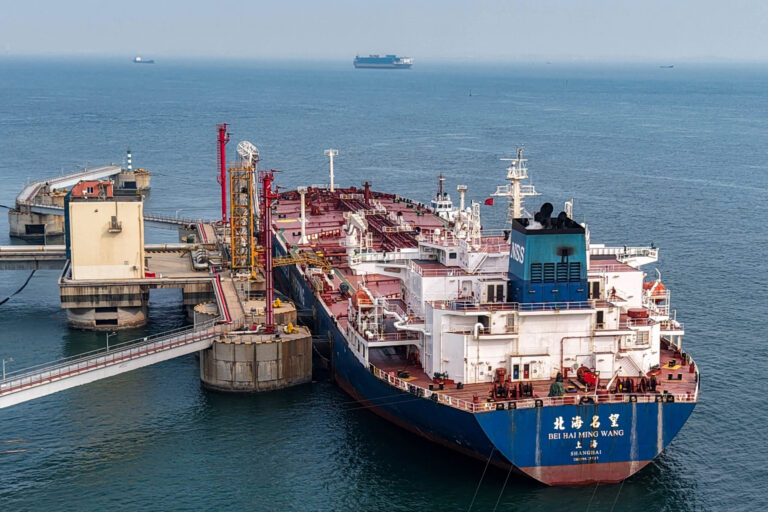
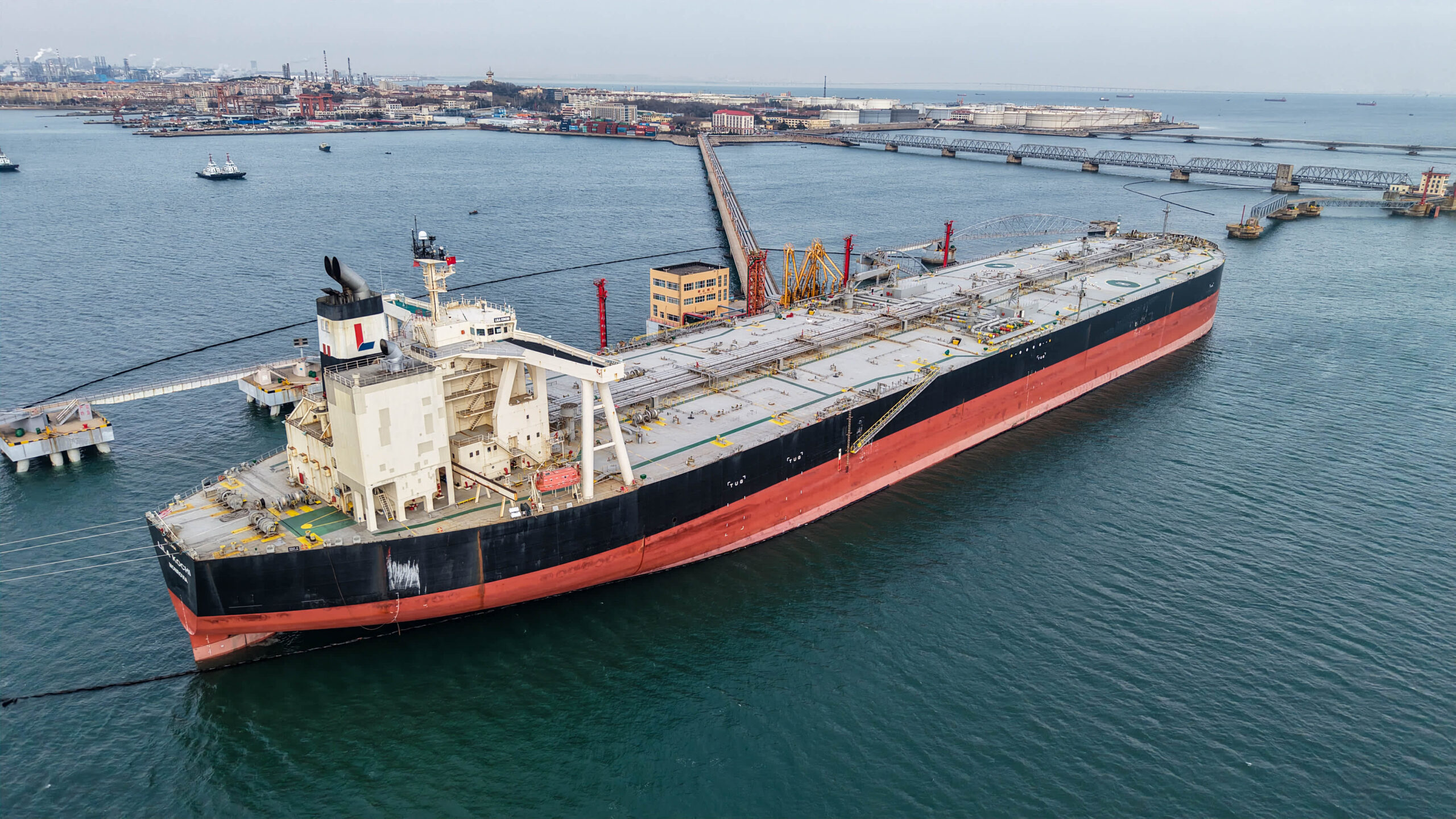
The most immediate line of defense for the Chinese economy is its massive physical buffer. Over the last two decades, Beijing has quietly orchestrated the construction of one of the world’s most extensive strategic and commercial crude reserves. As of early 2026, China’s onshore crude stockpiles are estimated at approximately 1.2 billion barrels. To put this into perspective, this volume represents roughly three to four months of total national consumption. In a scenario where global supply is constricted or prices skyrocket due to geopolitical instability, these reserves act as a macroeconomic shock absorber, allowing the government to release supply into the domestic market to stabilize prices and ensure that industrial production remains uninterrupted. This capacity to "wait out" a price spike provides a level of fiscal and emotional security that few other net-importing nations can claim.
Beyond the sheer volume of stored oil, the geography of China’s energy procurement has undergone a fundamental transformation. For years, the "Malacca Dilemma"—the fear that a conflict could choke off the narrow strait through which most of China’s energy flows—has dominated Beijing’s security thinking. In response, the nation has aggressively pursued overland alternatives. By investing heavily in pipelines connecting its industrial hubs to Russian and Central Asian oil fields, China has successfully diversified its logistical routes. While the Strait of Hormuz remains a critical artery—accounting for roughly 31% of global seaborne oil flows and nearly 13 million barrels a day—China’s reliance on this specific maritime passage has been diluted. Currently, only about 40% to 50% of China’s seaborne imports pass through the strait, a significant reduction from previous decades.

The economic weight of the Strait of Hormuz on China’s broader economy is also surprisingly manageable when viewed through the lens of total consumption. While the strait is a flashpoint for global oil traders, shipments passing through this narrow waterway account for only about 6.6% of China’s overall energy consumption. When natural gas is included, the figure rises by a mere 0.6%. This data suggests that while a prolonged closure of the strait would certainly be disruptive, it would not be existential for the Chinese economy in the way it might be for other regional powers.
A comparative analysis of the world’s three largest energy consumers—the United States, China, and India—further highlights China’s unique positioning. The United States, having undergone a shale revolution over the last fifteen years, is now the world’s largest producer of oil. While American consumers are still sensitive to global price parity at the pump, the U.S. economy as a whole benefits from high prices in terms of domestic production revenue and energy independence. Conversely, India remains the most vulnerable of the trio. India is heavily dependent on petroleum imports, which account for nearly 25% of its total energy consumption, and it lacks the massive strategic reserves and the advanced electrification infrastructure seen in China. In contrast, oil accounts for only about 14% of China’s total energy mix, a figure that continues to decline as the nation aggressively pursues its "dual carbon" goals.
The structural hedge provided by China’s transition to a "new energy" economy is perhaps the most significant factor in its newfound resilience. The electrification of transport is no longer just an environmental initiative; it is a pillar of national security. China has become the undisputed global leader in electric vehicle (EV) adoption, with new-energy vehicles now accounting for more than half of all new passenger car sales. This shift is particularly evident in the commercial sector. The rapid deployment of electric trucks and buses has already displaced over 1 million barrels per day of oil demand. Analysts expect this displacement to accelerate, with another 600,000 barrels per day likely to be removed from the oil demand equation within the next year. As the transport sector—traditionally the largest consumer of petroleum—shifts toward the power grid, the "oil sensitivity" of the Chinese economy diminishes on an annual basis.
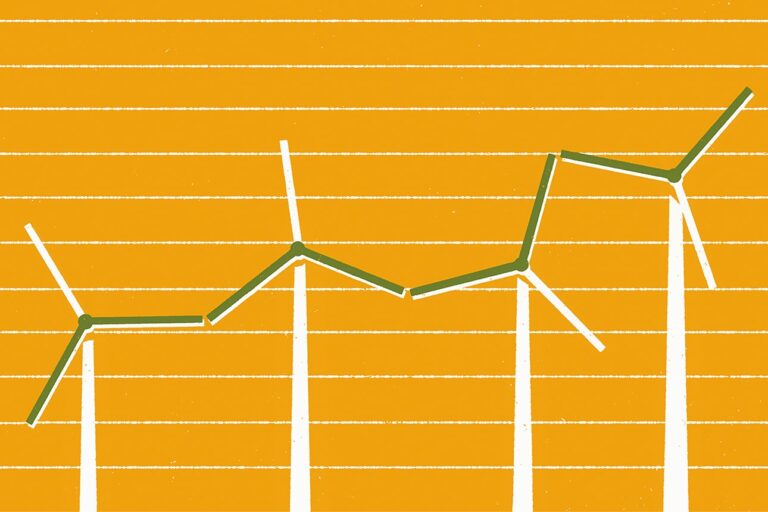
Crucially, China’s power grid itself is remarkably decoupled from the oil market. In many Asian and European economies, oil and natural gas play a significant role in electricity generation, meaning high oil prices lead directly to higher utility bills for factories and households. In China, however, oil and natural gas combined account for only about 4% of the power generation mix. The Chinese grid is primarily fueled by coal and an exponentially growing share of renewables. In 2024 alone, renewable energy sources provided roughly 80% of the growth in China’s electric power demand. This means that when oil prices surge, the cost of keeping the lights on and the factories running in China remains relatively stable, powered by domestic coal and a massive fleet of wind turbines and solar farms.

Despite this progress, the transition remains a work in progress. Coal continues to be the backbone of the Chinese energy system, serving as a reliable, albeit carbon-intensive, baseline. While coal consumption is beginning to stagnate as renewables take over the growth margin, it remains a domestic resource that protects China from the whims of Middle Eastern geopolitics. Furthermore, China’s unique diplomatic position has allowed it to maintain access to discounted energy sources. In the face of U.S. sanctions, China has remained a primary buyer of Iranian oil, which often trades at a significant discount to global benchmarks. While the current war puts this supply at risk, analysts suggest that China could pivot much of this volume to Russian imports, which have also become more integrated into the Chinese market through new infrastructure like the Power of Siberia pipelines.
The role of State-Owned Enterprises (SOEs) also provides a layer of stability that market-driven economies lack. China’s "Big Three" oil companies—PetroChina, Sinopec, and CNOOC—operate under a mandate that balances profit with national energy security. These entities are more likely to absorb short-term losses to maintain supply stability than private-sector firms. While this can lead to inefficiencies, in times of global crisis, it allows the state to exert direct control over energy distribution and pricing, preventing the kind of runaway inflation that can destabilize a society.
Looking toward the end of the decade, China’s strategic direction appears set. The government aims to increase the share of non-fossil fuels in its total energy consumption to 25% by 2030, up from roughly 21.7% in 2025. Each percentage point gained in this area represents millions of barrels of oil that the country no longer needs to import. The current crisis in the Middle East is likely to serve as an accelerant for this policy rather than a deterrent. For Beijing, $100 oil is a stark reminder that reliance on foreign fossil fuels is a strategic liability.
In conclusion, while a sustained period of triple-digit oil prices will undoubtedly exert pressure on global growth, China is navigating this volatility from a position of relative strength. Through a combination of massive strategic stockpiling, the diversification of import routes, and a world-leading transition toward an electrified transport and power sector, China has built a multi-layered defense against energy shocks. The country’s sensitivity to oil price fluctuations is on a permanent downward trajectory, marking a significant shift in the global economic balance of power. As other nations struggle to manage the inflationary fallout of the Iran war, China’s long-term vision of energy independence through decarbonization is proving to be a potent economic shield.