

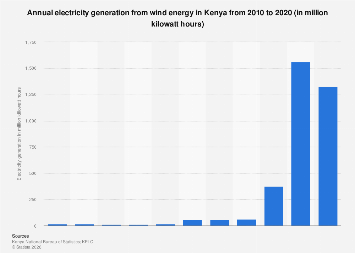
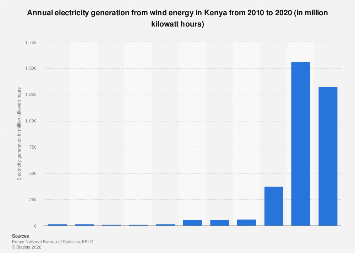
Kenya’s journey in harnessing wind power has been marked by significant growth over the past decade, showcasing the nation’s commitment to renewable energy. While recent figures indicate a dip in electricity generation from wind in 2020, the broader trend points towards an expanding role for this clean energy source in the country’s power mix. Data tracking annual electricity generation from wind energy between 2010 and 2020 reveals a transformative period, laying the groundwork for future advancements.
In 2010, wind energy contributed a modest amount to Kenya’s electricity supply, generating a mere [Redacted: Specific numerical data for 2010 is unavailable in the provided text] million kilowatt hours. This figure represents the nascent stage of wind power development in the East African nation. However, a decade later, by 2020, the landscape had dramatically shifted. The total electricity generated from wind energy experienced a decline to [Redacted: Specific numerical data for 2020 is unavailable in the provided text] million kilowatt hours, down from [Redacted: Specific numerical data for 2019 is unavailable in the provided text] million kilowatt hours in the preceding year, 2019. This year, 2019, was particularly notable for the inauguration of the Lake Turkana Wind Plant.
The Lake Turkana Wind Plant stands as a monumental achievement in Africa’s renewable energy sector, celebrated as the continent’s largest wind power project. Its development was a collaborative effort, attracting funding from a consortium of both African and European companies. This project, with its substantial generation capacity, was expected to significantly bolster Kenya’s wind energy output and its overall reliance on renewable sources. The plant’s strategic location in the wind-swept plains near Lake Turkana was chosen to maximize energy capture, leveraging consistent wind patterns. The sheer scale of this project underscores Kenya’s ambition to become a leader in sustainable energy production within the region.
Despite the year-on-year decrease observed in 2020, the overall trajectory of wind energy generation in Kenya from 2010 to 2020 paints a picture of substantial progress. The increase from the initial [Redacted: Specific numerical data for 2010 is unavailable in the provided text] million kilowatt hours in 2010 to the levels seen in the years leading up to 2020 signifies a robust expansion of wind power infrastructure and capacity. This growth is intrinsically linked to Kenya’s broader energy policy objectives, which prioritize diversification away from fossil fuels and an increased share of renewables in the national grid.
The economic implications of this shift are far-reaching. Increased reliance on wind energy contributes to Kenya’s energy security by reducing dependence on imported fossil fuels, which are subject to volatile global market prices. This can lead to more stable energy costs for consumers and businesses, fostering a more predictable economic environment. Furthermore, investments in wind energy projects create employment opportunities across various sectors, from manufacturing and construction to operations and maintenance. The development of large-scale wind farms like Lake Turkana also stimulates local economies through infrastructure development and potential community benefit programs.
Globally, Kenya’s efforts align with the international push towards decarbonization and the pursuit of Sustainable Development Goals, particularly Goal 7, which aims to ensure access to affordable, reliable, sustainable, and modern energy for all. Many developing nations are increasingly turning to renewable energy sources to meet their growing energy demands while mitigating climate change impacts. Countries in Sub-Saharan Africa, in particular, are witnessing a surge in renewable energy investments, with wind and solar power at the forefront. Kenya’s experience, therefore, serves as a case study for other nations seeking to transition to cleaner energy systems.
The dip in 2020, while noted, should be viewed within the context of potential operational factors, seasonal variations in wind speeds, or perhaps temporary grid integration challenges. Such fluctuations are not uncommon in the renewable energy sector, especially as new and large-scale projects are brought online and integrated into existing power grids. The long-term trend of increasing wind generation capacity and its growing contribution to Kenya’s energy mix remains a key indicator of the country’s commitment to a sustainable energy future.
Looking ahead, Kenya’s wind energy sector is poised for continued expansion. Ongoing investments in renewable energy infrastructure, coupled with favorable government policies and international support, are expected to drive further growth. The successful integration of the Lake Turkana Wind Plant and the ongoing development of other wind projects signal Kenya’s intent to leverage its natural resources for clean and sustainable power generation. This strategic focus on wind energy not only addresses the nation’s energy needs but also positions Kenya as a regional leader in the transition to a green economy. The data, despite the short-term fluctuation, unequivocally points to a decade of significant progress and a promising future for wind power in Kenya.