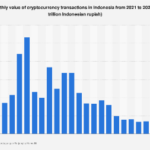
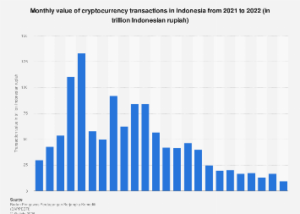


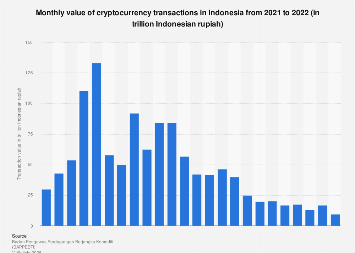
Indonesia’s cryptocurrency market witnessed a dynamic period throughout 2022, characterized by substantial month-to-month shifts in transaction values. While a precise, granular breakdown of monthly figures for the entire year is not publicly available without subscription access, available data and industry trends point to a volatile yet active landscape. As of June 2022, the archipelago nation boasted an estimated 16.5 million cryptocurrency users, according to Indonesia’s Commodity Futures Trading Regulatory Agency (Bappebti). This substantial user base underscores the growing interest and participation in digital assets within Southeast Asia’s largest economy.
The period leading up to and including May 2021 saw a notable peak in cryptocurrency transaction value, reaching an impressive figure of 219.3 trillion Indonesian rupiah. This surge represented the highest point observed within the data’s scope. While 2022 data points are less readily accessible, the preceding year’s high likely influenced market sentiment and regulatory considerations. The sheer scale of transactions in May 2021 suggests a period of intense speculative activity, increased institutional interest, or a combination of both, reflecting broader global trends in the burgeoning digital asset space.
Understanding the economic forces driving these fluctuations is crucial. Global macroeconomic factors, such as inflation rates, interest rate hikes by central banks, and geopolitical instability, undoubtedly cast a long shadow over the cryptocurrency market in 2022. These external pressures often lead to heightened volatility in risk-on assets, with cryptocurrencies being particularly susceptible. Investors tend to reallocate capital during uncertain economic times, moving away from speculative assets towards safer havens. This trend would have likely contributed to the observed monthly variations in Indonesia’s transaction values.
Furthermore, domestic regulatory developments and policy shifts within Indonesia play a pivotal role in shaping the crypto market’s trajectory. Bappebti, as the primary regulator, has been actively working to establish a framework for digital asset trading, aiming to balance innovation with investor protection. Announcements regarding new regulations, potential restrictions, or clarifications on existing rules can significantly impact market sentiment and, consequently, transaction volumes. For instance, news of potential government crackdowns or, conversely, supportive policies can trigger rapid shifts in trading activity.
The sheer number of Indonesian cryptocurrency users—16.5 million by mid-2022—positions the nation as a significant player in the global digital asset ecosystem. This large and growing demographic represents a substantial pool of potential investors and traders. The diversity within this user base, ranging from retail investors engaging in smaller, speculative trades to potentially more sophisticated investors and even businesses exploring blockchain technology, contributes to the complexity and dynamism of the market. Each segment can react differently to market signals, leading to varied transaction patterns.
Comparing Indonesia’s crypto market to its regional peers offers valuable context. Countries like Singapore and South Korea have established themselves as major cryptocurrency hubs in Asia, with robust regulatory frameworks and significant trading volumes. However, Indonesia’s sheer population size and a rapidly expanding digital economy present a unique growth opportunity. As internet penetration and smartphone adoption continue to rise across the archipelago, more individuals gain access to financial services, including cryptocurrency trading platforms. This demographic dividend can fuel sustained growth, even amidst market volatility.
The economic impact of cryptocurrency transactions in Indonesia extends beyond mere trading volumes. The growth of this sector has implications for financial inclusion, job creation in the fintech sector, and the potential for innovation in areas like decentralized finance (DeFi) and non-fungible tokens (NFTs). While the speculative aspect of cryptocurrency trading garners significant attention, the underlying blockchain technology holds promise for revolutionizing various industries, from supply chain management to digital identity.
The Indonesian government, through Bappebti, has taken steps to legitimize and regulate crypto assets, recognizing their potential while also acknowledging the inherent risks. The classification of crypto assets as commodities, rather than currencies, has guided the regulatory approach. This classification allows for oversight and taxation, aiming to integrate the digital asset economy into the broader financial system in a controlled manner. The effectiveness of these regulations in fostering a stable and trustworthy environment will be critical for long-term market development.
Looking ahead, the trajectory of Indonesia’s cryptocurrency market will likely be influenced by a confluence of factors. Continued global economic recovery, evolving regulatory landscapes both domestically and internationally, technological advancements in the blockchain space, and the broader adoption of digital assets for payments and investments will all play a role. The substantial user base and the government’s regulatory engagement suggest that Indonesia is poised to remain a significant market for cryptocurrencies, albeit one that will continue to experience periods of both expansion and contraction as it matures. The ability of regulators to strike a balance between fostering innovation and mitigating risks will be paramount in determining the sustained health and growth of this burgeoning digital economy.