

The intricate web of global energy supply chains has once again been dramatically illuminated by escalating tensions in West Asia, casting a stark spotlight on India’s profound vulnerability to imported energy sources. A recent series of disruptions, triggered by the intensifying conflict between Iran and Israel, has thrown a significant portion of India’s energy basket into disarray, particularly impacting its liquefied natural gas (LNG) and liquefied petroleum gas (LPG) supplies. The critical choke point, the Strait of Hormuz, through which a substantial volume of global oil and gas traverses, has become increasingly perilous, leading to a cascade of supply and pricing challenges for the world’s third-largest energy consumer.
At the heart of the immediate crisis is the unprecedented invocation of "force majeure" clauses by key players. Petronet LNG Ltd, a pivotal entity responsible for channeling approximately one-third of India’s gas supplies, recently declared force majeure to its largest supplier, QatarEnergy. This move came after its LNG tankers encountered insurmountable obstacles in reaching Ras Laffan, a primary loading port in Qatar, due to the heightened maritime risks in the region. Within days, QatarEnergy reciprocated, issuing its own force majeure to Petronet LNG, underscoring the severity and mutual recognition of the supply impediments. This impasse has not only halted crucial maritime traffic but has also laid bare India’s heavy reliance on external gas sources, predominantly from Qatar, with ripple effects now threatening a diverse array of domestic sectors.
Natural gas, hailed as a transitional "link fuel" due to its comparatively lower carbon emissions, has steadily gained prominence in India’s energy strategy. Government data for 2023-24 indicates that natural gas constituted around 7% of India’s total energy consumption, trailing behind coal (60%) and crude oil (29%). India has articulated an ambitious goal to elevate natural gas’s share to 15% by 2030, a target that now appears increasingly precarious in light of the current geopolitical headwinds. The escalating conflict in West Asia, a region from which a significant proportion of India’s energy needs are met, means that roughly one-third of the nation’s total energy consumption is presently exposed to acute supply and pricing volatility.
The trajectory of India’s gas import dependence has been steep and concerning. From accounting for approximately 28% of the nation’s gas basket in 2011-12, imports have surged to an estimated 50% by 2024-25. This burgeoning reliance is not merely a function of rising demand but also a consequence of dwindling domestic production. Over the same period, India’s indigenous gas output contracted by about 23%, forcing the country to double its imports to bridge the widening demand-supply gap. This structural deficit in domestic production forms the bedrock of India’s energy insecurity.
LNG, natural gas super-cooled to a liquid state for efficient long-distance maritime transport, constitutes India’s primary mode of gas import. While India’s LNG demand witnessed a robust 50% growth over the past decade, this trend has not been uniformly smooth, underscoring the inherent price sensitivity of the Indian market. The sectoral allocation of natural gas consumption further highlights the pervasive impact of supply disruptions. In 2024-25, two sectors—fertilizers and City Gas Distribution (CGD)—collectively accounted for nearly half of India’s total gas consumption. The CGD segment, encompassing piped natural gas (PNG) connections for households and compressed natural gas (CNG) for vehicles, represents direct touchpoints with millions of Indian citizens, and its share in overall gas consumption has almost doubled in the last decade. As of December 2025, India boasted approximately 8,600 CNG stations and 16.2 million domestic piped gas connections. A significant concentration of these connections, about 73%, is found in four states: Delhi, Uttar Pradesh, Gujarat, and Maharashtra, which also collectively host 80% of commercial and 60% of industrial CGD connections. Any disruption to this supply directly translates into higher costs for commuters and households, exerting inflationary pressure across the economy.

A persistent structural challenge for India has been its inability to substantially ramp up domestic natural gas production. Following a peak in 2011-12, production plummeted by 40% until 2020-21. While there has been a modest revival since 2021, spurred by renewed investments in key offshore blocks like KG-D6 by Reliance Industries-British Petroleum and government-owned ONGC, current output still lags about a quarter below its 2011-12 zenith. Efforts to incentivize new exploration and production through policies like the Open Acreage Licensing Policy (OALP), introduced in 2017 to offer companies greater flexibility in selecting oil and gas blocks under a revenue-sharing model, are yielding results. However, the gestation period for new discoveries to translate into commercial production is inherently long, offering little immediate relief to the current supply crunch.
Given the constraints on domestic output, India’s reliance on imports remains an unavoidable reality, and within this dependency, Qatar stands out as an overwhelmingly dominant supplier. For the past eight years, Qatar has consistently provided between 40-50% of India’s total natural gas imports, all routed through the geopolitically sensitive Strait of Hormuz. Major Indian gas trading and distribution entities, including Petronet LNG and GAIL (India), have cultivated long-term procurement agreements with Qatar, cementing this deep reliance. To contextualize, the International Energy Agency ranked Qatar as the world’s sixth-largest natural gas producer in 2023, while India stood at a distant 22nd, with its output being merely a fifth of Qatar’s. This concentrated dependence is now exacting a heavy toll on India, with existing gas stocks dwindling and the government compelled to prioritize and divert available supplies to critical sectors like piped gas connections and vehicle gas stations.
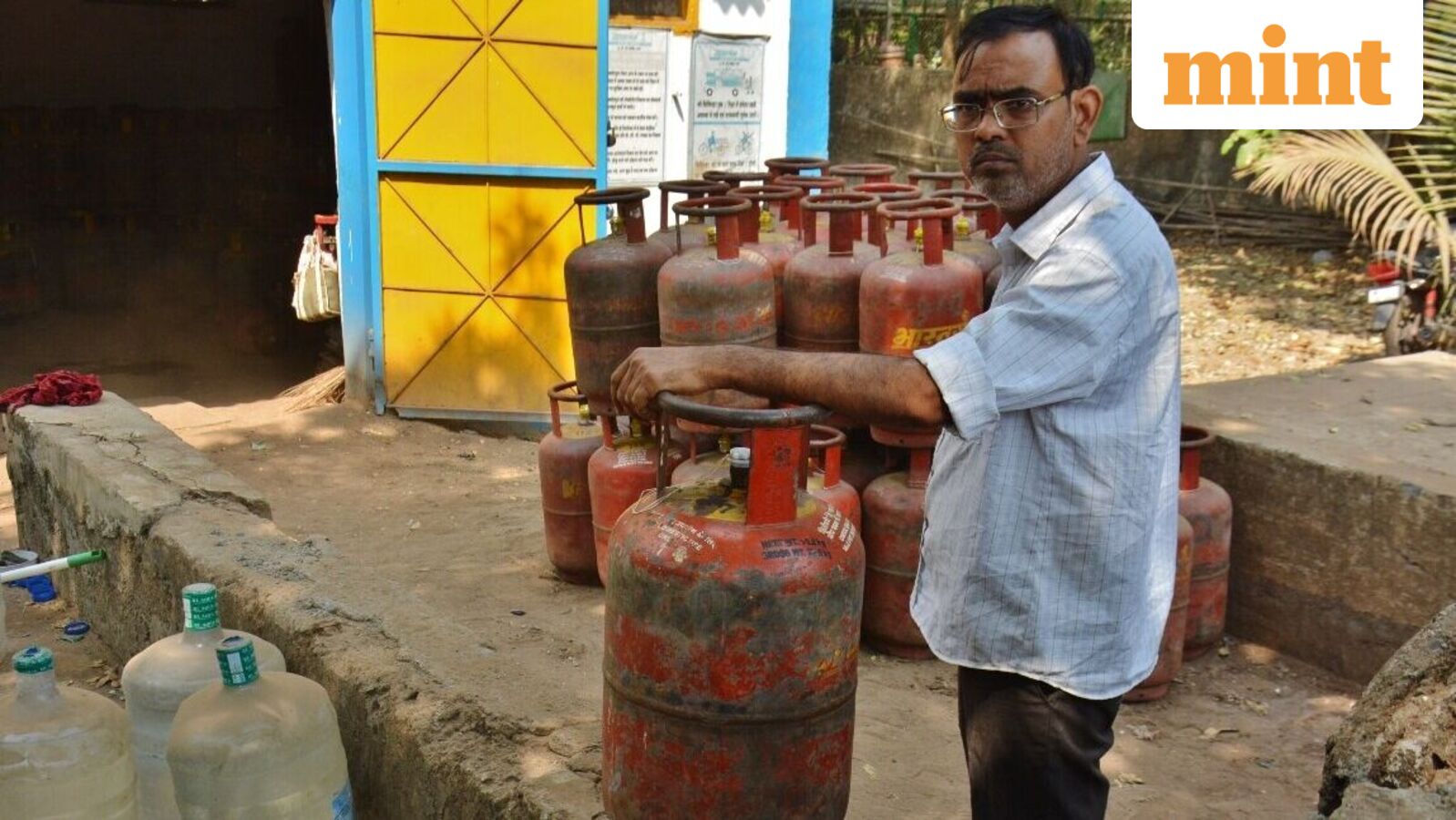
Beyond LNG, India faces a parallel predicament with Liquefied Petroleum Gas (LPG), a common household fuel. While LNG is derived from natural gas fields and LPG typically extracted through oil refining, India’s import dependence for LPG mirrors that of LNG. In 2010-11, India imported approximately 32% of its LPG supply; this figure has now surged to nearly 62% by 2024-25, with West Asia remaining the predominant source. The government’s ambitious target of achieving 120 million piped gas connections by 2030, a seven-fold increase from current levels, underscores the urgency of securing reliable gas supplies. Without a robust revival of domestic production and strategic diversification of import sources, India will remain increasingly captive to the vagaries of global commodity markets and geopolitical instabilities, exposing its economy to persistent supply and price risks.
A prolonged disruption in both LNG and LPG imports will have far-reaching macroeconomic consequences. Fertiliser production, a critical input for India’s vast agricultural sector, will face increased costs or even shortages, potentially impacting food security and rural incomes. Industrial output across various manufacturing segments, which rely on natural gas for energy and feedstock, could decelerate. Transportation costs, already a significant component of inflation, would rise further due to higher CNG prices. For households, the dual impact of pricier piped gas and LPG cylinders would erode purchasing power and strain budgets, particularly for lower-income segments. Analysts warn that continued reliance on expensive spot market purchases, necessitated by disruptions to long-term contracts, could significantly inflate India’s energy import bill, widening its current account deficit and exerting downward pressure on the rupee.
This crisis serves as a powerful reminder of the imperative for India to bolster its energy security through a multi-pronged strategy. Accelerating domestic exploration and production remains paramount, requiring sustained investment, technological upgrades, and streamlined regulatory frameworks. Concurrently, geographical diversification of import sources, exploring new suppliers from North America, Africa, or other regions, becomes critical to mitigate over-reliance on any single region or transit route. Furthermore, the long-term vision must embrace an accelerated transition towards renewable energy sources, including solar, wind, and green hydrogen, to fundamentally reduce fossil fuel dependence. While these alternatives offer structural solutions, the immediate challenge lies in navigating the current geopolitical storms to ensure stable, affordable energy access for a rapidly growing economy and population. The West Asian conflict has undeniably amplified the urgency of these strategic energy imperatives, transforming them from long-term goals into immediate national security priorities for India.