


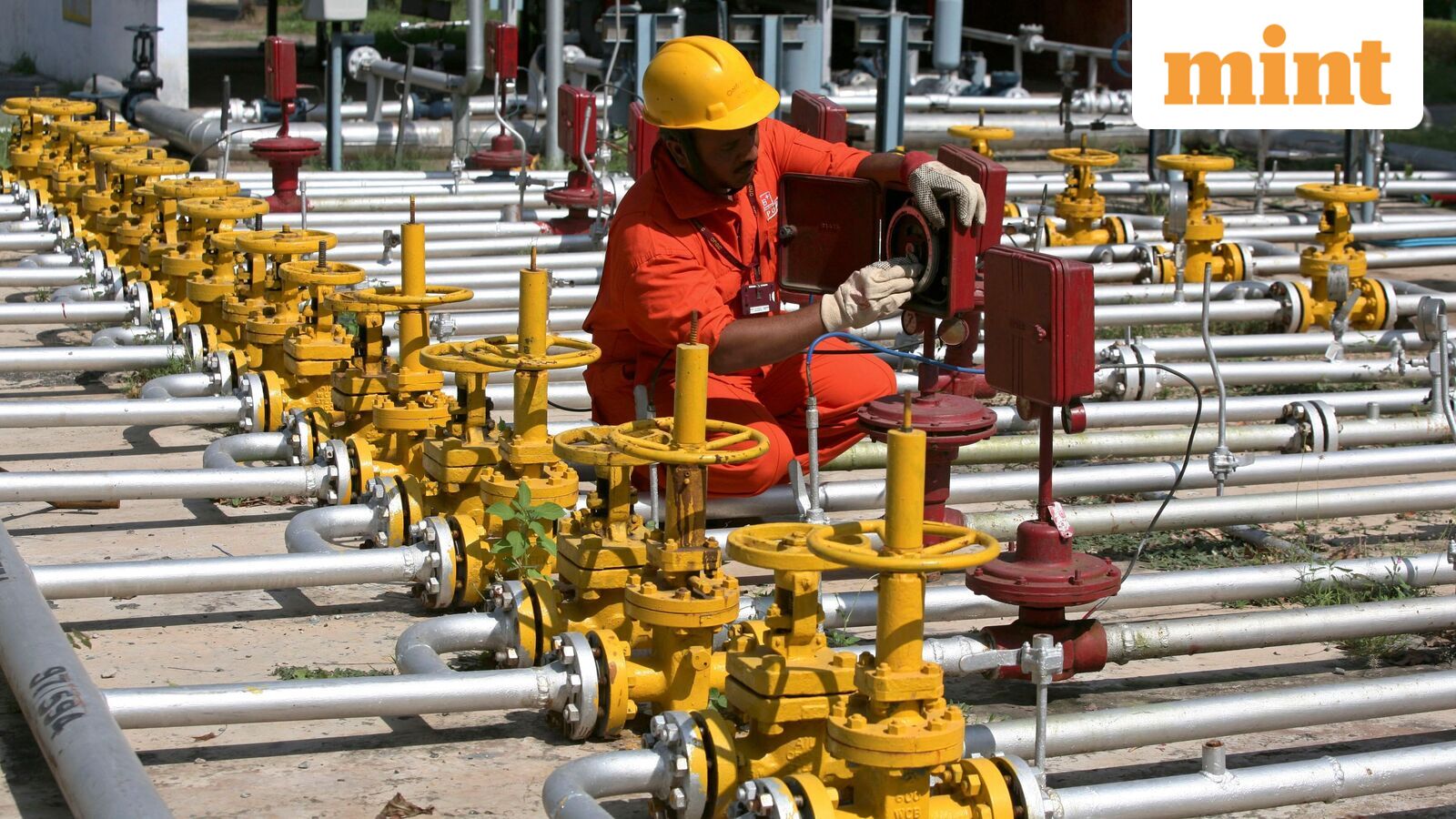
Amidst escalating geopolitical turbulence, particularly in the critical West Asia corridor, the Indian government has enacted a pivotal measure to safeguard domestic energy supplies, triggering a complex interplay of economic implications and legal challenges. On March 9, the Union government issued the Natural Gas (Supply Regulation) Order, 2026, under the sweeping powers of the Essential Commodities Act, 1955. This directive aims to prioritize natural gas allocation to essential sectors, while concurrently seeking to insulate these decisions from immediate legal contestation by certain beneficiaries. The move underscores India’s precarious energy security landscape, heavily reliant on liquefied natural gas (LNG) imports, which have become increasingly vulnerable to supply chain disruptions stemming from conflicts affecting key maritime routes like the Strait of Hormuz.
The recent governmental order, issued by the Ministry of Petroleum and Natural Gas, delineates a four-tier priority framework for natural gas allocation, reflecting a strategic response to potential LNG shortages. At the apex of this hierarchy are critical sectors such as piped natural gas (PNG) for households, compressed natural gas (CNG) for transportation, LPG production, and essential pipeline operations. These sectors are deemed indispensable for maintaining public welfare and foundational infrastructure. The second tier encompasses fertilizer plants, crucial for agricultural output and food security. Lower-priority categories include vital industrial segments like petrochemicals, power generation units, and refineries, which typically consume substantial volumes of natural gas. To ensure robust supply to the higher-priority segments, the government retains the prerogative to curtail gas allocations to these industrial users, a decision with significant ramifications for their operational costs and output.
A particularly contentious aspect of the notification is a clause requiring entities receiving pooled gas supplies under the revised framework to furnish an undertaking. This undertaking stipulates acceptance of the pooled price and, crucially, a commitment not to subject the "force majeure mitigation supply" to litigation, acknowledging potential variances from existing contractual agreements. This provision is designed to preempt legal challenges from companies benefiting from the redirected, pooled gas, thereby streamlining the emergency allocation process. However, it raises profound questions about contractual sanctity, the limits of executive power, and the broader access to judicial remedies for affected businesses.
The legal bedrock for this assertive governmental intervention is the Essential Commodities Act (ECA) of 1955. Enacted in the nascent years of independent India, the ECA was a legislative response to chronic shortages of food grains and other vital goods, exacerbated by weak supply chains and rampant hoarding. It superseded earlier wartime statutes, such as the Essential Supplies (Temporary Powers) Act, 1946, which had managed commodity distribution during World War II. The ECA empowers the government to regulate the production, supply, and distribution of essential goods to ensure their availability at fair prices and to curb market distortions like hoarding and black marketing. Section 3 of the Act specifically grants the government extensive powers to issue orders governing various aspects of essential commodities, from production and storage to distribution and pricing. Historically, the ECA has been invoked during national emergencies or periods of acute scarcity. For instance, during the COVID-19 pandemic, masks and hand sanitizers were temporarily declared essential commodities to prevent price gouging and ensure equitable distribution. More recently, it has been used to impose stock limits on agricultural products like pulses, edible oils, and onions in response to sharp price escalations, underscoring its role as a key instrument in maintaining economic stability and public welfare. Notably, the Essential Commodities (Amendment) Act, 2020, sought to reduce routine governmental control over agricultural commodities, limiting interventions to extraordinary situations like war, famine, natural calamity, or extreme price volatility, reflecting a shift towards market liberalization in some sectors. However, the current invocation for natural gas signals a return to active state control in the face of perceived energy crises.
From an economic perspective, the diversion order carries substantial weight for India’s industrial landscape. Sectors like petrochemicals, power generation, and refineries are major consumers of natural gas, which serves as a critical feedstock or fuel. Curtailment of supply could force these industries to switch to more expensive or less efficient alternative fuels, such as fuel oil or naphtha, leading to increased operational costs and reduced competitiveness. For power plants, this could translate into higher electricity tariffs, potentially fueling inflation across the economy. Petrochemical units, which rely on gas as a raw material for plastics, fertilizers, and other chemicals, might face production cuts, impacting supply chains and potentially leading to higher input costs for downstream industries. Refineries could also see altered operational parameters and increased costs. The broader economic ramifications include potential job losses in affected sectors, a drag on industrial output growth, and a dampening effect on foreign and domestic investment in energy-intensive industries, as regulatory uncertainty adds to business risks. Given India’s ambitious manufacturing targets and its growing energy demand, such disruptions could impede economic expansion and compromise energy transition goals that often rely on cleaner-burning natural gas.

While the government’s order aims to discourage litigation, legal experts concur that it does not entirely insulate these executive actions from judicial review. Chirag Gupta, an associate partner at Alpha Partners, emphasizes that the restriction primarily targets entities that directly benefit from the pooled gas supply. "The rights of entities that may be affected by the government order are not being curtailed in any manner," he noted, clarifying that the directive applies specifically to those receiving the diverted gas. This nuanced interpretation suggests that companies whose gas supplies are curtailed to facilitate diversions to priority sectors, and who do not receive pooled gas, retain broader avenues for legal recourse.
Affected companies retain the option to approach constitutional courts, specifically High Courts under Article 226 or the Supreme Court under Article 32 of the Indian Constitution. These articles empower the courts to review executive actions on grounds of legality, proportionality, or reasonableness. While the undertaking clause may complicate direct contractual disputes arising from the "force majeure mitigation supply," the overarching principle of judicial review ensures that executive orders, even those issued under emergency powers, cannot place themselves beyond the scrutiny of the judiciary. Courts have historically upheld the government’s authority to regulate essential commodities in the public interest, but they have consistently maintained their power to strike down arbitrary, disproportionate, or ultra vires (beyond legal powers) actions.
Beyond constitutional challenges, companies may also explore contractual remedies. Varun Lakra, an associate partner at King Stubb & Kasiva, highlighted that the government order effectively overrides existing gas sale agreements. "This means contractual obligations may be temporarily superseded where government-mandated diversion of gas is required," he stated. While force majeure clauses, which excuse parties from contractual obligations due to unforeseeable circumstances, might seem applicable, the government’s direct statutory intervention could limit their scope. Similarly, arbitration clauses, common in commercial contracts, might face limitations when a sovereign power explicitly overrides private agreements for public interest. Rishabh Gandhi, founder of Rishabh Gandhi & Advocates, predicted that the order could lead to a wave of renegotiations and arbitration disputes. He observed, "When the state intervenes under a statutory mandate, commercial contracts often yield to public interest, and disputes shift toward force majeure, risk allocation, and compensation claims." However, Shryeshth Ramesh Sharma, senior partner at SKV Law Offices, anticipated that large-scale litigation directly challenging the emergency order itself is unlikely, given the extraordinary circumstances. Instead, he foresees significant disruptions for lower-priority sectors, potentially leading to financial losses, shifts to alternative fuels, or reduced output.
Indian courts have a long-standing jurisprudence on balancing state power with individual rights in the context of essential commodities. The current order draws inspiration from a 22-year-old Supreme Court ruling in Association of Natural Gas & Ors vs Union of India, which affirmed that natural gas and LNG fall under the ambit of "petroleum and petroleum products," thus bringing them under the regulatory purview of the government. This precedent is crucial in establishing the legal basis for the current intervention. Earlier landmark judgments also guide this area. In Dwarka Prasad Laxmi Narain v. State of Uttar Pradesh (1954), the Supreme Court established that orders regulating essential commodities could indeed be challenged by affected parties, setting a foundational principle for judicial oversight. Subsequent cases, such as Narendra Kumar v. Union of India (1960) and Prag Ice & Oil Mills v. Union of India (1978), upheld the government’s power to regulate supply and prices in the public interest, acknowledging the state’s role in a developing economy. However, this power is not absolute. The court in Union of India v. Cynamide India Ltd. (1987) clarified that such orders remain subject to judicial review if they are found to be arbitrary, unreasonable, or exceed the legal authority granted by the statute. These precedents collectively establish that while the government possesses significant powers during emergencies, these powers must be exercised judiciously and remain accountable to the principles of legality and fairness.
Globally, governments often employ various mechanisms to manage energy crises, from strategic reserves and price controls to emergency allocation frameworks. For instance, the European Union implemented emergency measures during its gas crisis, including voluntary and mandatory demand reduction targets, while Japan maintains substantial strategic oil reserves and has robust contingency plans for critical energy imports. India’s approach, leveraging existing legislation like the ECA, aligns with a broader international trend of states asserting greater control over vital resources during periods of perceived national threat. However, the unique aspect of actively discouraging litigation from certain beneficiaries adds a layer of complexity, testing the delicate balance between executive action, economic stability, and the fundamental right to seek judicial redress in one of the world’s largest democracies. The unfolding scenario will undoubtedly set important precedents for future government interventions in critical sectors and for the interpretation of contractual obligations versus sovereign directives.