



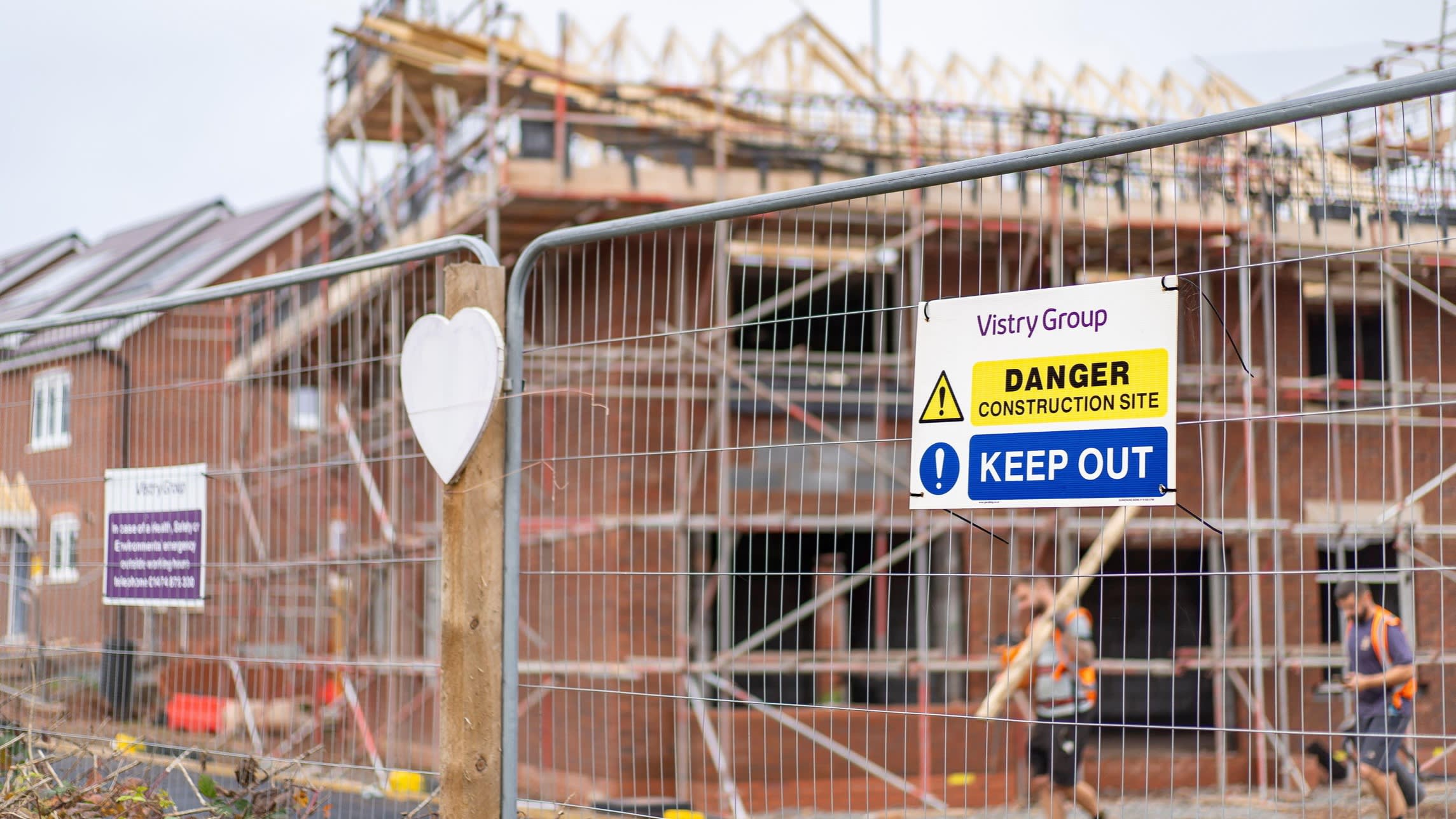
The British government is facing an escalating wave of inquiries regarding its reliance on Vistry Group, one of the nation’s largest residential developers, following a series of financial disclosures that have sent shockwaves through the City of London and Whitehall. As the Labour administration doubles down on its ambitious pledge to deliver 1.5 million new homes over the current parliament, the operational health of its primary delivery partners has become a matter of national economic security. The questioning of government ministers centers on whether the state’s housing strategy is overly dependent on a corporate model that critics argue may be showing signs of structural fatigue under the weight of inflationary pressures and internal management failures.
At the heart of the controversy is Vistry’s radical pivot to a "partnerships-led" business model, a strategy that distinguishes it from traditional volume housebuilders like Barratt Redrow or Taylor Wimpey. Under this framework, Vistry focuses on collaborating with local authorities, housing associations, and government agencies to build affordable and social housing, rather than relying solely on the volatile private sales market. While this model was initially lauded for its capital-light approach and its ability to provide steady cash flow regardless of mortgage rate fluctuations, recent profit warnings have sparked a debate about the thin margins and high execution risks inherent in public-sector contracting.
The scrutiny intensified after Vistry revealed a significant understatement of development costs within its South division, a revelation that led to a sharp reduction in its annual profit forecasts. The company admitted that build costs for approximately nine out of its 46 developments in the region had been underestimated by roughly £115 million. This disclosure wiped nearly a quarter of the company’s market capitalization in a single trading session, prompting investors and policymakers to question the robustness of Vistry’s internal controls. For a government that has effectively "outsourced" the logistics of its housing revolution to the private sector, any instability in a firm of Vistry’s scale represents a systemic risk to its domestic policy agenda.
Economic analysts suggest that the issues facing Vistry are symptomatic of a broader malaise within the UK construction sector. For nearly three years, the industry has grappled with "stagflationary" forces: stagnant demand driven by high interest rates and soaring input costs for labor and materials. Data from the Office for National Statistics (ONS) indicates that construction output prices rose by more than 20% between 2021 and 2024, a pace that has outstripped the ability of many fixed-price contracts to absorb. In the partnership model, where margins are traditionally tighter than in private speculative building—often hovering between 10% and 12% compared to 20% in the private sector—there is very little room for error. When cost projections are missed, the impact on the bottom line is disproportionately severe.
The government’s response to these financial tremors has been one of cautious defense. Ministers have maintained that their housing targets remain on track, but behind the scenes, there is growing concern regarding the "concentration risk" of the UK’s housebuilding landscape. A handful of Tier-1 contractors now dominate the market, meaning the failure or significant downsizing of any single entity could lead to a localized collapse in housing delivery. Opposition MPs have been quick to seize on this, demanding to know what contingency plans the Department for Levelling Up, Housing and Communities has in place should Vistry’s financial position deteriorate further or if it should decide to scale back its partnership commitments to shore up its balance sheet.
The Vistry situation also highlights a divergence in global housing strategies. In markets such as Germany and the Netherlands, the state plays a more direct role in the financing and management of social housing projects through municipal housing companies. In contrast, the UK has leaned heavily on a "Section 106" system and large-scale public-private partnerships. While this shifts the financial risk away from the taxpayer in the short term, it leaves the delivery of essential infrastructure at the mercy of equity market sentiment and corporate governance. If investors lose confidence in the profitability of low-margin social housing, the capital required to meet the government’s 300,000-homes-per-year target may simply evaporate.
Expert insights from the real estate sector suggest that Vistry’s problems may also be a byproduct of rapid expansion. Following its acquisition of Countryside Partnerships in 2022, Vistry became a behemoth in the sector. Integrating two massive corporate cultures while simultaneously shifting the entire business model was always a high-stakes gamble. Some industry veterans argue that the "partnerships" pivot was an attempt to bypass the cyclical nature of the UK housing market, but instead, it has exposed the firm to the rigidities of government-tied contracts where price renegotiation is notoriously difficult.
Furthermore, the impact on the supply chain cannot be overlooked. Vistry works with thousands of small-to-medium enterprises (SMEs), from bricklayers to electrical contractors. Any delay in payments or reduction in project starts due to financial restructuring at the top level sends ripples through the entire regional economy. The Federation of Master Builders has previously warned that the health of the "Big Six" housebuilders is a leading indicator for the survival of thousands of independent tradespeople. If Vistry is forced to pause developments to reassess its cost base, the collateral damage to the UK’s skilled labor pool could be permanent, further exacerbating the country’s chronic productivity issues.
The market data reflects this uncertainty. While the broader FTSE 250 has shown some resilience, the housebuilding sub-index remains sensitive to every update from the Bank of England. Although inflation has moderated toward the 2% target, the "higher-for-longer" interest rate environment continues to suppress mortgage approvals, which were down significantly from their pre-pandemic averages throughout much of 2024. For Vistry, which had hoped to offset private market weakness with public sector volume, the discovery of a nine-figure hole in its cost estimates suggests that the safety net of government partnerships may be more porous than previously thought.
Institutional investors are now calling for a comprehensive review of Vistry’s board oversight. The question being asked in boardroom meetings is how such a massive discrepancy in cost reporting could go unnoticed for so long, especially in a division as critical as the South of England. This has led to broader questions about the transparency of the "cost-plus" and "fixed-fee" arrangements that dominate public sector housing. If the government is to continue using Vistry as a primary vehicle for its housing goals, there may be a need for more stringent regulatory oversight, perhaps even a dedicated "housing regulator" with the power to audit the financial viability of major developers in real-time.
As the government prepares its next fiscal statement, the shadow of Vistry’s financial health looms large. The administration is caught in a difficult position: it must support its delivery partners to ensure its flagship policy succeeds, but it cannot be seen to be bailing out or providing preferential treatment to a private entity that has suffered from internal management lapses. The outcome of this scrutiny will likely determine the future of the partnership model in the UK. If Vistry can stabilize its operations and prove that the cost understatements were an isolated geographic issue rather than a systemic flaw, the model may yet be vindicated. However, if further "black holes" appear in other regional divisions, the government may be forced to radically rethink how it intends to build the homes the country so desperately needs.
Ultimately, the Vistry saga is a case study in the complexities of modern economic governance. It illustrates the tension between the public sector’s social objectives and the private sector’s fiduciary duties to shareholders. As the UK attempts to navigate its way out of a multi-decade housing shortage, the stability of its corporate builders is no longer just a matter for the stock exchange—it is a cornerstone of national policy. The coming months will be a litmus test for both Vistry’s leadership and the government’s ability to manage the private partners upon whom its political legacy now depends. Without a resolution that restores market confidence and ensures financial transparency, the dream of a new generation of social and affordable housing may remain frustratingly out of reach, stalled by the very balance sheets meant to support it.