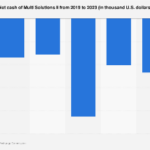


The financial year 2023 presented a complex tableau for global businesses, marked by persistent inflation, shifting interest rate environments, and evolving consumer behaviors, all of which directly impacted net cash flow dynamics. Analyzing net cash, a critical indicator of a company’s financial health and operational efficiency, reveals the intricate interplay between operational activities, investing, and financing. This period saw a divergence in performance across sectors and geographies, underscoring the resilience and adaptability required in the contemporary economic climate.
Net cash flow, broadly defined as the difference between cash inflows and outflows over a specific period, serves as a vital metric for assessing liquidity, solvency, and the ability of an enterprise to generate cash from its core operations. In 2023, several macroeconomic forces coalesced to shape these flows. Central banks in major economies, grappling with elevated inflation, continued or initiated monetary tightening cycles. This translated into higher borrowing costs for businesses, potentially squeezing margins and impacting investment decisions. Furthermore, supply chain disruptions, though somewhat abating from their peak, continued to create uncertainties, affecting inventory levels and the speed at which cash could be converted from sales. Geopolitical tensions also cast a long shadow, influencing trade patterns and capital allocation strategies.
For many corporations, 2023 was a year of careful financial stewardship. Companies focused on optimizing working capital, a key driver of operational cash flow. This often involved stringent inventory management to reduce holding costs and improve cash conversion cycles. Accounts receivable management also gained prominence, with businesses actively seeking to shorten payment terms and improve collection rates. On the flip side, managing accounts payable strategically became crucial, balancing the need to maintain supplier relationships with the imperative to preserve liquidity. The effectiveness of these working capital initiatives directly translated into the strength of a company’s net operational cash flow.
Investment activities also played a significant role in shaping net cash positions. While some sectors experienced robust investment in research and development, digital transformation, and capacity expansion, others adopted a more cautious approach. The higher cost of capital influenced the internal rate of return calculations for new projects, leading to a more selective investment landscape. Mergers and acquisitions, a common channel for inorganic growth, also saw a recalibration. Deals that were previously viable at lower interest rates might have become less attractive, leading to a more discerning M&A market. Consequently, the cash spent on acquisitions or divestitures, and the cash generated from the sale of assets, profoundly impacted overall net cash flow.
Financing activities provided another critical dimension. Companies accessed capital markets through various instruments, including debt issuance and equity offerings. The decision to take on new debt was often weighed against the prevailing interest rate environment and the company’s existing leverage ratios. For companies with strong credit ratings, access to financing remained relatively stable, albeit at a higher cost. Conversely, businesses with weaker financial profiles might have found it more challenging and expensive to secure the necessary funds. Share buybacks and dividend payouts, common uses of surplus cash, also saw adjustments. Some companies prioritized strengthening their balance sheets in the face of economic uncertainty, while others continued to reward shareholders, albeit potentially with less aggressive programs.
Examining specific market segments provides a granular understanding of these trends. The technology sector, for instance, continued to be a powerhouse for cash generation, driven by the sustained demand for digital services, cloud computing, and artificial intelligence. However, even within tech, a bifurcation emerged. Companies with established, recurring revenue models and strong market positions often exhibited robust net cash flows, while more speculative ventures faced increased scrutiny and funding challenges. The energy sector, buoyed by volatile commodity prices, saw significant cash inflows for some players, enabling them to reduce debt and invest in new projects, while others navigated the complexities of transitioning to renewable energy sources, which often involves substantial upfront capital expenditure.
The retail sector presented a mixed picture. E-commerce giants continued to leverage their scale and logistical efficiencies to maintain healthy cash flows. However, brick-and-mortar retailers faced ongoing pressures from changing consumer habits and increased operational costs, necessitating careful cash management. The automotive industry grappled with supply chain issues, particularly concerning semiconductor availability, impacting production volumes and, consequently, cash generation. The financial services sector, sensitive to interest rate movements, experienced shifts in net interest margins and trading revenues, influencing their cash flow profiles.
Globally, the impact on net cash flow varied considerably. Emerging markets, while offering higher growth potential, often carried greater currency risk and geopolitical instability, which could affect the predictability of cash inflows. Developed economies, while facing slower growth, generally offered more stable regulatory environments and access to deeper capital markets. For instance, companies operating in the Eurozone contended with the European Central Bank’s monetary policy, while North American businesses navigated the Federal Reserve’s actions. Asian economies, with their diverse economic structures, presented a spectrum of cash flow experiences, influenced by domestic demand, export performance, and regional trade dynamics.
Expert analysis suggests that companies that demonstrated agility in adapting to changing market conditions were best positioned. This included a proactive approach to risk management, a focus on operational excellence, and a clear strategy for capital allocation. The ability to access diverse funding sources and maintain strong relationships with financial institutions was also paramount. Looking ahead, the continued evolution of the global economy, including the ongoing energy transition, the digitalization imperative, and potential shifts in global trade alliances, will undoubtedly continue to shape net cash flow dynamics. Businesses that can anticipate these changes and proactively adjust their financial strategies will be best equipped to thrive in the years to come. The emphasis on sustainable cash generation, rather than simply topline growth, is likely to remain a central tenet of corporate financial strategy.