

The escalating geopolitical tensions in the Middle East, marked by intensified conflict involving Iran, Israel, and the United States, have thrust India’s burgeoning aviation sector into an unprecedented crisis. The immediate fallout includes widespread airspace closures, massive flight disruptions, and a significant spike in operational costs, collectively threatening to derail the industry’s recovery trajectory and impose multi-billion dollar losses. This complex confluence of events – a sliding rupee, soaring crude oil prices, and severely constrained air routes – presents a formidable challenge to an industry already operating on thin margins and ambitious growth plans.
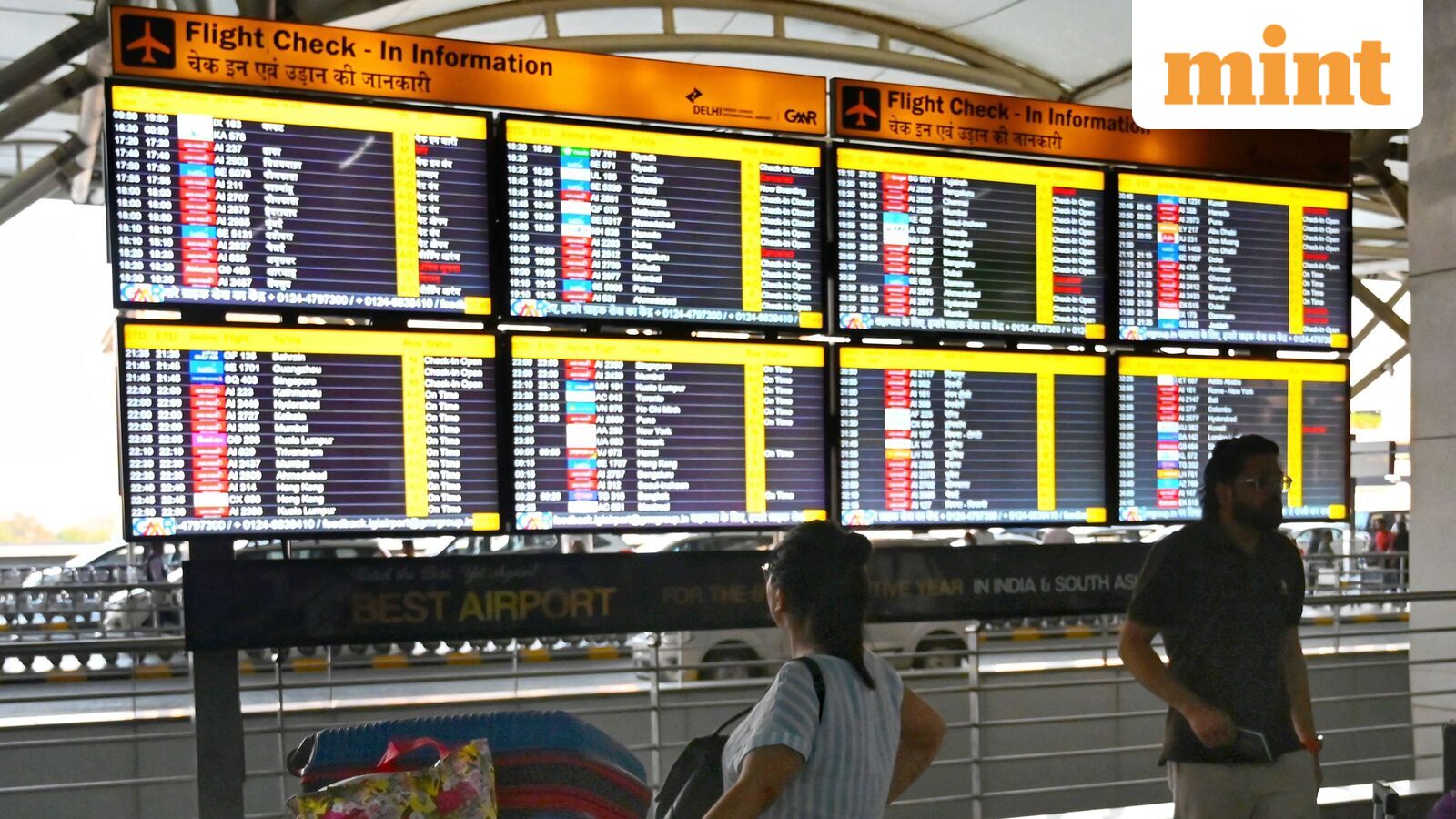
The regional instability reached a critical juncture following a series of strikes on February 28, reportedly leading to the demise of Iran’s Supreme Leader, Ayatollah Ali Khamenei. This development triggered swift and severe retaliation from Iran, which launched a barrage of missiles and drones targeting Israeli territories and US military installations across various Gulf nations. In response, a vast swathe of airspace spanning Iran, Iraq, the United Arab Emirates, Saudi Arabia, Qatar, Bahrain, and Kuwait was abruptly shut down. This geographical area forms the critical West Asia corridor, which is indispensable for Indian aviation, handling approximately 50% of the nation’s international air traffic. The immediate operational impact was staggering: over 1,100 flights were cancelled between February 28 and March 2, with major hubs like Delhi’s Indira Gandhi International Airport alone witnessing 350-410 daily cancellations. Similar disruptions rippled through Mumbai and other key Indian airports, effectively bringing air travel in and out of the Gulf region to a near standstill.
Indian carriers initially adopted a cautious "wait-and-watch" approach, assessing the volatile situation. While some operations to Europe gradually resumed, these flights were compelled to undertake significant detours, circumnavigating the conflict-ridden airspace. This rerouting adds an estimated 2 to 4 hours to flight durations for journeys to Europe and the United States, consuming more fuel and extending crew duty times. The operational complexities are further compounded by an existing challenge: the closure of northern routes due to Pakistan’s airspace restrictions. This "double whammy" forces airlines to navigate a highly constrained aerial environment, drastically reducing efficiency and increasing operational costs. The impact is felt differently across carriers; while Air India, with its extensive global network, possesses some flexibility, newer players like IndiGo face unique hurdles. IndiGo, for instance, operates damp-leased Dreamliner aircraft from Norse Atlantic, a European carrier, which subjects its operations to stricter European regulatory oversight regarding flight paths and safety protocols, limiting its adaptability.
Aviation Turbine Fuel (ATF) constitutes the single largest expenditure for Indian airlines, typically accounting for 30% to 40% of their total operational costs. The current geopolitical landscape has sent crude oil prices spiraling upwards, with market analysts projecting an 11% jump amidst heightened risks of a blockade of the Strait of Hormuz. This vital maritime chokepoint, through which approximately 20% of the world’s total petroleum liquids pass daily, is now under threat, creating significant upward pressure on global energy markets, despite pledges from OPEC+ to ramp up production. For Indian carriers, this translates directly into surging ATF costs. The benchmark ATF price for a forward projection of March 2026, for example, has already reached ₹96,638 per kilolitre, a 6% increase from February and substantially higher than the pre-COVID level of ₹64,715. Industry estimates suggest that every dollar increase in a barrel of ATF adds approximately ₹300 crore annually to a major airline like IndiGo’s fuel bill. Moreover, the extended flight paths due to rerouting necessitate burning additional fuel, exacerbating these costs. Critically, most Indian airlines have limited hedging strategies in place, leaving them highly vulnerable to the volatility of spot market prices and making them acutely susceptible to global energy price shocks.
Simultaneously, the Indian Rupee (INR) has experienced a sharp depreciation, adding another layer of financial strain. On March 4, the INR breached the 92/USD mark for the first time, declining by 0.9% on that day alone and over 2% year-to-date. This depreciation is fueled by a combination of war fears, the anticipated surge in India’s oil import bill, and significant foreign capital outflows. The impact on airlines is profound: a 1% drop in the rupee’s value can erode profits by an estimated 5-6%. This is primarily because a substantial portion of airline expenditures, including aircraft leases and Maintenance, Repair, and Overhaul (MRO) services, are dollar-denominated. A weaker rupee directly inflates these costs, effectively increasing the leasing bill without any corresponding increase in aircraft capacity. Furthermore, airlines with large order books are disproportionately affected, as Pre-Delivery Payments (PDPs) to aircraft manufacturers, also marked in foreign currency, become significantly more expensive. This dual blow from rising fuel costs and a weakening currency creates a formidable financial headwind.
Pre-conflict projections from credit rating agency ICRA had already painted a challenging picture for the Indian aviation industry, forecasting a net loss peaking at ₹170-180 billion in FY2026, with a gradual narrowing to ₹110-120 billion by FY2027. However, these projections were based on a stable geopolitical environment and did not factor in the current escalation in the Middle East or the consequent surge in oil prices and currency depreciation. Consequently, these figures are now set for a substantial upward revision, indicating a much deeper financial trough for the sector. Airlines like SpiceJet, Air India Express, and Akasa Air, which have a significant portion of their capacity deployed to the Middle East, are particularly exposed to the direct impact of airspace closures and demand fluctuations in the region. Even carriers with a wider global footprint, such as Air India, cannot escape the ripple effects of disrupted global aviation networks and increased operational costs.
Beyond the immediate financial metrics, the crisis carries significant human and broader economic implications. A major concern revolves around passengers stranded mid-journey or unable to commence their return trips, facing risks of expired visas and overstaying in foreign countries. The severely limited flight operations due to airspace closures have led to sold-out seats and a subsequent steep hike in one-way airfares, further burdening travelers. While the Ministry of Civil Aviation has established a passenger assistance control room, the fundamental constraint of unavailable airspace severely limits the ability to direct airlines to add flights or for even armed forces to plan large-scale rescue operations, underscoring the severity of the operational deadlock.
The ripple effects extend beyond individual travelers and airline balance sheets. India maintains robust economic ties with the Gulf Cooperation Council (GCC) countries, which are major destinations for Indian expatriates, sources of foreign direct investment, and crucial trading partners. Disruptions to air travel and cargo could impact inbound and outbound tourism, business travel, and the efficient movement of high-value goods, potentially straining supply chains and affecting India’s overall trade balance. The long-term confidence of investors and tourists could also be eroded by sustained instability, impacting India’s aspirations as a global economic player.
For Indian aviation, the current scenario represents a crisis unlike any other, compounding an already challenging year. The industry’s ability to recover hinges critically on a rapid de-escalation of the conflict or an early ceasefire. Until such a resolution materializes, the sector’s resilience will be severely tested against multiple, interconnected challenges. This period will likely force a re-evaluation of route diversification strategies, hedging policies against fuel price and currency volatility, and overall risk management frameworks. The inherent volatility of the geopolitical landscape serves as a stark reminder of its immediate and profound impact on globalized industries like aviation, underscoring the necessity for robust contingency planning in an increasingly interconnected and unpredictable world.