


The escalating global climate crisis, marked by intensifying weather patterns and irreversible ecological shifts, has propelled carbon dioxide removal (CDR) from a niche scientific concept to an urgent economic imperative. As nations and corporations worldwide commit to ambitious net-zero targets, the focus is increasingly shifting beyond simply reducing emissions to actively extracting legacy carbon from the atmosphere. This critical transition is now finding an unexpected, yet profoundly impactful, frontier in the vast agricultural landscapes of India, positioning the subcontinent as a nascent, low-cost powerhouse for durable carbon removal.
India’s unique confluence of abundant agricultural land, diverse mineral resources, favorable tropical weathering conditions, and a massive agrarian workforce presents an unparalleled opportunity to scale carbon removal technologies. Unlike capital-intensive direct air capture facilities emerging in developed economies, India’s approach leverages nature-based and hybrid solutions, embedding carbon sequestration directly into farming practices. This model not only addresses climate change but also offers a transformative pathway for rural economic development, channeling global climate finance directly into the hands of smallholder farmers.
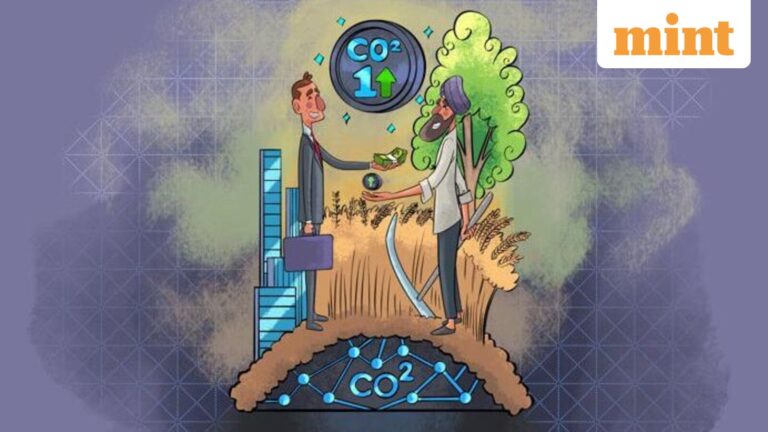
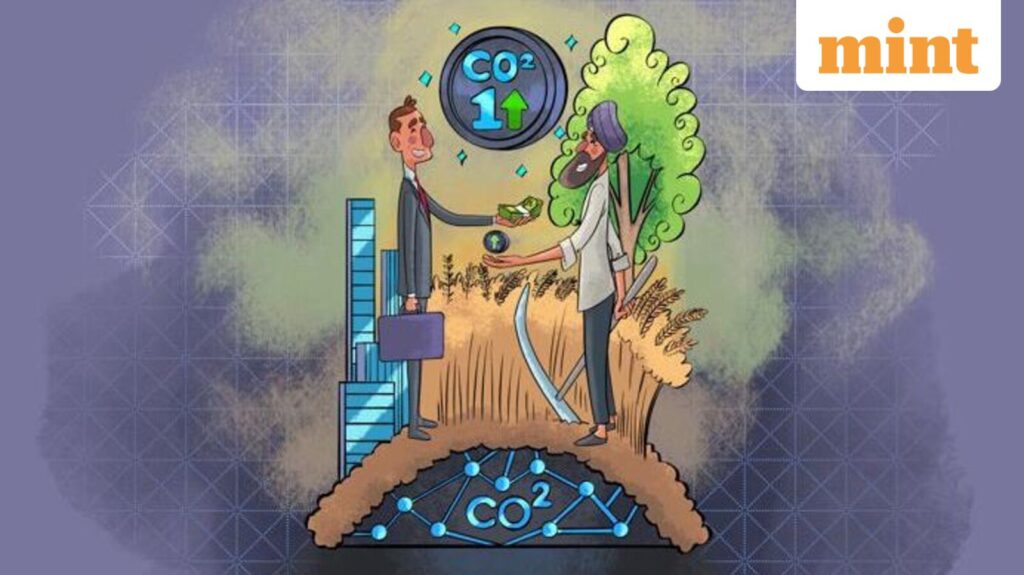
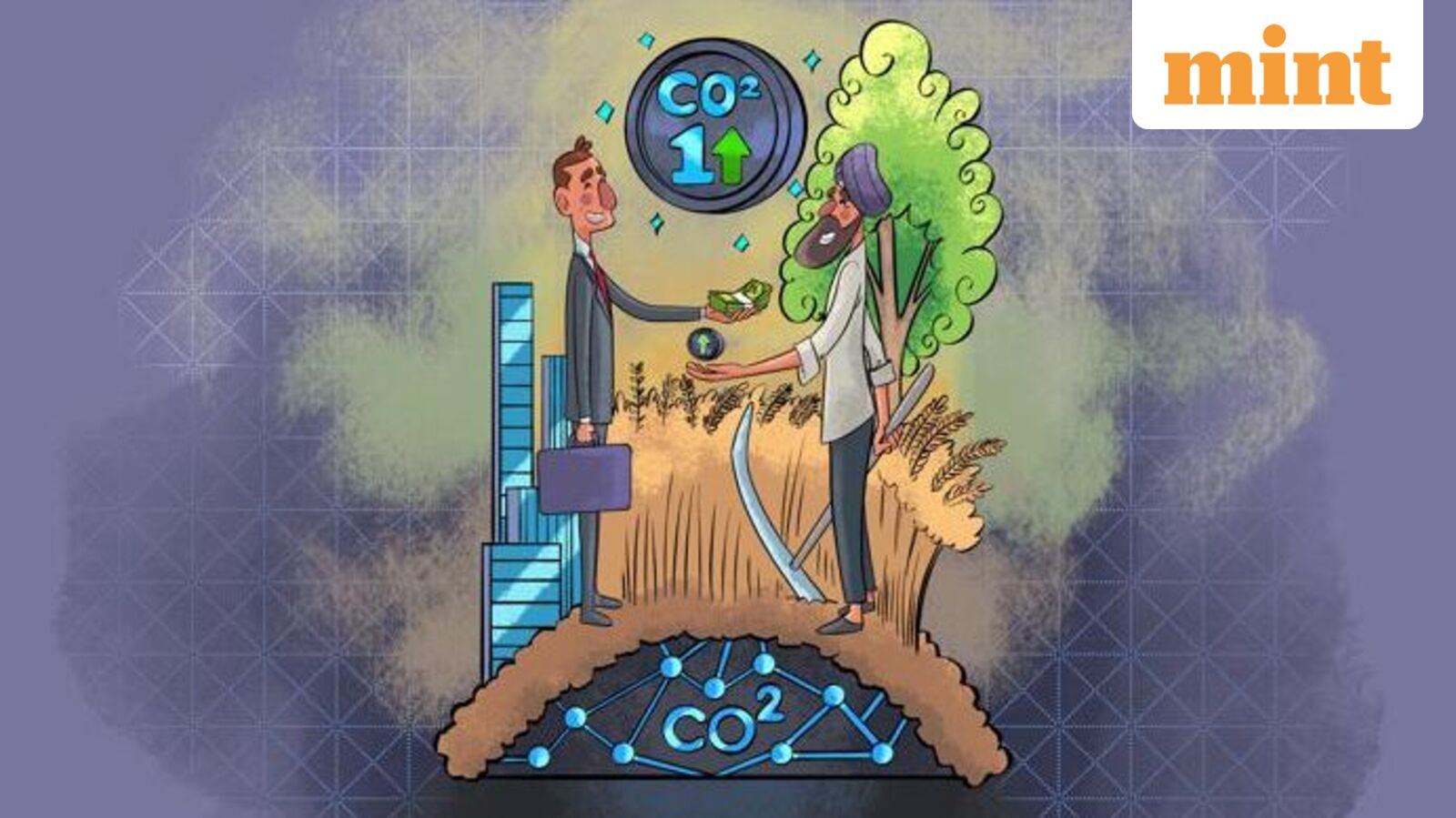
One such pioneering initiative unfolds in the verdant paddy fields of Dubanochi village in Darjeeling, West Bengal. Here, Subhonanda Singha, a third-generation farmer, has embraced a practice that, at first glance, seems counterintuitive: spreading a fine layer of grey basalt powder, locally known as Hari Mati, across his land. This simple agronomic tweak, facilitated by Bengaluru-based climate tech startup Alt Carbon, is a prime example of Enhanced Rock Weathering (ERW). Basalt, a readily available byproduct of quarrying and mining operations in eastern India, is rich in silicate minerals. When finely crushed and spread on agricultural soils, these minerals react with atmospheric CO2 dissolved in rainwater, forming stable carbonate compounds that effectively lock away carbon for centuries. What appears as routine soil treatment in Singha’s field translates into verified carbon removal on corporate balance sheets thousands of kilometers away, each tonne of sequestered CO2 becoming a tradable carbon credit.
The global voluntary carbon market is experiencing a significant pivot towards such verifiable carbon removal credits. For nearly a decade, the market primarily relied on "avoidance" projects—such as preventing deforestation or funding renewable energy—which, while valuable, often faced scrutiny over additionality and permanence. The current demand from major corporations like Amazon, Microsoft, Google, and Unilever, all committed to achieving net-zero emissions between 2030 and 2040, is driving a preference for projects that physically extract and durably store carbon. These companies, facing annual emissions in the millions of tonnes from vast data centers, complex supply chains, and global logistics, see high-integrity removal credits as essential tools for meeting their pledges. The price point for these credits reflects their durability and technological sophistication, ranging from approximately $150 to $600 per tonne, and sometimes significantly higher for advanced engineered solutions. Alt Carbon’s Sparsh Agarwal notes that ERW credits from India are currently trading below $300 per tonne, offering a cost-effective solution compared to the global average for engineered removals, which can exceed $700.
Beyond ERW, Indian climate startups are innovating across the agricultural spectrum. Varaha, another Bengaluru-based firm, is tackling the issue of agricultural waste in the cotton belt of India. Traditionally, farmers resort to open burning of crop residue, a quick but carbon-intensive method. Varaha’s biochar program offers an alternative: collecting biomass, paying farmers for it, and then processing it in rural pyrolysis reactors. In these oxygen-deprived environments, the biomass is converted into biochar, a stable, carbon-rich charcoal that is then returned to the farms as a soil amendment. This biochar not only sequesters carbon for decades but also improves soil health and water retention. Varaha’s model has attracted significant international interest, securing landmark multi-year agreements with tech giants like Google and Microsoft for over 100,000 tonnes of biochar credits each, to be delivered by 2030. The company reported revenues of $6.1 million in the year ending March 2025, underscoring the commercial viability of this approach.

A third crucial front in India’s carbon battle is methane reduction in rice cultivation, spearheaded by Mitti Labs. Rice paddies, when continuously flooded, create anaerobic conditions where microbes produce methane, a greenhouse gas with a global warming potential significantly higher than CO2 over a 20-year period. Globally, rice farming contributes approximately 15% of all anthropogenic methane emissions. Mitti Labs works with tens of thousands of rice farmers across six Indian states to implement Alternate Wetting and Drying (AWD) irrigation techniques. By intermittently drying fields instead of continuous flooding, oxygen is reintroduced to the soil, drastically reducing methane emissions by 40-50%. For farmers like Karunakar in Warangal, adopting AWD not only generates CO2 equivalent credits for Mitti Labs to sell but also offers immediate benefits: reduced water consumption, lower pumping costs, and even improved yields and decreased pest incidence due to healthier soil conditions. Mitti Labs shares a substantial portion of the carbon revenue with participating farmers, ensuring direct economic upliftment.
The integrity of these carbon removal projects hinges critically on robust Measurement, Reporting, and Verification (MRV) protocols. Proving that physical activities in muddy fields translate into quantifiable, durable carbon removal is a complex scientific and logistical challenge. For ERW, this involves meticulous soil and water sampling before and after basalt application, lab analysis using advanced techniques like mass spectrometry, and sophisticated modeling to account for varying soil chemistries and climatic conditions. Alt Carbon, for instance, has invested in a 15,000 sq. ft earth science laboratory in Darjeeling, collaborating with institutions like the Indian Institute of Science to refine its verification methods. Similarly, biochar projects demand strict accounting of feedstock sourcing and lifecycle emissions, while methane reduction schemes require verifiable evidence of altered irrigation practices, often leveraging remote sensing and farmer-reported data. As Allister Furey, CEO of carbon data and rating platform Sylvera, emphasizes, the credibility of carbon credits is directly tied to the rigor of their MRV. This scientific and technological hurdle, though significant, is precisely what makes these startups attractive to investors like Lightspeed Ventures, who recognize the value in solving scalable verification challenges.
The economic and social implications of this burgeoning sector are profound. For farmers, participating in these programs translates into direct financial gains through improved yields, payments for agricultural waste, access to free soil amendments, and a share of carbon credit revenues. Subhonanda Singha, for example, has seen his paddy yield increase from 1,600-1,700 kg per acre to around 2,600 kg per acre after adopting ERW. These additional income streams provide a crucial buffer against unpredictable weather patterns and market fluctuations, enhancing rural livelihoods and contributing to several UN Sustainable Development Goals, including poverty alleviation and responsible consumption and production. The carbon market thus acts as a novel financial mechanism, directing capital from historically high-emitting economies to support sustainable practices in developing regions, fostering a more equitable climate transition.
Despite its immense potential, India’s carbon removal sector faces challenges, primarily around scaling, policy integration, and maintaining market integrity amidst rapid growth. While nearly 50 carbon removal projects are now registered in India, collectively generating over 214,000 verified credits—a significant leap from four years ago—this is still a fraction of the global demand and India’s overall emissions footprint. Clearer national policy frameworks, streamlined verification processes, and enhanced financial mechanisms are essential to unlock the full potential of this sector. Yet, India’s inherent advantages – vast agricultural land (over 150 million hectares), a colossal farmer population (estimated at 145 million), abundant mineral resources, and lower operational costs – position it uniquely to become a dominant force in the global carbon removal landscape.
As the world grapples with the urgency of climate action, the journey of a tonne of carbon from an Indian field to a corporate ledger represents more than just an accounting entry. It embodies a paradigm shift in climate mitigation, demonstrating how distributed, nature-based solutions can empower local communities while addressing a global crisis. In Dubanochi, Subhonanda Singha continues his seasonal rhythms, preparing his fields for the monsoon, perhaps unaware of the intricate global market he feeds. Yet, his labor, augmented by innovative climate technologies, is a vital thread in the collective effort to rebalance Earth’s climate, proving that the future of carbon removal might well be cultivated, one farm at a time, in the heart of India.