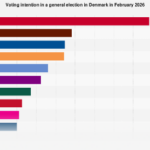

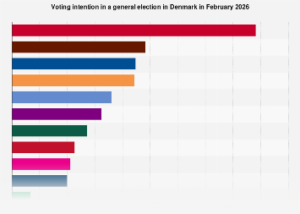
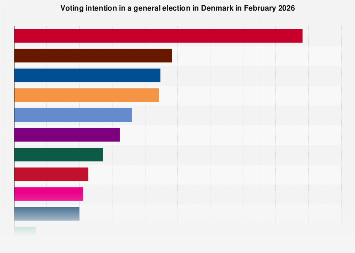
As Denmark gears up for its next general election, anticipated around 2026, the nation’s political currents are showing signs of significant flux. While official polling data for that specific timeframe is still nascent and subject to considerable revision, current indicators and recent electoral history provide a compelling snapshot of the evolving landscape. Understanding these trends is crucial for grasping the potential trajectory of Danish domestic and economic policy, as well as its role on the international stage.
The Danish parliamentary system, characterized by a multi-party structure and coalition governments, often sees close contests and a dynamic interplay between established parties and newer political forces. Historically, the Social Democrats and the Liberal Party (Venstre) have been the dominant players, frequently forming the backbone of governing coalitions. However, the political terrain has become increasingly fragmented in recent years, influenced by factors such as immigration debates, climate change policy, and socio-economic disparities. This fragmentation introduces an element of unpredictability into electoral outcomes, making long-term forecasting a complex undertaking.
Recent analyses of Danish public opinion, even those predating the 2026 election cycle, suggest a continued emphasis on core issues that resonate with the electorate. Social welfare, healthcare, and environmental sustainability consistently rank high in voter priorities. The current government, a broad coalition, faces the challenge of balancing competing demands from its diverse base and from opposition parties. Any shift in polling numbers could signal a change in public appetite for specific policy approaches, potentially impacting everything from taxation levels to public spending on social programs and green initiatives.
Globally, Denmark is recognized for its robust welfare state, high levels of social trust, and ambitious climate targets. These attributes are often a point of national pride and a key differentiator in international comparisons. However, maintaining this model in the face of global economic headwinds, demographic changes, and the ongoing energy transition presents significant policy challenges. The outcome of future elections will undoubtedly shape Denmark’s response to these challenges, influencing its fiscal policies, its commitment to international climate agreements, and its approach to European integration.
For businesses operating within or looking to engage with Denmark, understanding these political undercurrents is not merely an academic exercise but a strategic imperative. Changes in government could lead to shifts in regulatory frameworks, corporate tax rates, and investment incentives. For instance, a government with a stronger focus on environmental policies might accelerate investments in renewable energy and green technology, creating new market opportunities. Conversely, a focus on fiscal austerity could lead to reduced public procurement or a more cautious approach to business expansion.
The statistical data available, even in its preliminary form for future elections, often reflects a public grappling with the pace of societal change. Younger voters, for example, tend to exhibit different priorities, with a greater emphasis on climate action and digital innovation. Older demographics may be more focused on pension security and healthcare accessibility. Political parties are keenly aware of these generational divides and are tailoring their messaging and policy proposals accordingly. This demographic influence, coupled with evolving social values, means that parties must constantly adapt to remain relevant and competitive.
International comparisons provide further context. Many developed nations are experiencing similar political shifts, characterized by a rise in populism, increased polarization, and a demand for greater governmental accountability. Denmark, while often lauded for its stability, is not immune to these broader global trends. The way Danish parties navigate these challenges could offer valuable insights for other countries facing similar predicaments. The country’s ability to maintain social cohesion and economic prosperity amidst these shifts is a testament to its strong institutional framework and a generally engaged citizenry.
The economic impact of potential electoral shifts can be substantial. For example, a government prioritizing public spending on infrastructure or social services might stimulate domestic demand, while a more fiscally conservative approach could aim to reduce national debt and attract foreign investment through tax reforms. The impact on sectors such as renewable energy, pharmaceuticals, and technology, which are significant drivers of the Danish economy, will be closely watched. Any policy changes that affect labor market regulations, trade agreements, or the cost of doing business will have ripple effects across the national and international economic landscape.
Furthermore, Denmark’s position within the European Union means that its domestic political developments can have broader implications for regional economic policy and cooperation. Shifts in government could influence the country’s stance on key EU initiatives, trade negotiations, and financial regulations, thereby impacting the wider European economic bloc. The ongoing debate about the future of the European economy, including issues of digital transformation and the green transition, will likely be a recurring theme in Danish political discourse leading up to and beyond the 2026 elections.
The role of data and polling in modern political campaigning cannot be overstated. While the specific figures for 2026 are still being gathered and refined by various research institutions, the underlying methodologies and the insights they provide are critical for understanding the ebb and flow of public sentiment. These polls act as a barometer, indicating which issues are gaining traction, which parties are resonating with voters, and what potential coalition formations might emerge. They are an indispensable tool for political strategists, policymakers, and indeed, for anyone seeking to comprehend the future direction of Danish governance.
The economic implications of election outcomes are also deeply intertwined with Denmark’s commitment to its advanced social model. Maintaining this model requires a strong and stable economy, capable of generating the tax revenues necessary to fund public services. Therefore, electoral platforms often center on economic growth strategies, job creation, and fiscal responsibility, alongside the core social and environmental agendas. The specific blend of these priorities will be a key determinant of the country’s economic trajectory in the coming years.
In conclusion, while definitive predictions for Denmark’s 2026 general election remain speculative, the underlying trends in public opinion and the persistent influence of key socio-economic and environmental issues provide a clear indication of the forces at play. The evolving political landscape, characterized by increasing fragmentation and the need to address complex global challenges, suggests that the upcoming electoral cycle will be a critical juncture for Denmark. The outcomes will not only shape the nation’s domestic policies but will also influence its economic strategy and its standing on the international stage, making it a subject of considerable interest for business leaders, investors, and policymakers worldwide.