
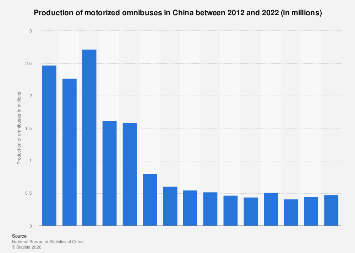
China’s role as a manufacturing powerhouse extends significantly into the automotive sector, with its production of omnibuses – a broad category encompassing buses of various sizes and purposes – reaching considerable scale. While specific, up-to-the-minute production figures for omnibuses are often proprietary and part of premium market intelligence, industry analysis points to a dynamic and expansive landscape driven by domestic demand, export ambitions, and evolving technological standards. The sheer volume of urban populations, the expansion of public transportation networks, and the growth of tourism within China have historically fueled a robust domestic market for buses. This domestic appetite, coupled with government initiatives to modernize fleets and promote cleaner energy solutions, has created a fertile ground for omnibus production.
The global omnibus market is characterized by a complex interplay of factors including economic growth, urbanization rates, government investment in infrastructure, and increasingly, environmental regulations. China’s contribution to this global picture is substantial, not only in terms of sheer output but also in its growing influence on technological innovation. The country has become a leading producer and exporter of electric buses, a segment that is rapidly gaining traction worldwide as cities and governments prioritize decarbonization and sustainable urban mobility. This shift towards electric powertrains is a significant trend shaping the future of omnibus manufacturing, both in China and internationally.
Beyond electric vehicles, China’s omnibus production encompasses a wide array of vehicle types, from large city transit buses designed for high-capacity passenger movement to smaller shuttle buses, coaches for intercity travel, and specialized vehicles for tourism and corporate use. The diversity of these offerings reflects the varied demands of its vast domestic market and the increasingly sophisticated requirements of international buyers. The scale of production is supported by a well-established supply chain, a large and skilled workforce, and significant investment in research and development by both domestic manufacturers and international joint ventures operating within China.
Market data, often accessed through specialized research platforms, reveals that China consistently ranks among the top global producers of commercial vehicles, with buses forming a significant component of this output. While precise annual production numbers fluctuate based on economic cycles, government subsidies, and industry-specific policies, the underlying trend has been one of sustained growth and increasing technological sophistication. The Chinese government’s long-term vision for its automotive industry, including the "Made in China 2025" initiative, has placed a strong emphasis on developing advanced manufacturing capabilities and fostering innovation in key sectors like new energy vehicles, which directly impacts the omnibus segment.
The economic impact of China’s omnibus production is far-reaching. It supports a vast ecosystem of component suppliers, from engine and chassis manufacturers to electronics and interior fitting providers. This, in turn, generates significant employment across various skill levels. Furthermore, the export of Chinese-made buses contributes to the country’s trade balance and bolsters its reputation as a capable manufacturing nation. As developing economies in Asia, Africa, and Latin America continue to invest in public transportation infrastructure, Chinese omnibus manufacturers are well-positioned to capture a substantial share of these growing markets, offering competitive pricing and increasingly advanced technologies.
Comparisons with other major omnibus manufacturing regions, such as Europe and North America, highlight both similarities and divergences. While European manufacturers have historically been strong in premium coach and bus segments, with a focus on design and specialized applications, and North America has its own established players, China has rapidly ascended in terms of volume and, more recently, in its leadership in electric bus technology. The rapid adoption of electric buses in Chinese cities, driven by ambitious environmental targets and substantial government support, has provided manufacturers with invaluable real-world experience and economies of scale that are now being leveraged for export markets.
The ongoing transition to electric mobility presents both opportunities and challenges for China’s omnibus sector. While the country is a clear leader in electric bus production, maintaining this advantage requires continuous innovation in battery technology, charging infrastructure, and vehicle efficiency. Furthermore, the global market for electric buses is becoming increasingly competitive, with established players in Europe and North America also making significant strides. China’s ability to sustain its dominance will depend on its capacity to adapt to evolving global standards, address potential trade barriers, and continue to invest in cutting-edge research and development.
Analysis of market trends suggests that the future of omnibus production in China will likely be shaped by several key factors. The continued push for electrification will remain paramount, with a focus on longer ranges, faster charging times, and improved battery lifespan. Urbanization will continue to drive demand for public transport solutions, requiring a steady supply of high-capacity and efficient buses. Government policies, both domestically and in key export markets, will play a crucial role in shaping the regulatory landscape and influencing purchasing decisions, particularly concerning environmental standards and safety regulations.
Moreover, the integration of smart technologies, such as advanced driver-assistance systems (ADAS), connectivity features, and real-time passenger information systems, will become increasingly important differentiators in the omnibus market. Chinese manufacturers are actively investing in these areas, aiming to offer vehicles that are not only environmentally friendly but also safe, comfortable, and technologically advanced. The competitive landscape is expected to remain intense, with a consolidation of smaller players and a continued focus on innovation and cost-effectiveness by the larger manufacturers. The global implications of China’s omnibus production capacity are significant, influencing global supply chains, the pace of sustainable transportation adoption, and the overall competitiveness of the international automotive industry. As China continues to refine its manufacturing capabilities and technological prowess, its impact on the global omnibus market is set to grow, shaping the way people move around the world’s cities and beyond.