

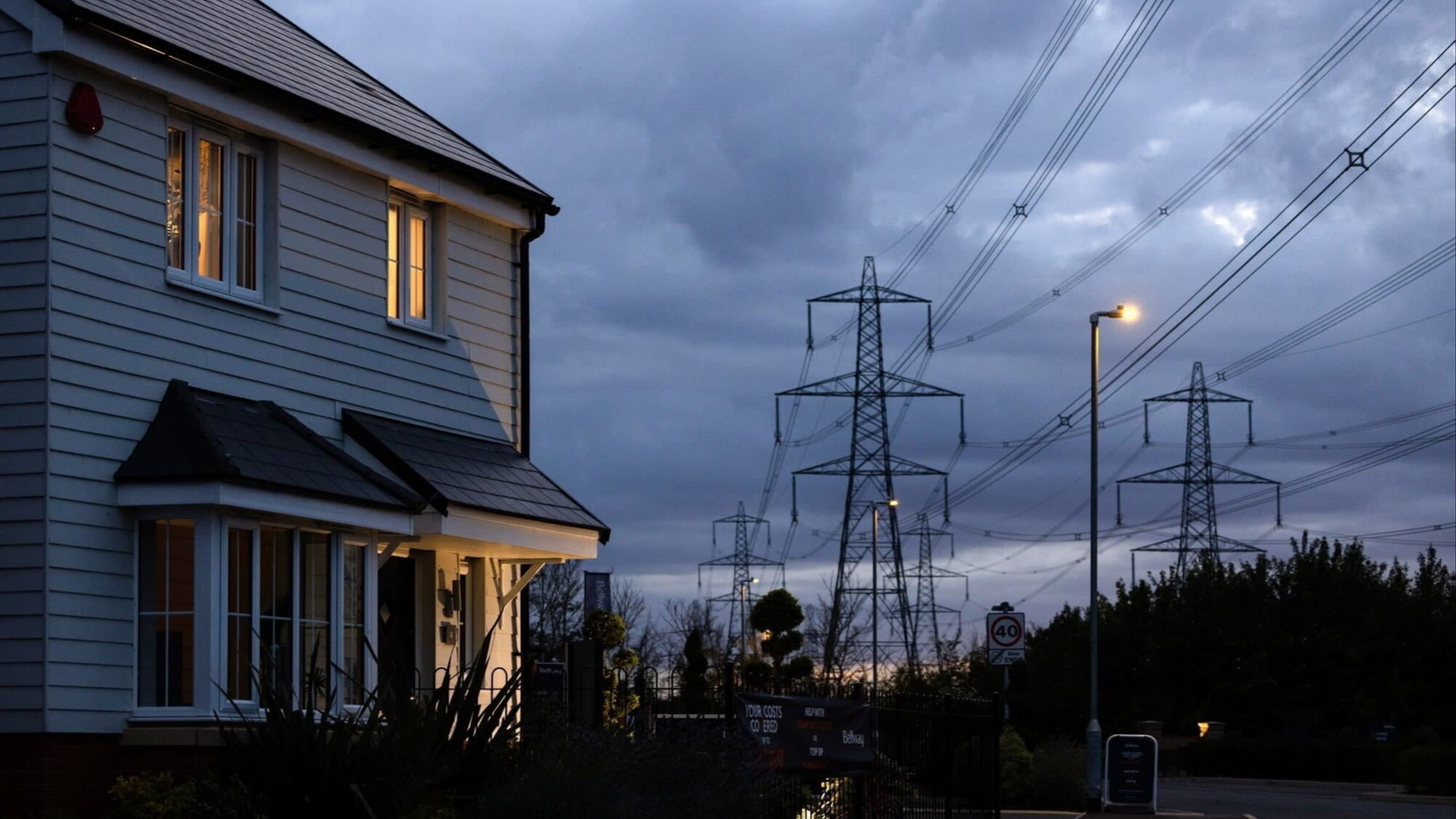
The British government has announced a targeted £50 million financial intervention aimed at shielding the nation’s most vulnerable households from a looming spike in energy prices. This strategic allocation comes at a critical juncture for the United Kingdom’s economy, as the convergence of geopolitical volatility, wholesale market fluctuations, and the seasonal transition into colder months threatens to reignite the cost-of-living crisis that has gripped the country for the better part of three years. While the sum is modest in comparison to the multibillion-pound universal subsidies deployed during the height of the 2022 energy shock, it signals a shift toward a more surgical, fiscally disciplined approach to social welfare in a post-inflationary environment.
The new support package is designed to act as a fiscal shock absorber for low-income families who fall through the cracks of existing benefit frameworks. Distributed primarily through local authorities via the Household Support Fund and similar discretionary mechanisms, the capital is intended to provide immediate relief for essentials, including heating bills, thermal efficiency improvements, and emergency credit for those utilizing prepayment meters. For the Treasury, the challenge is twofold: maintaining the UK’s path toward fiscal consolidation while preventing a catastrophic rise in fuel poverty, which currently affects an estimated 13% of households in England alone.
Market analysts note that the timing of this announcement is no coincidence. Ofgem, the UK’s independent energy regulator, recently adjusted the national price cap upward, reflecting a sustained rise in the wholesale cost of natural gas. Although the UK has significantly diversified its energy mix, natural gas remains the marginal price-setter for the electricity market. With international gas prices sensitive to supply disruptions in the Middle East and the ongoing conflict in Ukraine, the "energy ceiling" that protects consumers has become increasingly expensive to maintain. The current cap adjustment is expected to add hundreds of pounds to the average annual household bill, a burden that is disproportionately felt by those in the bottom two income deciles.
The economic logic behind this targeted £50 million injection rests on the principle of marginal utility. For a middle-income household, a £150 annual increase in energy costs represents a manageable budgetary friction; for a household on the breadline, it represents a choice between nutrition and warmth. By funneling resources specifically to those at the highest risk of "self-disconnection"—a phenomenon where residents stop using energy entirely because they cannot afford to top up their meters—the government aims to prevent a wider social and public health crisis. Public health data consistently shows that cold homes exacerbate chronic respiratory and cardiovascular conditions, placing an indirect but substantial financial strain on the National Health Service (NHS) during the winter period.
From a broader macroeconomic perspective, the UK’s energy landscape remains in a state of precarious transition. Since the 2022 invasion of Ukraine by Russia, the European energy market has undergone a fundamental decoupling from Siberian gas pipelines. While the UK was never as dependent on Russian gas as peers like Germany or Italy, it remains tethered to the European gas grid and global Liquefied Natural Gas (LNG) prices. This exposure means that even local policy successes in renewable energy generation cannot fully insulate British consumers from price shocks originating in the Strait of Hormuz or the US Gulf Coast.
In comparison to international peers, the UK’s strategy has evolved from broad-based interventions to highly specific safety nets. In 2022 and 2023, the British government spent upwards of £40 billion on the Energy Price Guarantee, a move that effectively nationalized a portion of every citizen’s utility bill. In contrast, France utilized a "tariff shield" that capped price increases at 15% through direct state intervention in the energy giant EDF, while Germany implemented a €200 billion "double ka-boom" subsidy package. The current £50 million package reflects a new era of "fiscal realism" in London, where the government is attempting to manage a massive debt-to-GDP ratio while still fulfilling its role as a provider of last resort.
Critics of the measure argue that the £50 million sum is a "drop in the ocean" given the scale of the challenge. Advocacy groups and consumer rights organizations point out that the aggregate increase in household energy debt—now estimated to be in the billions of pounds—requires a structural overhaul rather than a series of ad-hoc grants. There is also a growing debate regarding the "poverty premium," where lower-income consumers on prepayment meters often pay higher unit rates for their energy than those who can afford to pay by monthly direct debit. While recent regulatory changes have sought to align these costs, the inherent volatility of the market continues to punish those with the least liquidity.
Industry stakeholders, including the "Big Six" energy suppliers, have expressed a cautious welcome for the government support but continue to call for a social tariff. A social tariff would be a permanent, discounted energy rate for the vulnerable, mandated by the government and funded either through general taxation or a levy on higher-usage consumers. Such a move would represent a permanent shift in the UK’s social contract regarding essential services. However, the Treasury has remained hesitant to commit to such a long-term fiscal obligation, preferring the flexibility of discretionary funds like the one announced this week.
The role of the transition to Net Zero cannot be ignored in this economic calculus. A significant portion of the UK’s energy bills is comprised of environmental and social levies, which fund the development of offshore wind, solar, and nuclear projects. While these investments are essential for long-term energy security and price stability, they create a "green paradox" in the short term: the costs of building a cleaner grid are being borne by current consumers, many of whom are struggling to afford their current bills. The government has faced mounting pressure to move these levies from energy bills into general taxation to lower the immediate cost of electricity, a move that would be popular with consumers but difficult for a cash-strapped Treasury to absorb.
Furthermore, the UK’s aging housing stock remains one of the most significant hurdles to energy affordability. British homes are among the least energy-efficient in Western Europe, losing heat up to three times faster than modern homes in countries like Germany or Sweden. Economists argue that while £50 million in direct aid is necessary for immediate survival, the long-term solution lies in a multi-billion-pound national retrofitting program. Improving insulation and installing heat pumps would reduce the "base load" of energy required by households, making them less susceptible to the whims of the global gas market.
As the winter season approaches, the efficacy of this £50 million package will be measured by the rate of fuel poverty and the stability of the retail energy sector. For the government, the objective is to navigate a narrow corridor between fiscal responsibility and social compassion. The UK is currently witnessing a fragile recovery in real wage growth, but this progress could easily be erased by a sharp spike in non-discretionary spending like heating and electricity.
Ultimately, this support package is a testament to the "new normal" of the global energy economy. The era of cheap, abundant energy that characterized the early 21st century has been replaced by a landscape defined by scarcity, geopolitical leverage, and the high capital costs of the green transition. For the British consumer, the £50 million fund provides a temporary bridge, but the underlying volatility of the market suggests that the debate over energy affordability is far from over. As policymakers look toward the next fiscal year, the focus will likely shift from emergency grants to the structural reforms needed to ensure that the UK’s energy security is both sustainable and affordable for all levels of society.