

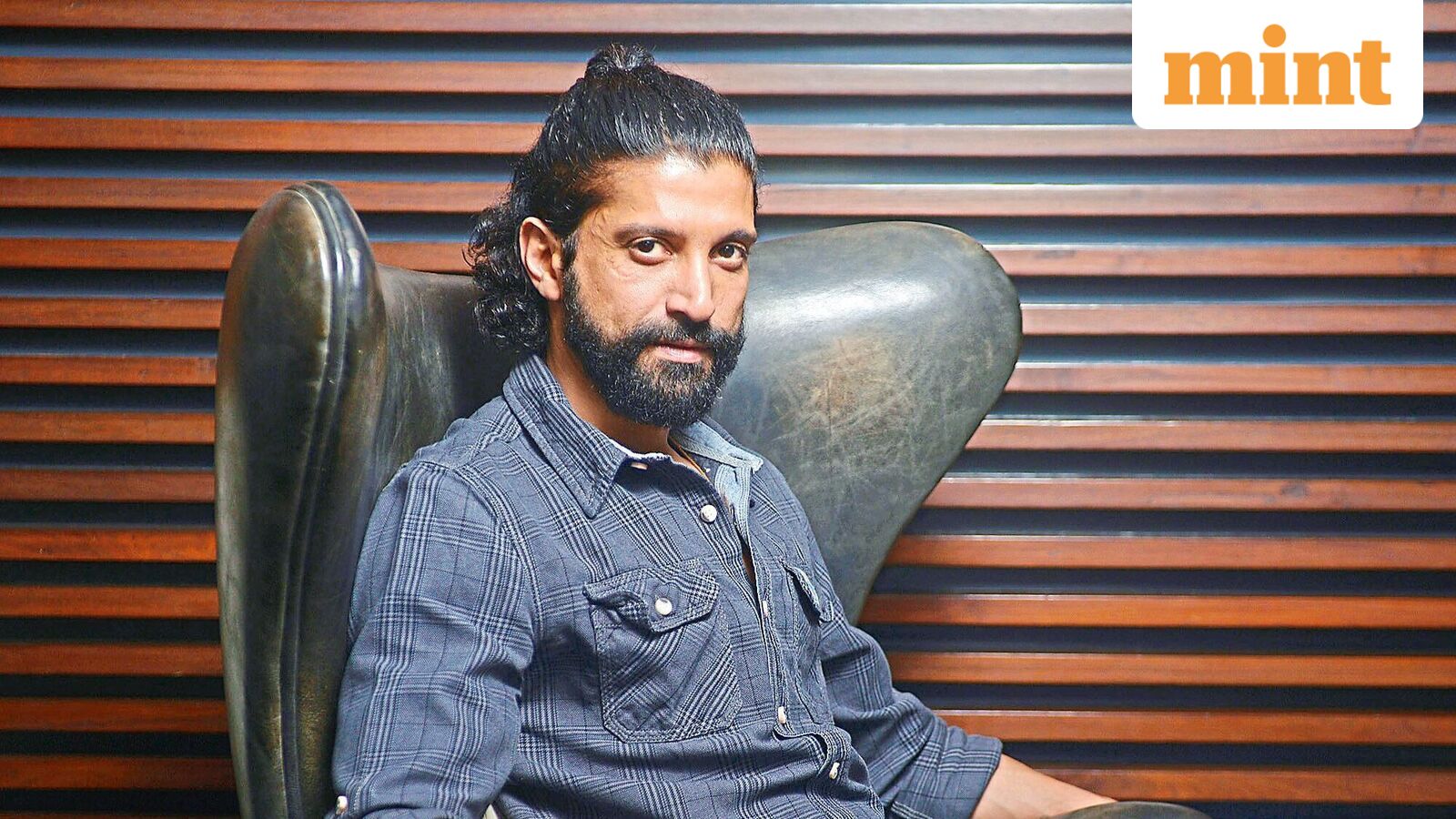
The recent news of actor-director Farhan Akhtar joining the cast of Sam Mendes’ ambitious four-part biopic on The Beatles once again shines a spotlight on the perennial aspiration of Indian talent to conquer Hollywood. While such announcements invariably spark a wave of excitement about global crossover success, the journey from the vibrant, multifaceted Indian cinema landscape to the highly competitive American entertainment industry remains fraught with profound challenges, revealing a complex interplay of access, economics, and cultural perception. Despite India’s position as the world’s largest film producer by volume, generating over 1,800 feature films annually across dozens of languages and commanding a domestic box office revenue exceeding $2.5 billion, its celebrated actors rarely achieve mainstream Hollywood stardom beyond supporting or niche roles.
The Structural Divide: Access and Audition Culture
One of the most significant barriers lies in the fundamental operational differences between the two industries, particularly concerning talent acquisition. Hollywood operates on a highly structured, agency-driven model where auditions are the bedrock of casting, even for established stars. Securing representation from a reputable US talent agency is often the first, and perhaps most daunting, hurdle for an Indian actor. This typically requires a demonstrable track record of American credits, creating a ‘catch-22’ situation: one needs US credits to get an agent, but an agent is crucial for securing those initial US roles. The resources and sustained effort required for international actors to simply get their foot in the door—including self-taping auditions, extensive travel for in-person meetings, and maintaining a presence in expensive hubs like Los Angeles—are substantial and often beyond the immediate reach of many, regardless of their domestic fame.
In stark contrast, the Indian film industry, particularly Bollywood, often operates on a star system where established actors are frequently approached directly for roles, with scripts occasionally tailored to their persona. "In India, once you’re established, roles are written for you, someone decides you’re the right fit, and you’re cast," observes Harikrishnan Pillai, CEO and co-founder of digital marketing agency TheSmallBigIdea. This ingrained comfort with being sought-out rather than having to audition can be a significant psychological and professional adjustment for Indian luminaries. The notion of a celebrated actor having to "try out" for a part, often alongside dozens of other hopefuls, is a cultural shift that many find uncomfortable, leading to a natural reluctance to engage with the Hollywood system. This dynamic often means that relatively newer or less-established Indian actors, who are more accustomed to auditioning and have less to "lose" in terms of perceived status, are more willing to explore international opportunities, as exemplified by actors like Ali Fazal in films such as Victoria & Abdul and Death on the Nile.
The Economic Calculus: Opportunity Cost and Investment
For top-tier Indian actors, the decision to pursue Hollywood comes with a steep economic opportunity cost. A-list stars in India command substantial fees, often in the millions of dollars per film, alongside lucrative endorsement deals that constitute a significant portion of their annual income. They operate within a robust ecosystem of fan adoration, media attention, and a steady stream of domestic projects. Shifting focus to Hollywood would necessitate a substantial reduction in income initially, as Indian actors often accept significantly lower fees for their inaugural international roles, banking on future visibility and improved deal terms. This strategic move, however, demands a clear-eyed assessment of its return on investment, which can be elusive.
Beyond the reduced immediate income, the financial outlay for an aspiring Hollywood career is considerable. Securing an O-1 visa—a non-immigrant visa for individuals with "extraordinary ability" in the arts, requiring national or international acclaim—involves complex immigration legal fees, USCIS processing costs, and the practical expense of maintaining a presence in Los Angeles or New York. Brijen Desai, associate vice-president at digital agency White Rivers Media, highlights that these "represent sustained upfront investment before bookings materialise." An actor might spend hundreds of thousands of dollars over several years before securing a role that truly pays off, a risk few are willing to take when they are already at the pinnacle of success in their home country.
Operational Hurdles and Market Dynamics

Balancing a flourishing career in India with Hollywood aspirations presents formidable operational complexities. Indian film productions, while diverse, often adhere to faster schedules compared to Hollywood’s typically longer development and production cycles. Committing to a multi-year television series or an extended film shoot in the US can create significant scheduling conflicts, forcing actors to turn down lucrative Indian projects. Juggling dates across continents, navigating time zone differences for virtual meetings and auditions, and managing dual teams of agents and publicists adds layers of logistical challenge that can strain even the most dedicated professionals.
Furthermore, Hollywood’s motivation for casting Indian actors often stems from a commercial strategy rather than a pure artistic imperative. Production houses frequently cast Indian faces to expand their reach into the lucrative Indian market, which boasts a massive audience, and to appeal to the significant global Indian diaspora. With the Indian diaspora estimated at over 32 million people worldwide, representing a considerable consumer base for entertainment, this strategy makes economic sense for studios. However, it can inadvertently lead to typecasting or roles that specifically require an "Indian" persona, limiting the scope for diverse character portrayals. As film producer Shariq Patel notes, "Studios in the West aren’t necessarily enamoured of Indian stars unless a role specifically requires an Indian face." The potential for being relegated to supporting or stereotypical roles, coupled with the pressure of public scrutiny if the venture doesn’t immediately yield blockbuster success, can deter many, as "there isn’t much dignity in getting trolled for struggling."
Cultural Perceptions and Shifting Narratives
A more subtle but equally powerful barrier is the cultural unfamiliarity within Hollywood regarding Indian stardom. The depth of an Indian actor’s domestic fame, their extensive filmography, and their iconic status within India’s diverse cinematic traditions are often not fully understood or appreciated by Western casting directors and producers. This perceptual gap necessitates persistent networking across time zones, a continuous effort to bridge cultural understanding, and a constant need for Indian actors to re-establish their credentials in a new milieu. Beyond cultural recognition, linguistic nuances and accent considerations can also play a role, even for actors fluent in English, potentially influencing casting decisions for certain character types.
Despite these hurdles, the landscape is gradually evolving. The rise of global streaming platforms like Netflix, Amazon Prime Video, and Disney+ has undeniably broadened exposure for international talent and content. These platforms, driven by a global subscriber base and a demand for diverse narratives, are increasingly investing in original content from various regions, including India. While streaming has created more opportunities for Indian actors to appear in internationally distributed productions, it "hasn’t materially shifted role hierarchies or fee parity" in the traditional Hollywood sense, as Desai points out. Many roles remain supporting, and compensation often lags behind domestic rates or what a similar role would fetch for a Western actor. The path to lead roles and equitable remuneration in Hollywood for Indian talent remains a marathon, not a sprint.
The Outliers and the Future Horizon
There have, of course, been notable exceptions that highlight the immense potential. The late Irrfan Khan, a master of his craft, transcended cultural barriers with his nuanced performances in films like Life of Pi, Jurassic World, and The Amazing Spider-Man, contributing to films that collectively grossed hundreds of millions worldwide. His success was attributed to his exceptional talent, versatility, and ability to embody complex, universal characters that resonated with global audiences. Similarly, Priyanka Chopra Jonas strategically leveraged her international recognition (initially as Miss World, then through a music career) into a high-profile role in the TV series Quantico, which quickly evolved into a high-value per-season deal, followed by significant film projects. These actors represent outliers whose unique circumstances, talent, and strategic decisions allowed them to navigate the challenging waters.
As Hollywood continues to grapple with calls for greater diversity and authentic representation, and as the global entertainment market becomes increasingly interconnected, the prospect for Indian actors may slowly improve. Initiatives aimed at fostering diverse talent and stories could gradually open more doors. However, the deep-seated structural, economic, and cultural realities mean that the journey for most Indian actors seeking to crack the Hollywood game will likely remain an arduous, often unrewarding, yet perpetually alluring quest. The true breakthrough may come not just from individual talent, but from a fundamental shift in how Hollywood perceives and integrates global narratives and the stars who embody them.