


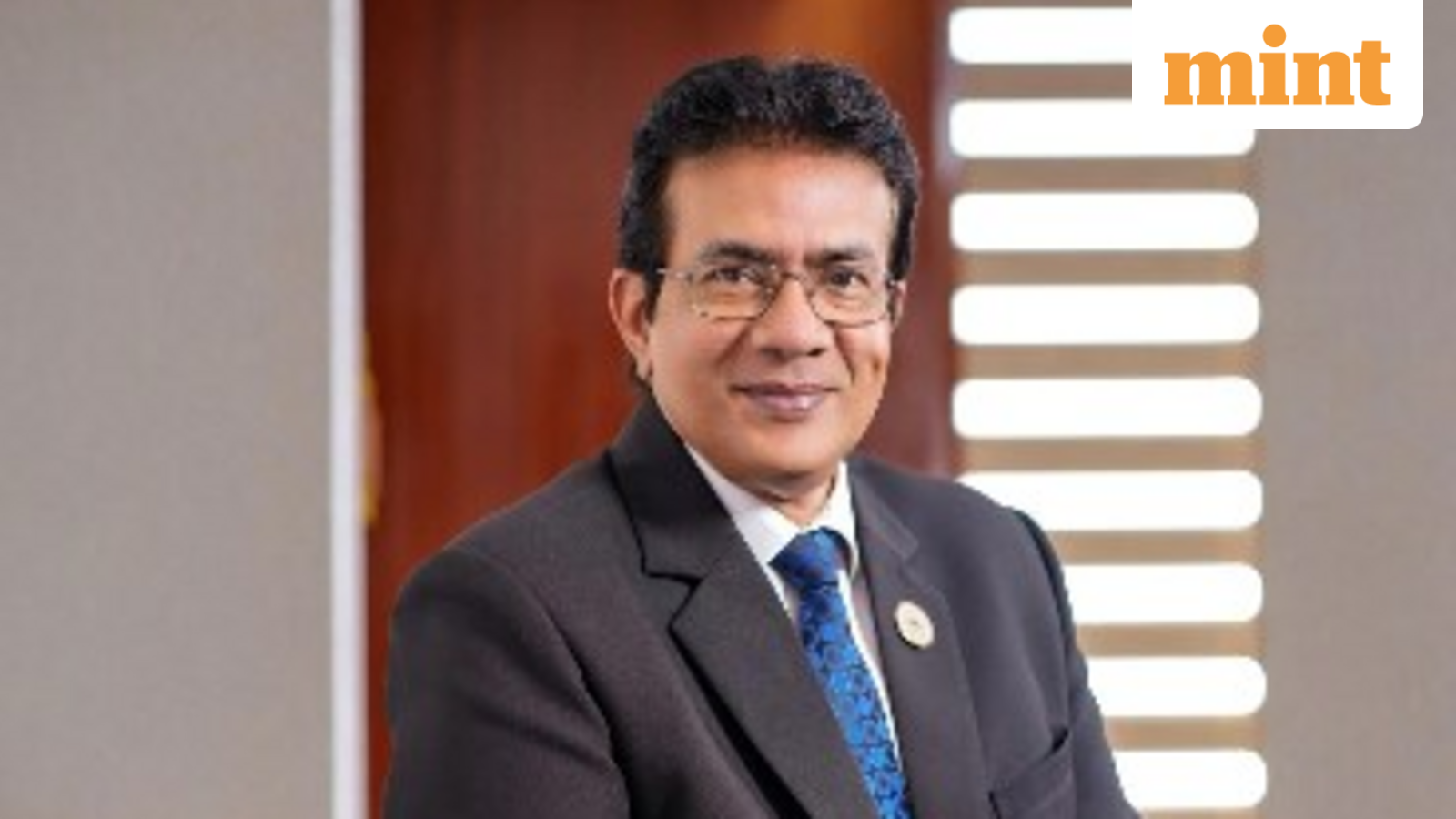
The appointment of Vinay M. Tonse as the new chief executive officer of Yes Bank marks a pivotal moment for the private sector lender, signaling a strategic focus on granular, stable growth after years of rigorous balance sheet clean-up and a dramatic rescue operation. Tonse, a seasoned banking veteran formerly at the State Bank of India (SBI), brings a wealth of experience in retail banking, a segment analysts believe is paramount for Yes Bank’s next phase of transformation. His mandate is clear: to steer the revitalized institution towards sustained profitability and a re-established position of trust within India’s competitive financial landscape.
Yes Bank’s journey over the past six years has been nothing short of a financial saga, transitioning from the precipice of collapse in March 2020 to a significantly de-risked entity today. The crisis, precipitated by aggressive corporate lending practices and accumulating asset-quality risks under previous management, necessitated an unprecedented intervention by the Reserve Bank of India (RBI). The central bank orchestrated a rescue package involving a consortium of lenders, prominently led by SBI, alongside ICICI Bank Ltd, Kotak Mahindra Bank Ltd, and others, who infused critical capital after the regulator superseded the bank’s board. This systemic event underscored the interconnectedness of India’s financial ecosystem and the RBI’s commitment to maintaining stability. The news of Tonse’s approval by the RBI, conveyed to exchanges, was met positively by the market, with the bank’s shares witnessing a modest uptick, closing at ₹21.52 apiece, an almost 1% rise from the previous day’s close.

The subsequent years under the interim leadership, particularly that of former SBI chief financial officer Prashant Kumar, have been defined by a root-and-branch overhaul of the bank’s credit culture and operational framework. As Ventura Research aptly noted, Yes Bank’s history demonstrated that "growth was never the constraint, risk was." The post-crisis period has seen a fundamental shift from aggressive expansion to conservative underwriting, stringent provisioning, and focused recoveries. This transformation is vividly reflected in the dramatic improvement in asset quality: bad loans, which peaked at an alarming 18.9% of total loans in December 2019, have plummeted to a much healthier 1.5% by the end of December in the current fiscal year. Complementing this, the bank undertook a significant balance sheet clean-up in 2022, offloading a substantial ₹48,000 crore in stressed loans to J.C. Flowers Asset Reconstruction Co., further solidifying its financial health. The share of low-cost Current Account Savings Account (CASA) deposits has also seen an incremental improvement, rising from 32.1% six years ago to 34%, a crucial step towards reducing the overall cost of funds.
At 60, Tonse inherits a bank significantly cleaner and more stable than its pre-crisis avatar. His distinguished career at SBI, culminating in heading its colossal retail banking division, positions him uniquely for Yes Bank’s current strategic needs. At SBI, he oversaw a retail loan book exceeding ₹16 trillion – a staggering figure more than six times the size of Yes Bank’s entire loan portfolio. This extensive experience in managing a diverse and vast retail segment, encompassing everything from mortgages and auto loans to personal finance and small business credit, is invaluable. Analysts widely concur that a robust and profitable turnaround in the retail segment is key to Yes Bank’s long-term success. Retail banking typically offers higher net interest margins, greater granularity in asset portfolios, and a more stable deposit base compared to large corporate lending, which often carries higher concentration risks and can be prone to cyclical downturns. Tonse’s expertise aligns perfectly with the bank’s imperative to diversify its loan book and build a resilient revenue stream.
Despite the significant strides made, formidable challenges remain for Tonse. A primary focus will be to accelerate deposit growth, particularly against a backdrop of heightened competition and a tightening liquidity environment across the Indian banking sector. In the third quarter of FY26, Yes Bank reported a year-on-year deposit growth of 5.5%, reaching ₹2.9 trillion. While positive, this rate lags significantly behind peers like IDFC First Bank Ltd, which recorded a robust 24% growth, and Federal Bank Ltd, with an 11.8% increase over the same period. Bridging this gap is crucial, as strong, low-cost deposit growth is the bedrock of sustainable lending and improved profitability. Tonse will need to deploy innovative strategies, potentially leveraging digital channels, expanding targeted branch networks, and offering competitive yet sustainable deposit rates to attract and retain customers.

Another critical area for improvement is the bank’s Net Interest Margin (NIM), a key indicator of profitability. Yes Bank’s NIM stood at 2.6%, which is considerably lower than IDFC First Bank’s impressive 5.7% and Federal Bank’s 3.18%. A lower NIM indicates either a higher cost of funds or a less profitable asset mix, or both. Tonse’s retail banking acumen could be instrumental here, as retail loans typically command higher yields than large corporate exposures. By optimizing the liability mix towards lower-cost CASA deposits and strategically growing the higher-yielding retail and SME (Small and Medium-sized Enterprises) loan books, the bank can gradually expand its NIM. Furthermore, maintaining stringent credit costs and enhancing operational efficiency will directly contribute to the bottom line. Nomura, a global financial services group, projects a gradual improvement in Yes Bank’s Return on Assets (RoA) to 0.9%-1.1% by FY27/FY28, up from 0.8% in the first nine months of FY26. This anticipated improvement is contingent on better margins, sustained fee income momentum, and disciplined credit cost management.
On the capital front, Yes Bank now benefits from a significantly strengthened equity base and the continued backing of strategic investors. While most of the original consortium banks divested their stakes post the three-year lock-in period, SBI has remained a committed investor, albeit reducing its holding. In September 2025, SBI sold a 13.2% stake to Japan’s Sumitomo Mitsui Banking Corp. (SMBC) for a substantial ₹8,889 crore, but still retains around 10.8% of the bank. SMBC’s dual transactions have provided a substantial capital cushion, and its deeper strategic interest in the Indian market was further evidenced in January 2026 when the central bank permitted it to operate a wholly-owned subsidiary in India, signaling long-term commitment beyond just investment. This institutional confidence, coupled with the bank’s improved fundamentals, provides a stable foundation for future growth initiatives.
As Tonse assumes leadership, the bank is also in the process of formulating a comprehensive five-year strategy, a blueprint that will outline its growth trajectory and operational priorities. Outgoing CEO Prashant Kumar, during the bank’s Q3 media earnings call, emphasized a "calibrated and cautious" approach, a sentiment likely to be echoed and reinforced by Tonse. This cautious optimism reflects the lessons learned from the bank’s past and the imperative to balance ambition with robust risk management. The path ahead for Yes Bank involves not just expanding its loan book and deposit base but doing so sustainably, building enduring customer relationships, and leveraging technology to enhance service delivery and operational efficiency. Tonse’s leadership will be critical in navigating the complexities of India’s dynamic banking sector, ensuring that Yes Bank evolves into a truly resilient, customer-centric institution, charting a course towards sustained profitability and re-establishing its prominence in the Indian financial landscape.