


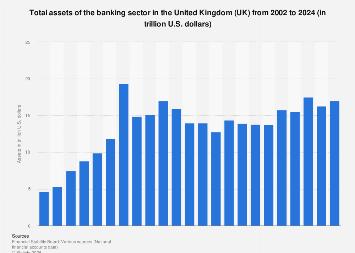
The United Kingdom’s banking sector has witnessed a significant expansion in its asset base, with aggregate bank assets in the UK reaching an unprecedented scale in 2024, solidifying its position as a global financial powerhouse. While specific granular data on the exact total value requires premium access, available indicators and broader market trends point to a substantial and growing figure that likely surpasses several trillion pounds sterling. This expansion is not merely a reflection of increased lending or deposit-taking, but also a symptom of the evolving nature of financial intermediation, the impact of monetary policy, and the strategic maneuvers of domestic and international financial institutions operating within the UK.
The sheer volume of assets held by UK banks is a critical barometer of the health and influence of its financial services industry. These assets, which encompass a wide array of instruments including loans, securities, cash, and derivative positions, form the backbone of the economy, facilitating investment, consumption, and trade. The current asset trajectory suggests a robust financial system, capable of absorbing economic shocks and fueling growth. However, this growth also presents challenges related to risk management, regulatory oversight, and the potential for systemic vulnerabilities.
Examining the components of this asset growth provides deeper insights. The persistent low-interest-rate environment, while gradually shifting, has historically encouraged banks to seek higher yields, potentially through more complex financial products or increased leverage. Furthermore, the UK’s role as a global financial hub attracts significant cross-border capital flows, contributing to the accumulation of assets by its banking institutions. Foreign banks with a substantial presence in the UK, alongside domestic giants, are all contributing to this impressive aggregate figure.
In a global context, the UK’s banking asset size places it among the top tier of financial centers worldwide. While precise comparisons are complex due to varying reporting standards and the inclusion of different types of financial institutions, the UK consistently ranks alongside economies like the United States, China, and Japan in terms of the sheer scale of its financial sector. This competitive standing is a double-edged sword, offering immense opportunities for economic development but also exposing the UK to global financial contagion risks.
The economic implications of this asset accumulation are multifaceted. On one hand, a larger asset base generally signifies greater capacity for banks to lend to businesses and individuals, thereby stimulating economic activity and job creation. It also indicates a strong deposit base, reflecting public confidence in the banking system. On the other hand, an oversized banking sector can pose systemic risks if not adequately regulated. The 2008 global financial crisis served as a stark reminder of the interconnectedness and fragility that can emerge when financial institutions accumulate excessive leverage and engage in risky asset classes.
Regulatory bodies, such as the Bank of England and the Prudential Regulation Authority, are tasked with monitoring these asset levels and ensuring that banks maintain adequate capital buffers and liquidity to withstand potential downturns. The ongoing regulatory landscape, shaped by international agreements like Basel III and IV, aims to impose stricter capital requirements and risk management protocols. These measures are crucial in balancing the economic benefits of a large banking sector with the imperative of financial stability.
Moreover, the nature of bank assets is continuously evolving. The rise of digital banking, fintech innovation, and the increasing importance of intangible assets are reshaping balance sheets. Banks are no longer solely defined by traditional lending. Investments in technology, data analytics, and payment infrastructure are becoming significant components of their asset portfolios. This diversification can enhance efficiency and customer service, but also introduces new types of operational and cyber risks that require careful management.
The geopolitical landscape also plays a role. Global economic uncertainties, trade tensions, and inflationary pressures can influence asset valuations and the demand for financial services. Banks operating in the UK must navigate these external factors, which can impact their lending appetite, investment strategies, and ultimately, the growth trajectory of their asset bases. For instance, rising interest rates, while potentially boosting net interest margins, can also lead to increased loan defaults and a decline in the market value of fixed-income securities held by banks.
Looking ahead, the trajectory of UK bank assets will be closely watched by economists, investors, and policymakers. The balance between supporting economic growth through robust financial intermediation and safeguarding financial stability will remain a central challenge. The ability of the UK’s banking sector to adapt to technological advancements, evolving regulatory frameworks, and a dynamic global economic environment will be key to its sustained success and its contribution to the nation’s prosperity. The sheer scale of assets underscores the sector’s importance, demanding continuous vigilance and strategic foresight to ensure its continued resilience and its role as a cornerstone of the UK economy.