


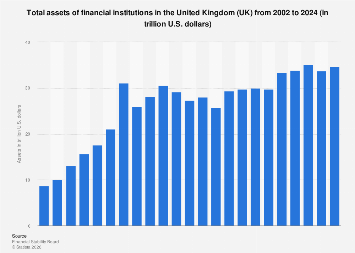
The United Kingdom’s financial institutions have solidified their position as a cornerstone of the nation’s economic might, with their aggregate assets poised to demonstrate significant scale and influence throughout 2024. This sector, encompassing a broad spectrum of entities from traditional banking giants to agile fintech firms, represents a critical engine for capital allocation, investment, and economic stability, both domestically and on the global stage. The sheer volume of assets under management and control by these institutions underscores their pivotal role in driving growth, facilitating trade, and providing essential financial services that underpin modern commerce.
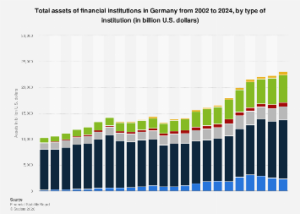
Analysis of the UK’s financial landscape in 2024 reveals a sector characterized by immense depth and breadth. This encompasses not only the balance sheets of major commercial and investment banks, but also the vast reserves held by pension funds, insurance companies, asset managers, and the burgeoning fintech sector. The aggregate value of these assets is a key indicator of the sector’s systemic importance. While precise, up-to-the-minute figures are often proprietary or subject to dynamic market fluctuations, trends and projections consistently point to a financial ecosystem of substantial scale. For context, global financial asset figures often run into the hundreds of trillions of dollars, and the UK, as a leading global financial center, consistently accounts for a significant portion of this international wealth. This concentration of capital within the UK’s financial institutions provides them with considerable leverage in influencing investment flows, corporate finance, and broader economic policy.
The composition of these assets is as diverse as the institutions themselves. Traditional banking assets, such as loans, deposits, and securities held by commercial banks, form a foundational layer. These are complemented by the significant holdings of insurance companies, which manage substantial reserves to meet policyholder obligations, and the rapidly growing pools of capital overseen by asset managers on behalf of institutional and retail investors. Pension funds, tasked with securing retirement income for millions, represent another colossal reservoir of assets, often invested across a wide array of asset classes to ensure long-term growth. The rise of alternative investment funds, including private equity and venture capital, further diversifies the asset base, fueling innovation and supporting emerging industries.
The economic impact of this asset concentration is multifaceted. Firstly, it enables substantial lending and investment activity, providing the lifeblood for businesses to expand, innovate, and create employment. Access to capital is a critical determinant of a nation’s productive capacity and its ability to compete internationally. The UK’s financial sector, through its extensive asset base, plays a crucial role in channeling funds from savers to borrowers and investors, thereby fostering economic dynamism. Secondly, the financial services sector itself is a significant contributor to the UK’s Gross Domestic Product (GDP) and a major employer, generating substantial tax revenues and supporting a highly skilled workforce. Its outward-looking nature also makes it a vital component of the UK’s export economy, attracting international capital and business.
Global comparisons further highlight the UK’s standing. As a leading financial hub, alongside New York, London competes for global capital flows. The sophistication and depth of its financial markets, coupled with a robust regulatory framework, attract both domestic and international institutions. While the specific figures for UK financial assets will vary depending on the methodology and scope of inclusion, they consistently rank among the highest in the world. For instance, studies analyzing global financial centers often place London at or near the top in terms of financial services exports, foreign direct investment in the sector, and the depth of its capital markets. This competitive advantage is largely a function of the sheer scale and diversity of assets managed within its borders.
The ongoing evolution of the financial landscape, particularly the rapid advancements in financial technology (fintech), is also reshaping the nature and management of assets. While traditional institutions continue to dominate in terms of sheer asset volume, fintech firms are increasingly capturing market share in areas like payments, lending, and investment platforms. This has led to a more competitive and innovative financial ecosystem, with new models of asset management and client engagement emerging. The integration of digital assets and blockchain technology, while still in its nascent stages for mainstream financial institutions, represents another frontier that could influence asset composition and management in the years to come.
However, the immense scale of financial assets also brings inherent risks and responsibilities. The stability of the financial sector is paramount to overall economic health. Regulatory bodies in the UK, such as the Bank of England and the Financial Conduct Authority (FCA), continuously monitor and manage these risks through stringent capital requirements, prudential supervision, and consumer protection measures. The interconnectedness of global financial markets means that events in one jurisdiction can have ripple effects elsewhere, underscoring the importance of robust international cooperation and regulatory alignment. The management of these assets is not merely an accounting exercise but a complex undertaking that involves navigating market volatility, geopolitical uncertainties, and evolving technological landscapes.
Looking ahead, the trajectory of UK financial assets in 2024 and beyond will be influenced by several key factors. These include the prevailing macroeconomic environment, characterized by inflation rates, interest rate policies, and global growth prospects; the ongoing adjustments to the post-Brexit regulatory and trade landscape; and the pace of technological adoption and innovation within the sector. The commitment to sustainability and environmental, social, and governance (ESG) factors is also becoming an increasingly significant driver of investment decisions and asset allocation, suggesting a future where the "quality" and ethical alignment of assets will be as important as their sheer volume. The continued strength and adaptability of the UK’s financial institutions, underpinned by their vast asset base, will be critical to navigating these dynamics and sustaining the nation’s economic prosperity.