

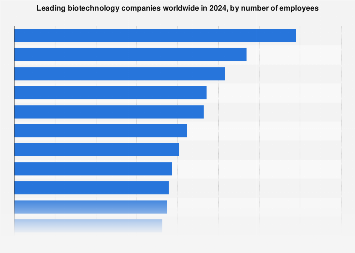
The biotechnology sector, a crucible of scientific advancement and economic transformation, is increasingly defined by the sheer scale of its human capital. As companies push the boundaries of medical research, drug development, and agricultural innovation, their employee numbers serve as a potent indicator of their operational capacity, market reach, and strategic ambition. Analyzing the largest employers within this dynamic industry offers critical insights into which organizations are best positioned to shape the future of healthcare, sustainable agriculture, and beyond. These giants, through their extensive workforces, not only drive research and development but also contribute significantly to global employment and economic growth, underscoring the sector’s expanding influence.
The biotechnology industry, broadly defined as the application of biological organisms and processes to create or modify products or processes for specific uses, encompasses a diverse range of companies. From pharmaceutical giants with dedicated biotech divisions to pure-play biopharmaceutical firms and agricultural biotechnology innovators, the common thread is a deep reliance on skilled scientific and technical talent. The scale of these operations directly correlates with their ability to undertake large-scale clinical trials, invest in cutting-edge research infrastructure, and navigate complex regulatory landscapes. Consequently, companies boasting the largest workforces often represent established players with broad portfolios or rapidly expanding entities making significant market inroads.
Examining the employee count provides a proxy for a company’s investment in its operational infrastructure and research pipeline. A larger workforce suggests a greater capacity for parallel research streams, extensive manufacturing capabilities, and a more robust commercialization apparatus. For instance, companies involved in the production of biologics, which often require intricate manufacturing processes and stringent quality control, tend to employ a substantial number of personnel across research, development, manufacturing, and quality assurance. Similarly, firms engaged in widespread clinical testing of novel therapeutics, a process demanding significant logistical coordination and a large pool of clinical research associates, will naturally reflect this in their headcount.
Furthermore, the geographic distribution of these large biotech employers often mirrors global economic hubs for scientific innovation and investment. North America, particularly the United States, and Europe have historically been centers for biopharmaceutical development, hosting a significant proportion of the world’s leading biotech companies. However, Asia, with countries like China and South Korea making substantial investments in R&D, is rapidly emerging as a formidable player, attracting talent and fostering innovation. The expansion of these companies into emerging markets also reflects their global strategies and the increasing demand for advanced biotechnological solutions worldwide.
The economic impact of these large employers extends far beyond their immediate payrolls. They are significant contributors to local and national economies through direct job creation, indirect employment in supporting industries (such as contract research organizations, raw material suppliers, and logistics providers), and substantial tax revenues. Moreover, their innovations often lead to the development of new treatments, improved agricultural yields, and more sustainable industrial processes, generating substantial societal and economic benefits. The pipeline of new drugs and therapies developed by these companies can translate into billions of dollars in healthcare savings and improved quality of life for patients.
The nature of employment within large biotech firms is also evolving. While scientific researchers and laboratory technicians remain core to their operations, there is a growing demand for professionals in areas such as data science, artificial intelligence (especially for drug discovery and clinical trial analysis), regulatory affairs, intellectual property law, and advanced manufacturing. This diversification of skills reflects the increasingly interdisciplinary nature of modern biotechnology. The ability of these companies to attract and retain top talent across these varied disciplines is crucial for their continued success and competitive edge.
Moreover, the employee figures can also be indicative of a company’s strategic direction and its approach to growth. A surge in hiring might signal an aggressive expansion phase, the successful integration of a major acquisition, or the scaling up of production for a newly approved product. Conversely, a plateau or slight decline could suggest a period of consolidation, a shift in R&D focus, or efforts to optimize operational efficiency. Understanding these dynamics through workforce metrics provides a valuable lens for investors, policymakers, and industry observers.
The competitive landscape within biotechnology is intense. Companies are constantly striving to bring novel, effective, and commercially viable products to market. The race to develop breakthrough therapies for diseases like cancer, Alzheimer’s, and rare genetic disorders, or to create more resilient and productive crops, requires sustained investment in human capital. The ability to recruit and retain world-class scientists, engineers, and business professionals is therefore a critical determinant of success. Companies that can offer compelling research environments, competitive compensation, and opportunities for career advancement are better positioned to secure the talent necessary to innovate and lead.
Beyond direct employment, the influence of these large biotech organizations extends to academic institutions and research centers. They often forge partnerships with universities, fund academic research, and recruit graduates, creating a symbiotic relationship that fuels the entire innovation ecosystem. This collaborative approach is vital for translating fundamental scientific discoveries into tangible products and solutions. The demand for highly skilled graduates from these institutions is a testament to the growth and importance of the biotechnology sector.
In conclusion, the employee numbers of major biotechnology companies are not merely statistics; they are powerful indicators of an organization’s scale, ambition, and impact. They reflect the vast human endeavor required to push the frontiers of science, develop life-changing therapies, and contribute to a more sustainable future. As the biotechnology sector continues its rapid evolution, understanding the workforce giants at its helm provides indispensable insights into the forces shaping global health, agriculture, and the broader economic landscape. The continuous growth and strategic deployment of human capital within these organizations will undoubtedly remain a key determinant of innovation and market leadership for years to come.