


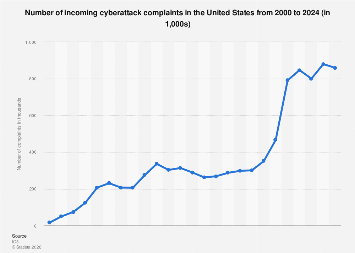
The United States is grappling with an unprecedented surge in cybercrime, as evidenced by the staggering number of complaints filed with the Internet Crime Complaint Center (IC3). Data reveals a dramatic upward trajectory in reported incidents, underscoring the growing sophistication and pervasiveness of online threats. In the most recently reported year, the IC3, a collaborative effort between the FBI, the National White Collar Crime Center, and the Bureau of Justice Assistance, received approximately 859,530 cybercrime complaints. This figure represents a significant escalation from the mere 16,840 complaints logged in the year 2000, signaling a more than fifty-fold increase in just over two decades.
This alarming trend is not a recent phenomenon but rather a sustained and accelerating pattern. Between 2019 and 2023, the number of complaints more than doubled, jumping from 467,360 to 880,420. While the latest reported figure for 2024 stands at 859,530, it is crucial to note that this number may still be subject to revisions as the year progresses and more data is compiled. The sheer volume of these complaints paints a stark picture of the challenges faced by individuals, businesses, and government agencies in safeguarding digital assets and personal information.
Examining the data from a broader perspective, the early 2000s saw cybercrime complaints hovering in the tens of thousands annually. By 2010, this number had crossed the 300,000 mark, indicating a growing concern. The following decade witnessed an exponential rise, with figures consistently surpassing 300,000 and frequently breaching the 700,000 and even 800,000 thresholds in recent years. This sustained growth suggests that cybercriminals are continuously evolving their tactics, exploiting new vulnerabilities, and expanding their reach across the digital landscape.
The economic implications of this escalating cybercrime epidemic are profound and far-reaching. Beyond the direct financial losses incurred by victims, which can range from individual life savings to corporate revenue, there are significant indirect costs. These include the expenses associated with cybersecurity investments, incident response and recovery efforts, legal fees, regulatory fines, and reputational damage. While specific aggregate financial loss figures are often difficult to quantify precisely due to the clandestine nature of cybercrime, reports from various cybersecurity firms and government agencies consistently highlight billions of dollars in estimated losses annually. For instance, the FBI’s Internet Crime Report often details specific types of scams and their associated monetary losses, revealing the immense financial toll.
Globally, the United States is not alone in facing this cyber threat. Many developed nations are experiencing similar surges in cybercrime. Countries with high internet penetration rates and robust digital economies, such as those in Europe, Asia, and North America, often become prime targets for cybercriminals. The interconnected nature of the global economy means that a cyberattack originating in one region can have ripple effects across multiple continents, impacting supply chains, financial markets, and critical infrastructure. International cooperation and information sharing between law enforcement agencies are therefore paramount in combating this transnational threat.
The types of cybercrime reported to the IC3 are diverse and constantly evolving. They range from common phishing scams and ransomware attacks that cripple businesses by encrypting their data, to more sophisticated forms of identity theft, business email compromise (BEC) fraud, and exploitation of critical infrastructure. The increasing reliance on cloud computing, the proliferation of the Internet of Things (IoT) devices, and the remote work paradigm have all introduced new attack vectors that cybercriminals are adept at exploiting.
Experts in cybersecurity and economics point to several key factors driving this surge. Firstly, the increasing digitization of nearly every aspect of modern life provides a larger attack surface. From online banking and shopping to remote work and telehealth, our reliance on digital platforms is near-universal. Secondly, the accessibility of sophisticated hacking tools and services on the dark web has lowered the barrier to entry for aspiring cybercriminals. Thirdly, the global nature of the internet allows attackers to operate with relative impunity from jurisdictions where law enforcement may have limited reach.
The rise in cybercrime complaints also reflects a growing awareness and willingness among victims to report these incidents. The establishment and promotion of platforms like the IC3 have undoubtedly encouraged more individuals and organizations to come forward. This increased reporting, while contributing to the higher complaint numbers, also provides valuable data for law enforcement to track trends, identify perpetrators, and develop effective countermeasures.
Looking ahead, the challenge of combating cybercrime will require a multi-pronged approach. This includes continued investment in advanced cybersecurity technologies and infrastructure, robust public-private partnerships, comprehensive cybersecurity education and awareness programs for the public, and stronger international legal frameworks to facilitate cross-border investigations and prosecutions. Furthermore, fostering a culture of proactive security, where prevention is prioritized over reaction, will be crucial in mitigating the ever-growing threat posed by cybercriminals in the digital age. The data from the IC3 serves as a critical barometer, highlighting the urgent need for sustained vigilance and innovative solutions in the ongoing battle against cyber threats.