

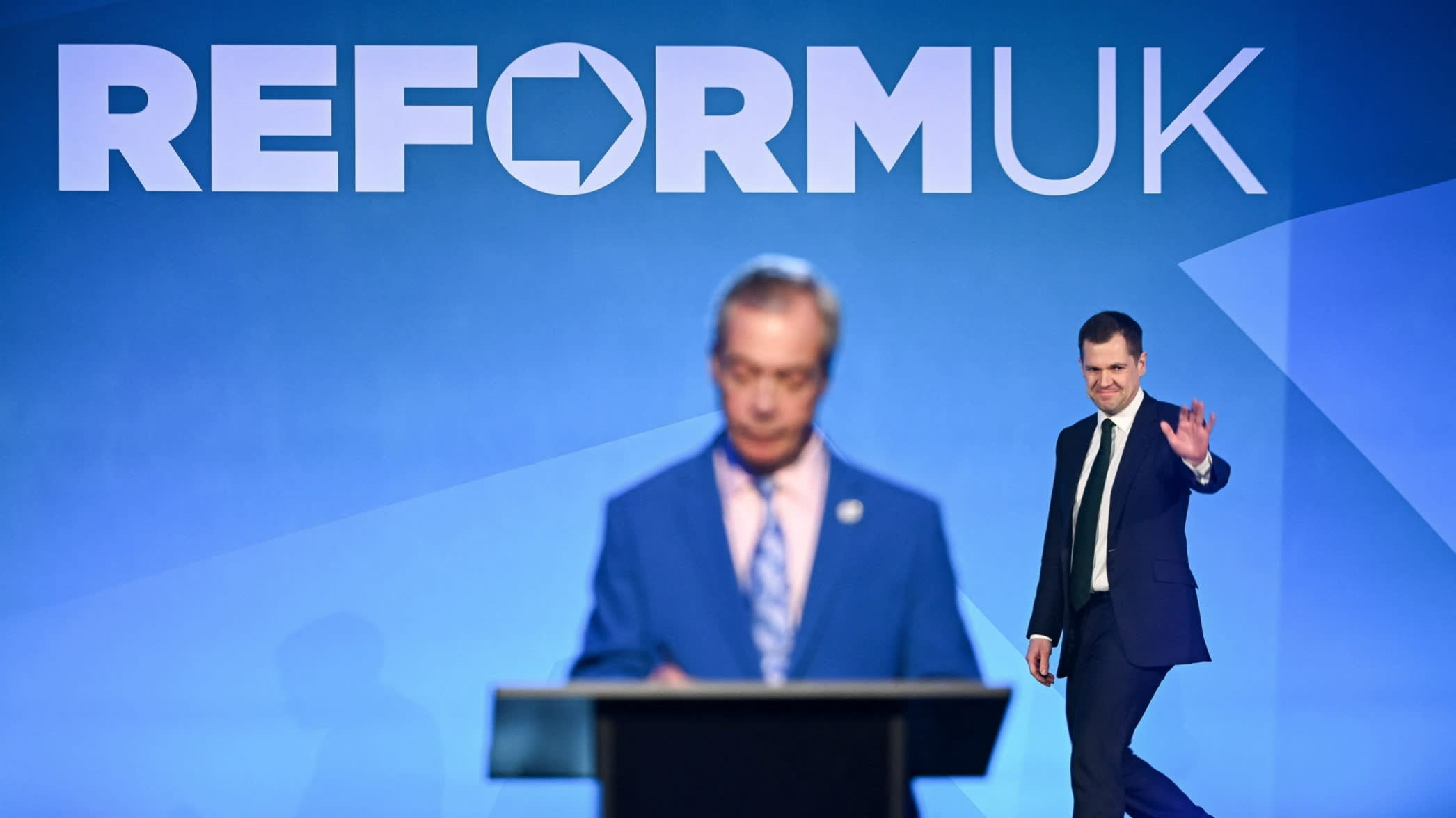
The landscape of British right-wing politics underwent a seismic shift this week as Reform UK, the insurgent party led by Nigel Farage, announced the appointment of Robert Jenrick as its "shadow chancellor." This move represents far more than a simple personnel change; it is a calculated attempt to institutionalize a populist movement and provide it with the veneer of fiscal credibility necessary to challenge the established order in Westminster. By recruiting a former cabinet minister who narrowly lost the Conservative Party leadership race just months ago, Reform UK is signaling its intent to transition from a single-issue pressure group into a professional party of government-in-waiting, specifically targeting the economic anxieties of a disillusioned electorate.
Robert Jenrick’s transition to the Reform frontbench marks a historic moment in the realignment of the UK’s right-of-center politics. A former Secretary of State for Housing, Communities, and Local Government, and more recently a Minister for Immigration, Jenrick brings a level of departmental experience that Reform UK has previously lacked. His resignation from the Conservative government in late 2023 over the perceived weakness of the Rwanda deportation bill established his credentials as a hardliner on sovereignty and border control. However, it is his new role as the architect of Reform’s economic platform that will likely define the next phase of his career and, potentially, the future of the British tax system.
The appointment comes at a time of significant macroeconomic flux for the United Kingdom. With the Labour government under Prime Minister Keir Starmer and Chancellor Rachel Reeves emphasizing "fiscal responsibility" and "investment through stability," a vacuum has opened for a more radical, supply-side economic alternative. Reform UK’s economic manifesto, often referred to as their "Contract with the People," proposes a dramatic restructuring of the UK’s fiscal framework. Central to this vision is a plan to raise the threshold for the 20% Income Tax rate from £12,571 to £20,000, a move they argue would lift millions out of the tax net and provide a significant boost to consumer spending power.
Jenrick’s primary challenge as shadow chancellor will be to provide a rigorous defense of these proposals, which many mainstream economists have criticized as being underfunded. During the 2024 General Election campaign, the Institute for Fiscal Studies (IFS) suggested that Reform’s tax-cutting plans would cost the Treasury approximately £141 billion per year. To offset this, the party proposes cutting government "waste," renegotiating the interest paid on Bank of England reserves, and slashing foreign aid. Jenrick’s task is to transform these broad political slogans into a cohesive fiscal strategy that can withstand the scrutiny of the City of London and international bond markets, particularly in the wake of the 2022 "mini-budget" crisis that severely damaged the reputation of radical right-wing economics in the UK.
The strategic logic behind Jenrick’s appointment also lies in his ability to bridge the gap between cultural populism and traditional Thatcherite economics. Reform UK’s base is largely composed of voters who feel left behind by globalization and the concentration of wealth in London and the South East. By appointing a shadow chancellor who speaks the language of "national sovereignty" and "border integrity," the party is attempting to frame economic policy through the lens of national identity. This includes the argument that high levels of net migration have suppressed wage growth for the working class and placed an unsustainable burden on public infrastructure, such as the National Health Service (NHS) and the housing market.
From a market perspective, the rise of a credible third force in British politics introduces a new layer of political risk. For decades, the UK has operated under a de facto two-party system that provided a degree of predictability for foreign direct investment. The emergence of Reform UK as a potent electoral force—consistently polling in the mid-to-high teens and occasionally overtaking the Conservative Party in specific demographics—suggests that the era of centrist consensus may be ending. Investors will be watching Jenrick closely to see if he adopts a "responsible populist" approach or if he leans into the more disruptive, anti-institutional rhetoric that has characterized Nigel Farage’s career.
Global comparisons further highlight the significance of this move. Across Europe and North America, the traditional "center-right" is being hollowed out by movements that combine restrictive social policies with interventionist or radical libertarian economic agendas. In France, the Rassemblement National has sought to professionalize its economic team to appear "ready to govern," while in the United States, the Republican Party has shifted toward a more protectionist, "America First" economic stance. Jenrick’s appointment as shadow chancellor is the British iteration of this global trend—an attempt to marry the administrative competence of the old guard with the ideological fervor of the new populism.
The impact on the Conservative Party, now led by Kemi Badenoch, cannot be overstated. By losing a figure of Jenrick’s stature to Reform, the Conservatives face an existential threat to their position as the primary alternative to Labour. The "shadow chancellor" title bestowed upon Jenrick is symbolic, as Reform is not the official opposition in Parliament, but it serves as a provocative challenge to the Conservative frontbench. It forces the Tories into a difficult choice: do they move further to the right to reclaim the voters lost to Reform, or do they hold the center ground and risk being outflanked on issues of tax and migration?
Expert insights suggest that Jenrick’s focus will likely remain on the "supply side" of the economy. He has long been an advocate for planning reform—a contentious issue in British politics—arguing that the UK’s restrictive development laws are the single greatest barrier to economic growth and homeownership. As shadow chancellor, he is expected to link the housing crisis directly to the failures of the "Westminster consensus," proposing radical deregulation as a way to unlock private sector investment. This "growth-first" narrative is intended to appeal to younger voters who find themselves priced out of the property market, a demographic that has traditionally been out of reach for populist right-wing parties.
Furthermore, Jenrick is expected to lead Reform’s critique of the UK’s transition to "Net Zero." The party has consistently argued that the costs of decarbonization are being unfairly borne by households and small businesses through higher energy bills and "green levies." By framing environmental policy as an economic burden, Jenrick aims to tap into "green-lash" sentiment, positioning Reform as the only party willing to prioritize industrial competitiveness and energy security over international climate commitments. This stance, while controversial, aligns with the party’s broader goal of reducing the size and regulatory reach of the state.
The economic impact of this appointment will also be felt in the debate over the UK’s relationship with the European Union. While "Brexit" as a term has faded from the daily headlines, the underlying tensions regarding regulatory divergence remain. Jenrick has been a vocal proponent of using post-Brexit freedoms to create a "Singapore-on-Thames" environment—low taxes, light-touch regulation, and a focus on emerging markets in the Indo-Pacific. His role will be to articulate how a Reform-led government would navigate the complexities of trade with the EU while aggressively pursuing a deregulatory agenda that distinguishes the UK from the European social model.
As the UK approaches the mid-term of the current Parliament, the performance of Robert Jenrick in this new role will be a key barometer for the health of British democracy. If he succeeds in providing Reform UK with a credible, data-driven economic platform, the party could become a permanent fixture of the political landscape, rather than a transient protest movement. This would necessitate a fundamental rethink of fiscal policy by both the Labour and Conservative parties.
Ultimately, the naming of Robert Jenrick as shadow chancellor is a declaration of war on the status quo. It signals that the debate over the UK’s economic future is no longer a binary choice between two shades of fiscal conservatism or social democracy. Instead, it introduces a third path—one that combines radical tax reform, aggressive deregulation, and strict national sovereignty. Whether this platform can survive the scrutiny of an electorate that remains wary of fiscal instability remains to be seen, but for now, the appointment has ensured that Reform UK will be the primary driver of political discourse on the British right for the foreseeable future. Professionalism, when wedded to populism, creates a potent political force, and in Robert Jenrick, Reform UK believes it has found the architect of its economic revolution.