


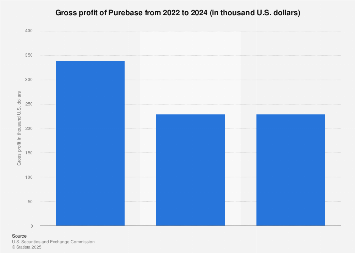
Purebase, a company operating within the dynamic and often unpredictable sector of [Insert Broad Industry Sector Here, e.g., agricultural technology, biotechnology, consumer goods, etc.], is facing increased investor and market analyst attention regarding its projected gross profit for the 2024 fiscal year. While specific, granular financial data for this period remains proprietary and is typically released through official corporate channels and financial reporting, the broader economic environment and industry-specific trends provide a crucial lens through which to assess potential performance. Understanding the factors influencing a company’s gross profit – the revenue remaining after deducting the cost of goods sold (COGS) – is paramount for evaluating its operational efficiency, pricing power, and overall financial health.
The global economic landscape in 2024 presents a complex tapestry of opportunities and challenges that will undoubtedly shape Purebase’s financial outcomes. Persistent inflationary pressures, particularly concerning raw materials, energy, and labor, continue to exert upward pressure on COGS across numerous industries. Companies like Purebase, whose business models rely on the sourcing and transformation of physical inputs, are particularly susceptible to these cost escalations. Supply chain disruptions, though perhaps less acute than in previous years, remain a latent risk, capable of impacting both the availability and cost of essential components. Geopolitical uncertainties and fluctuating currency exchange rates further complicate the picture, potentially affecting international sales, import costs, and overall market stability.
Within the [Insert Specific Sub-Industry Here, e.g., specialty fertilizer, biopharmaceutical research, organic food production, etc.] sector, Purebase likely navigates a competitive environment characterized by rapid technological advancement, evolving consumer preferences, and increasingly stringent regulatory frameworks. For instance, if Purebase operates in the agricultural technology space, its gross profit margins would be influenced by factors such as the adoption rates of new farming techniques, the price volatility of commodity crops, and the demand for sustainable or precision agriculture solutions. In the biotechnology realm, research and development expenditure, patent expirations, and the success rates of clinical trials would heavily weigh on COGS and, consequently, gross profit.
Market data from research firms specializing in Purebase’s operational domain suggests a mixed outlook for 2024. Analysts are closely monitoring key performance indicators (KPIs) such as sales volumes, average selling prices (ASPs), and the efficiency of production processes. For companies involved in the production of tangible goods, the ability to pass on increased costs to consumers without significantly impacting demand is a critical determinant of gross profit margins. This pricing power is often a function of brand strength, product differentiation, market share, and the availability of substitutes. A company that can command premium prices for its unique offerings or possesses a dominant market position is better equipped to maintain or expand its gross profit margins in the face of rising input costs.
Several economic indicators provide a broader context for Purebase’s financial projections. Global GDP growth forecasts for 2024, while showing some resilience, generally indicate a moderation compared to post-pandemic recovery surges. This slower growth can translate to more cautious consumer and business spending, potentially dampening revenue streams. Interest rate policies enacted by major central banks, aimed at curbing inflation, can also influence demand by increasing the cost of borrowing for both businesses and consumers, indirectly affecting sales volumes.
Furthermore, the specific strategic decisions undertaken by Purebase’s management team will play a pivotal role. Investments in automation, supply chain optimization, and the development of more cost-effective production methods can significantly impact COGS. Conversely, expansion into new markets, the launch of novel products, or substantial capital expenditures could temporarily affect profitability metrics. The composition of Purebase’s revenue streams – whether it relies more on high-margin specialty products or high-volume, lower-margin commodities – will also be a key determinant of its gross profit performance.
For a comprehensive understanding of Purebase’s gross profit, it is essential to consider its cost structure. COGS typically includes direct labor, direct materials, and manufacturing overhead. Any efficiencies gained in these areas, such as improved labor productivity, bulk purchasing discounts on raw materials, or reduced energy consumption in manufacturing, would directly contribute to a higher gross profit. Conversely, unexpected increases in any of these components would erode the gross profit margin.
Industry benchmarks provide a valuable point of comparison. If Purebase’s peers are experiencing margin compression due to similar cost pressures, its own performance might be viewed in a more favorable light, provided it is managing these challenges effectively. However, if competitors are demonstrating superior cost management or pricing strategies, Purebase could face significant competitive headwinds. Analyzing the gross profit margins of publicly traded companies within the same sector can offer insights into industry norms and potential areas for improvement. For example, companies in the consumer staples sector often exhibit more stable, albeit lower, gross profit margins due to the essential nature of their products, while technology or pharmaceutical companies might have higher but more volatile margins influenced by innovation cycles and market exclusivity.
The long-term implications of Purebase’s 2024 gross profit trajectory extend beyond immediate financial reporting. Consistent and healthy gross profit is the foundation for reinvestment in research and development, capital expansion, debt reduction, and shareholder returns. A declining or anemic gross profit can signal underlying operational issues, a weakening competitive position, or an inability to adapt to market changes, potentially hindering future growth and innovation. Investors and stakeholders will be keenly observing how Purebase navigates the prevailing economic climate and industry-specific pressures to maintain or enhance its profitability. The ability to forecast and manage gross profit effectively is a hallmark of robust financial management and a key indicator of a company’s resilience and long-term viability.