

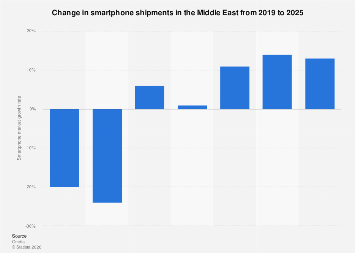
The Middle East’s burgeoning smartphone market is projected to experience significant growth in shipments through 2025, driven by a confluence of economic recovery, increasing digital penetration, and a youthful, tech-savvy demographic. This expansion signifies a critical opportunity for global device manufacturers, component suppliers, and the broader digital ecosystem within the region. Industry analysts foresee a dynamic period characterized by heightened consumer demand for advanced features, enhanced connectivity, and a diversification of device offerings catering to a spectrum of economic segments.
Several key factors are underpinning this optimistic outlook. Post-pandemic economic recalibration across many Middle Eastern nations has led to renewed consumer confidence and increased disposable income, directly translating into higher spending on consumer electronics. Countries such as Saudi Arabia, the United Arab Emirates (UAE), and Qatar, which have historically demonstrated strong consumer spending power, are expected to lead this surge. Furthermore, the ongoing digital transformation initiatives championed by various governments are fostering a more connected society, where smartphones are not just communication tools but essential gateways to online services, e-commerce, and digital entertainment. This government-backed push for digital inclusion is crucial, particularly in expanding smartphone adoption in less urbanized or underserved areas.
The demographic profile of the Middle East also plays a pivotal role. The region boasts a substantial youth population, a demographic that is inherently early adopter of new technologies and highly engaged with social media and digital content. This segment is increasingly demanding smartphones that offer superior camera capabilities, faster processing power, and seamless multitasking experiences, pushing manufacturers to innovate and introduce premium devices. Concurrently, there is a growing segment of the population seeking more affordable yet capable smartphones, creating a dual market where both high-end and budget-friendly devices can find substantial traction. This dichotomy necessitates a nuanced market strategy from brands, focusing on both flagship innovation and value-driven propositions.
Market intelligence suggests that the average selling price (ASP) of smartphones in the Middle East may see a moderate increase as consumers opt for devices with more advanced functionalities. However, this trend will be tempered by the competitive landscape, where aggressive pricing strategies from both established global players and emerging brands will aim to capture market share. The proliferation of 5G-enabled devices is also anticipated to accelerate, aligning with the region’s ongoing investment in next-generation network infrastructure. As 5G coverage expands, the demand for compatible smartphones will inevitably rise, creating a catalyst for device upgrades and further market expansion. Early adoption of 5G in countries like South Korea and China has demonstrated the rapid uptake of these technologies once infrastructure is in place, a trend likely to be mirrored in key Middle Eastern markets.
Global smartphone giants such as Apple and Samsung are expected to continue their dominance, leveraging their established brand loyalty and extensive product portfolios. However, Chinese manufacturers like Huawei, Xiaomi, and Oppo have been steadily increasing their market share through competitive pricing, innovative features, and strategic marketing campaigns tailored to local preferences. Their ability to offer compelling specifications at lower price points makes them particularly attractive to a large segment of the Middle Eastern consumer base. The intense competition among these players is beneficial for consumers, driving innovation and offering a wider choice of devices.
The economic impact of this projected growth extends beyond device sales. Increased smartphone penetration fuels the growth of the digital economy, supporting sectors such as mobile e-commerce, digital payments, ride-sharing services, and content streaming. As more individuals gain access to smartphones, the demand for mobile applications and digital services escalates, creating a virtuous cycle of economic activity. For instance, the e-commerce sector in the UAE and Saudi Arabia has witnessed exponential growth in recent years, and smartphones are the primary access point for a significant portion of these transactions. This trend is expected to accelerate, further integrating the region into the global digital marketplace.
Looking at broader economic indicators, the Middle East’s Gross Domestic Product (GDP) growth, projected to be robust in the coming years, provides a favorable backdrop for consumer spending on durable goods like smartphones. The International Monetary Fund (IMF) has recently revised its growth forecasts for the region upwards, citing factors such as higher oil prices and strong non-oil sector performance. This economic buoyancy directly supports discretionary spending, of which consumer electronics form a significant part. The region’s strategic geographical location also positions it as a key hub for both the import and potential export of technology-related goods and services, further enhancing its economic significance in the global tech landscape.
The development of local talent and the establishment of regional technology hubs could also be spurred by this sustained growth. As the smartphone market matures, there will be an increasing demand for skilled professionals in areas such as app development, digital marketing, and customer support, fostering job creation and knowledge transfer. Initiatives aimed at nurturing local tech startups and encouraging innovation in mobile technology could further solidify the region’s position as a significant player in the global technology arena. The ongoing diversification efforts in economies like Saudi Arabia, with its Vision 2030 plan, actively seek to build robust technology sectors, and the expanding smartphone market is a crucial enabler of this ambition.
However, challenges remain. Geopolitical stability, fluctuating currency exchange rates, and potential supply chain disruptions are factors that could influence market dynamics. The increasing sophistication of cybersecurity threats also necessitates a greater focus on device security and user data protection, a growing concern for both consumers and manufacturers. Ensuring that the growth is inclusive and reaches all segments of society, including those with lower incomes or in remote areas, will be crucial for sustainable market development. Regulatory frameworks that encourage fair competition and protect consumer rights will also be vital in shaping a healthy and dynamic smartphone market.
In conclusion, the Middle East’s smartphone market is on an upward trajectory, poised for substantial growth through 2025. The confluence of economic recovery, a young and digitally inclined population, and government-led digital transformation initiatives creates a fertile ground for device manufacturers and technology providers. As the region continues to embrace digital technologies, the smartphone will remain at the forefront, driving economic activity and shaping the future of communication, commerce, and connectivity across the Middle East. The sustained demand for both cutting-edge and value-oriented devices underscores the market’s maturity and its critical importance within the global technology sector.