

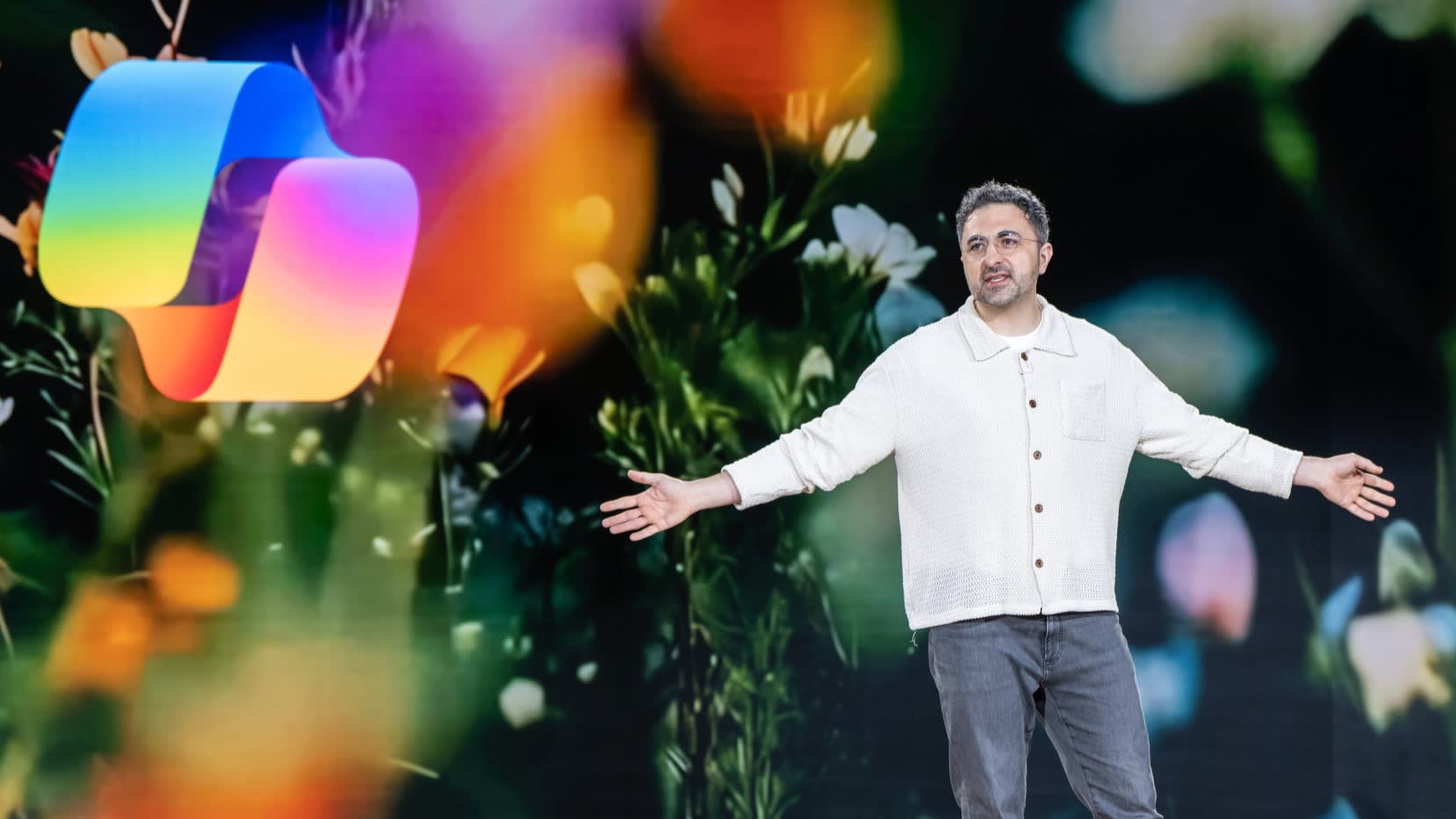
The architectural blueprint of the global artificial intelligence sector is undergoing a profound transformation as Microsoft, the primary benefactor of OpenAI, begins to pivot toward a strategy of internal self-sufficiency. Under the leadership of Mustafa Suleyman, the newly appointed CEO of Microsoft AI, the Redmond-based software giant is aggressively diversifying its technological portfolio to reduce its long-standing dependency on the startup that ignited the generative AI revolution. This shift represents more than just a change in vendor management; it is a fundamental realignment of the world’s most valuable company as it seeks to own the entire "stack" of intelligence, from the silicon in its data centers to the neural networks powering the next generation of Windows and Office.
For the past two years, the partnership between Microsoft and OpenAI has been the most significant alliance in the technology world. With an investment totaling approximately $13 billion, Microsoft secured a front-row seat to the development of GPT-4, integrating these capabilities into its "Copilot" suite of products. However, the economic and regulatory realities of 2024 are forcing a re-evaluation of this symbiotic relationship. The hiring of Suleyman—a co-founder of Google’s DeepMind and the former CEO of Inflection AI—marked the beginning of a new chapter where Microsoft is no longer content to be merely the cloud provider and distributor for another company’s intellectual property.
The Suleyman Mandate and Internal Model Development
Mustafa Suleyman’s arrival at Microsoft was not a standard executive hire; it was a strategic "acquihire" that saw much of Inflection AI’s top talent migrate to Redmond. This infusion of elite engineering talent has been tasked with a singular mission: the development of in-house large language models (LLMs) that can rival, and eventually surpass, the performance of OpenAI’s proprietary systems. Industry insiders point to a project codenamed "MAI-1," a massive model reportedly featuring 500 billion parameters. For context, while smaller than GPT-4, MAI-1 represents a significant escalation in Microsoft’s internal capabilities, providing the company with a "Plan B" should the relationship with OpenAI ever sour or should the costs of licensing external models become prohibitive.
The economic rationale for self-sufficiency is compelling. Currently, every query processed through a Copilot interface that relies on OpenAI’s models incurs a cost to Microsoft. By developing its own models, Microsoft can optimize the software to run more efficiently on its own hardware, specifically the Maia 100 AI accelerators. This vertical integration is a page taken directly from the playbooks of Apple and Tesla, aiming to maximize margins by eliminating the "middleman" of third-party intellectual property. In the hyper-competitive cloud market, where Azure competes with Amazon Web Services (AWS) and Google Cloud, the ability to offer proprietary, high-performance AI at a lower price point is a critical differentiator.
Navigating the Regulatory Minefield
Beyond the balance sheet, the move toward internal development is driven by an increasingly hostile regulatory environment. Antitrust authorities in the United States, the European Union, and the United Kingdom have begun scrutinizing the "partnerships" between Big Tech firms and AI startups. The Federal Trade Commission (FTC) has specifically expressed concern that these massive investments function as de facto acquisitions designed to circumvent traditional merger review processes.
By building its own models under Suleyman’s direction, Microsoft is insulating itself against potential regulatory interventions that could decouple its access to OpenAI’s technology. If a court or a regulatory body were to eventually rule that the Microsoft-OpenAI alliance constitutes an illegal monopoly or an undisclosed merger, Microsoft’s internal "self-sufficiency" ensures that its product roadmap remains intact. This strategy of "parallel development" allows the company to benefit from OpenAI’s cutting-edge research while simultaneously building a sovereign capability that satisfies the demands of sovereign governments and cautious regulators.
The Shift Toward Small Language Models
While the headlines often focus on massive, "frontier" models, Suleyman’s strategy also emphasizes the importance of Small Language Models (SLMs). Microsoft’s "Phi" series of models has demonstrated that smaller, highly curated datasets can produce AI that is remarkably capable at specific tasks while requiring a fraction of the computing power. This is essential for the "edge computing" revolution, where AI must run locally on laptops and mobile devices rather than in massive, energy-hungry data centers.
The economic impact of this shift is significant. The "AI PC" market is expected to grow exponentially over the next three years, with IDC forecasting that AI-capable PCs will represent nearly 60% of all PC shipments by 2027. For Microsoft to dominate this hardware refresh cycle, it needs models that are lightweight enough to run on its Surface devices without draining the battery or requiring a constant internet connection. By owning these smaller models, Microsoft can ensure that its Windows ecosystem remains the primary platform for AI developers, much as it was for the software developers of the 1990s.
A Competitive Landscape in Flux
Microsoft’s pivot occurs against a backdrop of intense global competition. Google, after a slow start, has unified its DeepMind and Brain units to produce Gemini, a model that is natively integrated into its search and workspace tools. Meta has disrupted the market by releasing its Llama models as open-source, allowing developers to build sophisticated applications without paying licensing fees to a central provider. Meanwhile, Apple has introduced "Apple Intelligence," focusing on on-device privacy and a hybrid approach that uses its own models for simple tasks and OpenAI’s ChatGPT for more complex queries.
In this environment, Microsoft’s reliance on a single partner was becoming a strategic vulnerability. The volatility within OpenAI’s leadership—exemplified by the brief firing and rehiring of CEO Sam Altman in late 2023—served as a wake-up call for the Microsoft board. The "Suleyman era" is designed to ensure that the fate of Microsoft’s AI strategy is never again tied to the internal politics of a third-party startup.
The Economic Multiplier of AI Sovereignty
The broader economic implications of Microsoft’s move toward AI self-sufficiency are vast. As AI becomes the foundational layer of the global economy, the companies that control the underlying models will wield immense power. By developing its own LLMs and SLMs, Microsoft is positioning itself to capture a larger share of the projected $15.7 trillion that AI is expected to add to the global economy by 2030, according to PwC.
Furthermore, this shift influences the global supply chain for semiconductors. Microsoft’s move to build its own models in tandem with its own silicon (the Maia chips) reduces its total reliance on Nvidia. While Nvidia remains the undisputed king of the GPU market, Microsoft’s diversification signals a broader trend among "hyperscalers" to design custom chips tailored to their specific software architectures. This reduces "compute inflation"—the rising cost of the hardware required to train and run AI—and provides a more stable cost structure for enterprise customers.
The Future of the OpenAI Alliance
Despite the push for self-sufficiency, the relationship between Microsoft and OpenAI is unlikely to end abruptly. OpenAI remains the gold standard for certain high-level reasoning tasks, and Microsoft continues to be its exclusive cloud provider. Instead, the relationship is evolving into a "co-opetitive" model. Microsoft will continue to offer OpenAI’s models through Azure to customers who want the absolute cutting edge, while simultaneously pushing its own internal models as the default for its mass-market consumer and enterprise applications.
This dual-track approach allows Microsoft to hedge its bets. It remains a partner in the most exciting startup in the world while building the internal muscle to eventually compete with that partner. For Mustafa Suleyman, the challenge is to blend the fast-moving, "move fast and break things" culture of a startup with the scale and reliability of a legacy tech titan.
As Microsoft moves forward, the success of this strategy will be measured not just by the benchmarks of its models, but by its ability to maintain its lead in the AI race without the training wheels of external partnerships. The quest for self-sufficiency is a bold declaration that in the age of artificial intelligence, true power lies in owning the intelligence itself, not just the pipes through which it flows. Through Suleyman’s leadership, Microsoft is attempting to reclaim its destiny, ensuring that the "Copilot" of the future is steered by Microsoft’s own hands.