


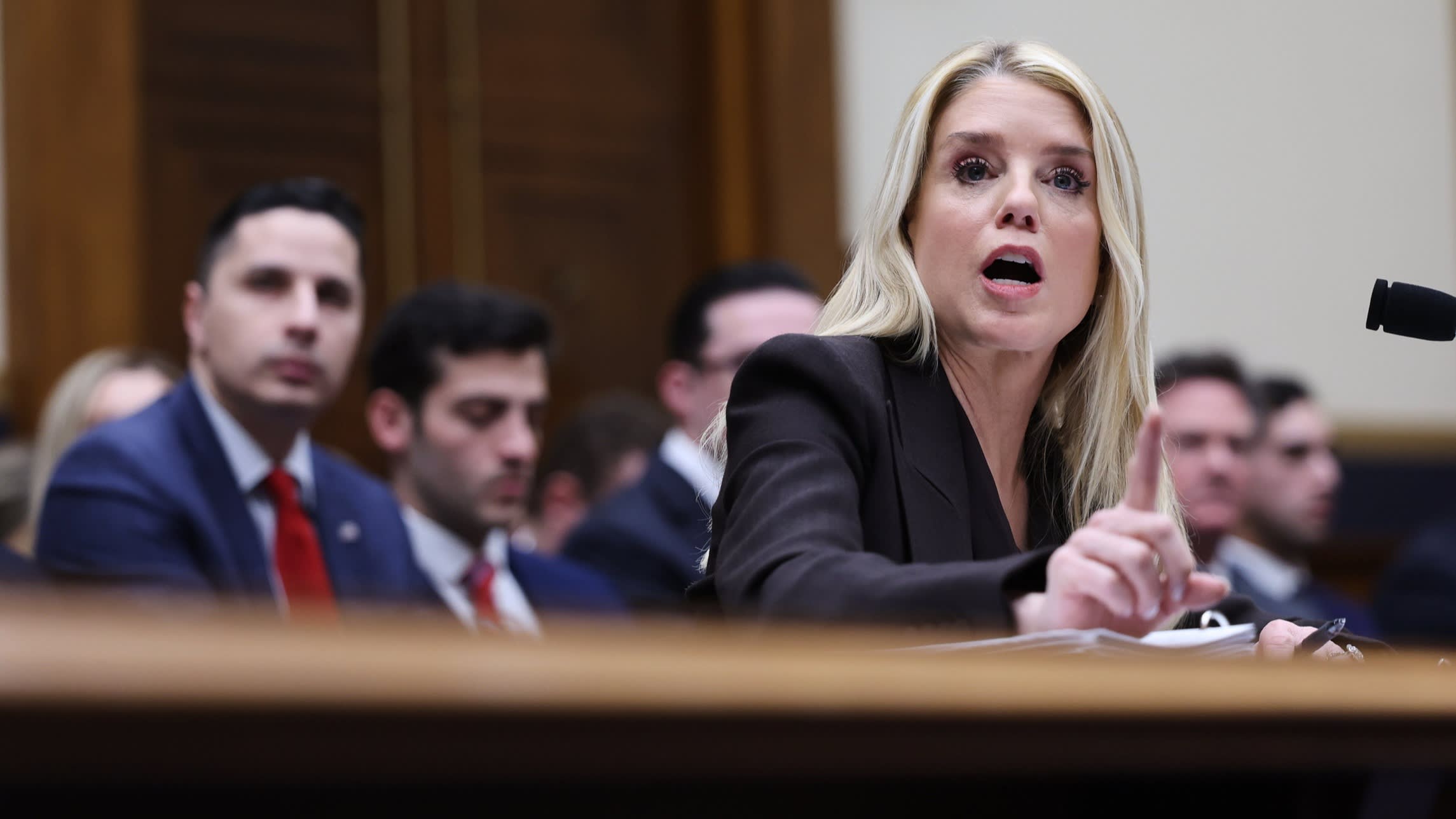
The intersection of high-stakes political appointments and the pursuit of historical justice reached a fever pitch this week as Pam Bondi, the former Attorney General of Florida and nominee for a senior federal post, faced rigorous questioning regarding her office’s handling of the Jeffrey Epstein case. As the confirmation process unfolds in the hallowed halls of the Senate, the discourse has shifted from standard policy debates to a granular examination of prosecutorial discretion, victim advocacy, and the transparency of the American legal system. The scrutiny centers on a pivotal period between 2011 and 2019, during which Bondi served as Florida’s chief legal officer, a tenure now being re-evaluated through the lens of one of the most notorious sex-trafficking scandals in modern history.
At the heart of the contention is the perceived inertia of the Florida Attorney General’s office during a decade when the full scale of Jeffrey Epstein’s crimes was beginning to emerge in the public consciousness. While the initial non-prosecution agreement (NPA) that allowed Epstein to serve a lenient sentence in a Palm Beach county jail was brokered in 2008—prior to Bondi taking office—critics argue that her administration failed to use its significant state-level powers to challenge the deal or investigate the broader network of enablers. During the recent hearings, lawmakers focused on the "missing" or "withheld" files related to the state’s internal reviews of the case, questioning whether institutional protective instincts overrode the mandate to seek justice for the dozens of survivors.
The economic and social implications of these hearings extend far beyond the career of a single politician. In the realm of business and economic journalism, the integrity of the Attorney General’s office is viewed as a cornerstone of the "Rule of Law," a critical metric for market stability and international investment. When the highest legal authorities in a jurisdiction are perceived as being selective in their prosecutions or opaque in their handling of high-profile criminal files, it creates a "governance risk" that can deter institutional capital. For the United States, which positions itself as a global leader in anti-trafficking efforts and judicial transparency, the Bondi hearings represent a test of whether past administrative lapses will be met with modern accountability.
Legal experts testifying before the committee highlighted the nuances of the Crime Victims’ Rights Act (CVRA), noting that the Florida AG’s office had multiple windows of opportunity to intervene as new evidence surfaced. The debate often returned to the 2019 investigative reporting that eventually led to Epstein’s federal indictment in New York. Critics suggest that if a news organization could uncover the depth of the conspiracy, a state attorney general with subpoena power and a dedicated investigative staff should have been able to do the same years earlier. Bondi’s defense has consistently maintained that the 2008 federal deal effectively tied the hands of state prosecutors, a legal "double jeopardy" or pre-emption argument that remains a point of intense jurisdictional debate.
The global context of human trafficking adds another layer of gravity to the proceedings. According to the International Labour Organization (ILO), human trafficking and forced labor generate an estimated $150 billion in illicit profits annually. Within this dark economy, high-profile cases like Epstein’s serve as a litmus test for how developed nations handle "elite" crime. When a legal system appears to grant immunity or leniency to the wealthy and well-connected, it undermines international treaties such as the Palermo Protocol. The questioning of Bondi is, in many ways, an attempt to reconcile the American domestic judicial record with its international commitments to combat systemic exploitation.
From a market perspective, the role of the U.S. Attorney General is vital for maintaining the "level playing field" necessary for competitive capitalism. The DOJ oversees antitrust litigation, white-collar crime, and the enforcement of the Foreign Corrupt Practices Act (FCPA). If a nominee’s record suggests a history of being "soft" on complex criminal networks or failing to maintain rigorous evidence chains, it raises concerns among compliance officers and corporate boards. The "Epstein Files" have become a metaphor for the shadows in the American legal system—places where evidence disappears and accountability is traded for political or social convenience.
The hearing also delved into the specifics of file retention and public record requests. In Florida, the "Sunshine Laws" are among the most robust in the nation, designed to ensure that the actions of public officials remain visible to the citizenry. Lawmakers questioned why certain communications between Bondi’s office and Epstein’s legal team were not more thoroughly documented or disclosed during her tenure. This line of inquiry touches on the fiduciary duty of public officials to preserve the integrity of the state’s investigative archives. In the digital age, the "loss" of files or the failure to digitize critical evidence is increasingly viewed not as a bureaucratic error, but as a deliberate obstruction of future justice.
Furthermore, the impact on the survivors of Epstein’s network cannot be overstated. The psychological and social costs of delayed justice manifest in a breakdown of trust between the public and the state. Expert witnesses in the hearing emphasized that when an Attorney General’s office appears to prioritize the status quo over the rights of victims, it discourages others from coming forward in future cases of corporate or high-level abuse. This "chilling effect" has tangible economic consequences, as it allows illicit activities to persist longer than they otherwise would, draining resources from the legitimate economy and increasing the long-term costs of social services and law enforcement intervention.
As the Senate moves toward a vote, the "Bondi handling" of the Epstein files has become a case study in the complexities of state-versus-federal jurisdiction. Some legal analysts argue that Bondi is being unfairly targeted for a deal she did not sign, while others contend that her subsequent silence and the alleged mismanagement of case files constitute a secondary failure of leadership. This divide often mirrors the partisan split in Washington, yet the underlying questions about the transparency of the justice system remain non-partisan in their importance.
The broader economic impact of this confirmation battle is seen in the shifting expectations for corporate and political governance. We are entering an era of "radical transparency," where the actions of a public official from a decade ago can be cross-referenced against digital archives and public sentiment in real-time. For the Department of Justice, which manages a budget of over $30 billion and oversees agencies like the FBI and the DEA, the leadership must be beyond reproach. Any perceived baggage regarding the mishandling of sensitive files can hamper the department’s ability to negotiate settlements or lead international task forces.
In comparison to other global jurisdictions, the U.S. approach to these confirmation hearings is uniquely public and adversarial. In the United Kingdom or France, judicial appointments often occur with less public fanfare but also with less direct accountability to the legislative branch. The American system, for all its friction, allows for these historical grievances to be aired. The Bondi hearings serve as a reminder that in a mature democracy, the "files" never truly stay closed; they remain as silent witnesses to the decisions made by those in power.
As the proceedings draw to a close, the focus remains on whether the nominee can provide a satisfactory explanation for the gaps in the record. The outcome will not only determine the trajectory of Pam Bondi’s career but will also set a precedent for how the U.S. government vet candidates with ties to controversial past investigations. In an age where the public demands greater accountability for the actions of the "one percent," the handling of the Epstein files remains a potent symbol of the work left to be done in the pursuit of an equitable legal system.
The final determination of the Senate will be watched closely by legal scholars, human rights advocates, and market analysts alike. Each group seeks assurance that the next leader of the nation’s legal apparatus possesses a commitment to transparency that transcends political cycles. Whether Bondi’s explanations will suffice to bridge the gap between her past record and the requirements of the nation’s highest legal office remains the central question of this high-stakes political drama. The "Epstein shadow" continues to loom large, proving that in the world of high-level law and politics, the past is never truly past—it is the foundation upon which the future of the rule of law is built.